Imperial Heart & Ancient Alleys
BeijingMaking the Most of Day 1 in Beijing
Start at Qianmen Avenue - the crowds are thin and
the light is ideal for photographs looking north toward Tiananmen Gate
Forbidden City: Meridian Gate → Hall of Supreme Harmony →
Imperial Garden → exit via Shenwumen (North Gate); Book tickets in advance
Behai park: Round city → Yong'an Temple → White Pagoda →
ferry boat ride → Nine-Dragon Screen → exit North gate
Temple of Heaven: East Gate → Hall of Prayer → Echo Wall
→ Circular Mound Altar → Relax in park with locals
Consider ending at Houhai Lake for drinks - lakeside bar
terraces open from around 7pm and stay lively until midnight
 Street
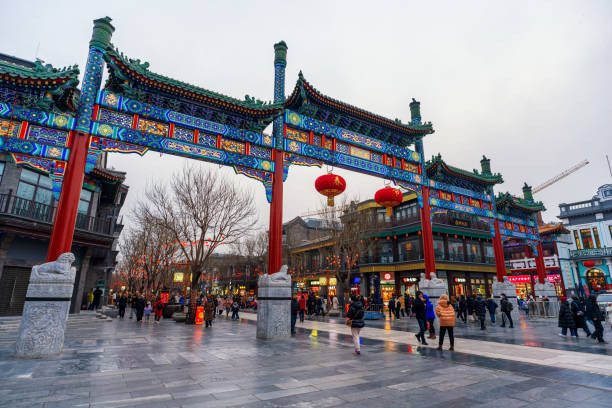
Qianmen Avenue
Beautifully restored Qing-dynasty pedestrian boulevard running south from Tiananmen Square. Historic shopfronts, traditional tea houses, and the nostalgic clang of a vintage tram make it the perfect morning warm-up before the imperial sights ahead.
 Landmark
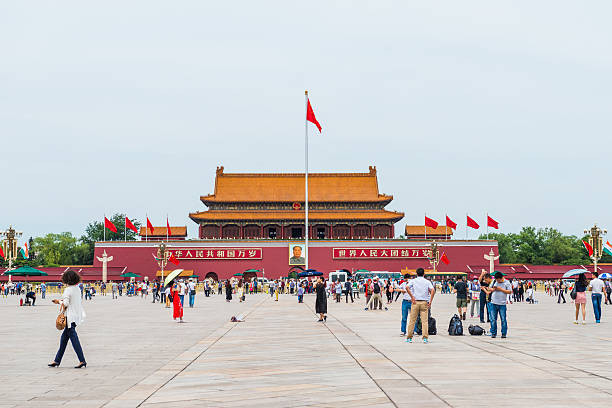
Tiananmen Gate
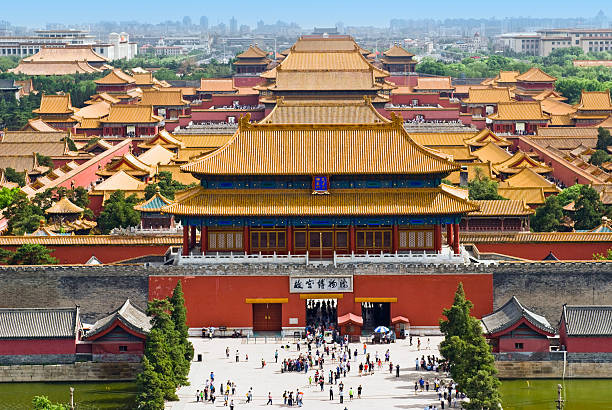
The "Gate of Heavenly Peace" - a vermillion fortress wall topped with a portrait of Mao Zedong overlooking the vast square below. The symbolic epicenter of modern China. Arrive early to witness the solemn flag-raising ceremony. 🗺️ TOUR
 UNESCO Site
Forbidden City
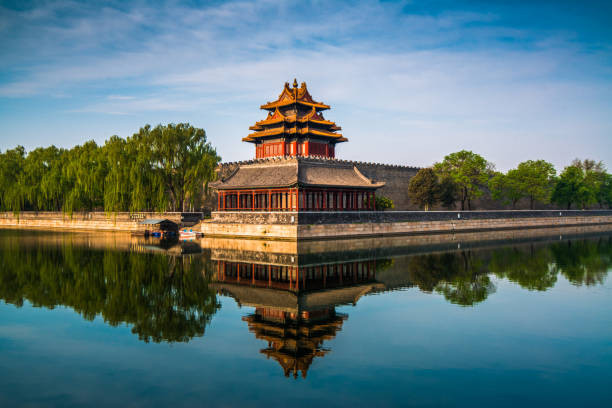
The crown jewel of Beijing and the world's largest palace complex - 180 acres, 980 buildings, and home to 24 emperors over five centuries. The Palace Museum showcases ancient Chinese architecture, treasures, and history, serving as a UNESCO World Heritage Site and symbol of imperial power. 🗺️ TOUR
 Park
Park
Jingshan Park
Climb to the hilltop pavilion - built from earth excavated for the Forbidden City's moat - for the best panoramic view of the Imperial Palace's golden rooftops. Visit right after the Forbidden City.
 Park
Park
Beihai Park
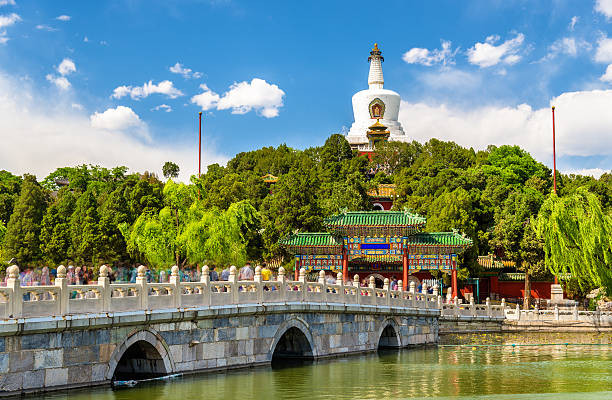
One of China's oldest imperial gardens, centered on a shimmering lake and crowned by the brilliant White Dagoba pagoda. Rent a rowing boat, stroll the Nine Dragon Screen, or simply sit at a lakeside pavilion with a cup of tea. 🗺️ TOUR
 Lakes
Lakes
Shichahai Lakes
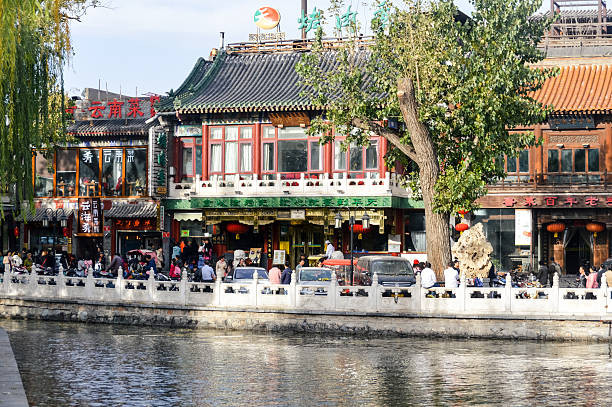
A trio of interconnected lakes - Qianhai, Houhai, and Xihai - ringed by willow trees and traditional courtyard homes. The waterfront comes alive in the afternoon with locals playing chess, ballroom dancing, and sailing lotus-shaped boats. 🗺️ TOUR
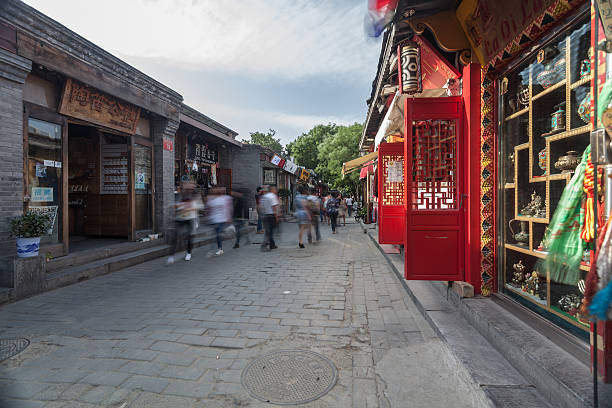 Hutong
Yandai Slant Street Hutongs
One of Beijing's most charming lanes - a narrow diagonal alley dating back 700 years, just steps from Shichahai. Today it's dotted with independent coffee shops, vintage stores, and craft workshops. The name means "Tobacco Pipe Slant Street,".
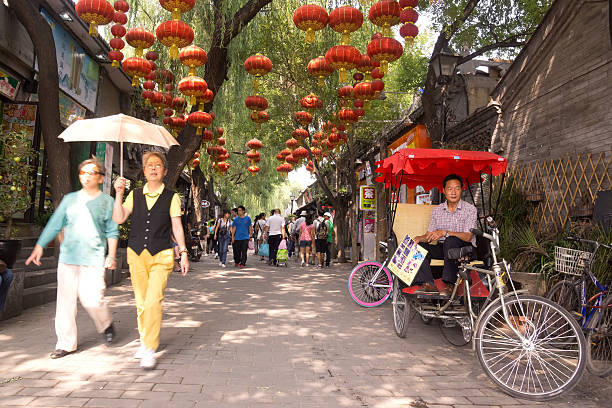 Hutong
Nanluoguxiang Hutong
Beijing's most famous hutong stretches nearly one kilometre through the heart of the old city. It's lined with indie boutiques, snack stalls, and courtyards-turned-cafés. A vibrant mix of old Beijing soul and modern creative energy.
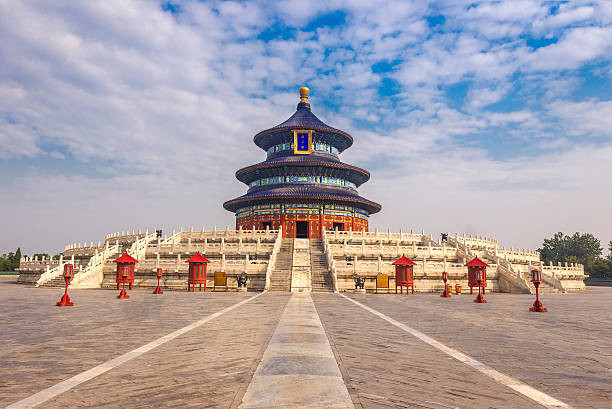 UNESCO Site
Temple of Heaven
A masterpiece of Ming-dynasty architecture where emperors once prayed for good harvests. The circular Hall of Prayer for Good Harvests, is Beijing's most graceful structure. The vast surrounding park buzzes with locals doing tai chi, playing erhu, and flying kites at dusk. 🗺️ TOUR
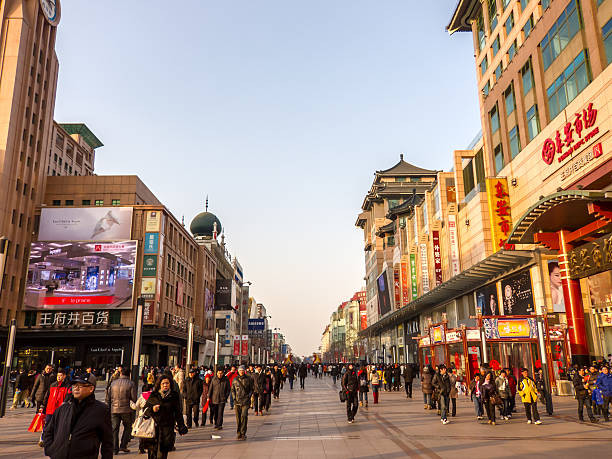 Shopping
Wangfujing Street
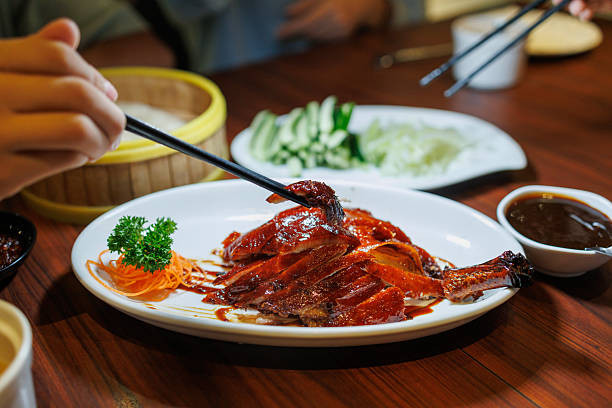
Beijing's premier shopping boulevard is equally famous for its after-dark snack alley - a sensory riot of scorpions on sticks, silkworm skewers, and stinky tofu alongside bubble tea and Peking duck.
 Nightlife
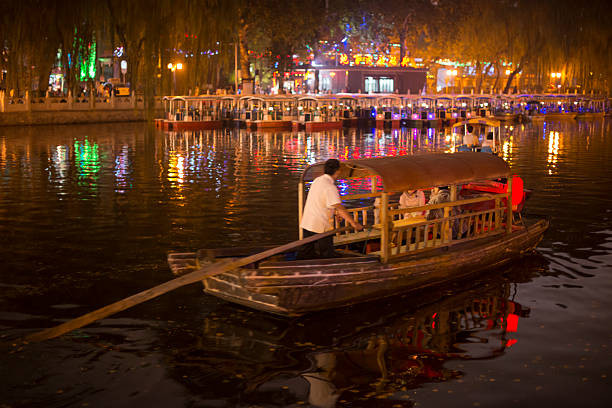
Nightlife at Houhai Lake
As the city settles into night, Houhai's lakeside transforms into one of Beijing's most atmospheric bar districts. String lights reflect off the water, live jazz drifts from open terraces, and pedal-boats dot the dark lake.
Walls, Palaces & City Lights
BeijingMaking the Most of Day 2 in Beijing
Book the Mutianyu cable car tickets online and opt for the toboggan slide descent
- saves 30 minutes of knee-punishing steps
Mutianyu Wall Route: Cable Car Station → Tower 14 → Walk
to Tower 20 →
Tower 6 → Slideway/Cable car down - BusDa 📍
Summer Palace: East Palace Gate → Longevity Hill →
Long Corridor → Kunming Lake → Ferry Boat: Shifang (Stone Boat) to Nanhudao Island
The Olympic Park is best in late afternoon when the
Bird's Nest and
Water Cube are less harsh in the light
End the day in
Sanlitun - the Taikoo Li complex and the surrounding bar
streets are Beijing's most international nightlife zone
 UNESCO Site
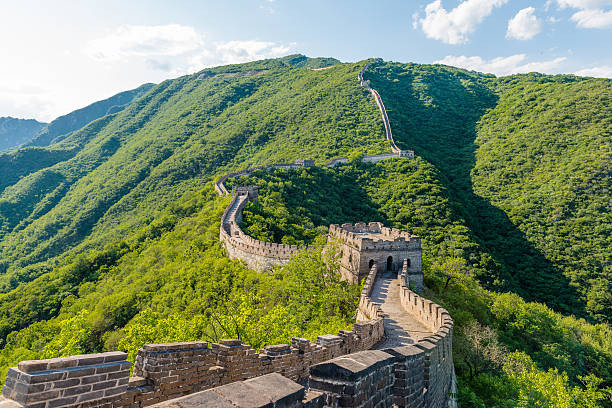
Mutianyu Great Wall
Arguably the most spectacular and least crowded stretch of the Great Wall. Lush forested hillsides flank watchtowers that have stood since the 6th century. Take the cable car up, hike along the restored battlements, and zip back down on the exhilarating toboggan slide. 🗺️ TOUR
 UNESCO Site
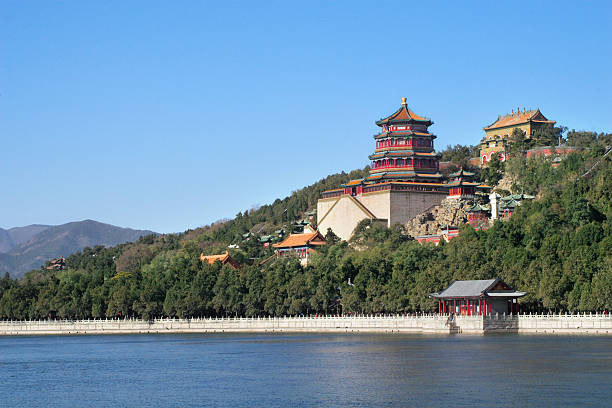
Summer Palace Beijing
Once served as the Qing dynasty's summer escape. Kunming Lake dominates the landscape - crossed by the elegant Seventeen-Arch Bridge - while Longevity Hill rises behind, crowned with pavilions and temples. Stroll the Long Corridor, its 728-metre covered walkway painted with over 8,000 intricate scenes. 🗺️ TOUR
 Architecture
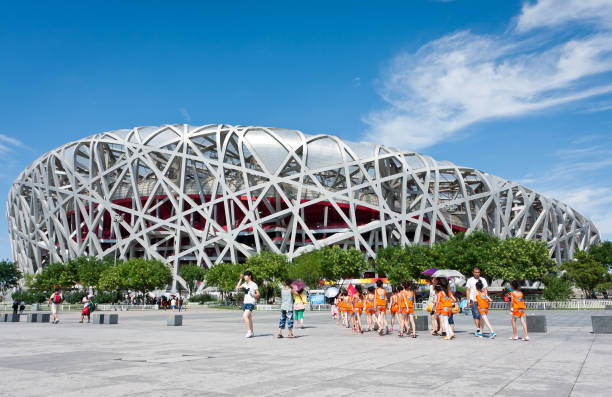
Bird's Nest Olympic Stadium
Head to the Olympic Green as the sun dips low. The Bird's Nest stadium - a daring lattice of interlocking steel built for the 2008 Games - is best seen at dusk when its structure begins to glow. Directly across sits the Water Cube, its bubbled facade shimmering in blue. The vast surrounding park is a favourite with locals for an evening stroll.
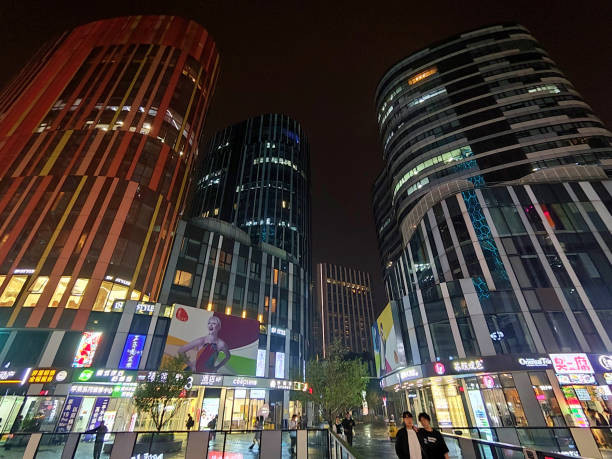 Nightlife
Sanlitun Nightlife Beijing
Beijing's most cosmopolitan nightlife district pulses with energy after dark. Sanlitun's neon-lit streets are packed with rooftop bars, live music venues, craft beer spots, and international restaurants. Sanlitun delivers the full spectrum of the city's modern, youthful side.
Ancient Capital & Imperial Legends
Xi'anMaking the Most of Day 1 in Xi'an
Terracotta Warriors: Pit 1 (main army), Pit 2
(cavalry/archers), Pit 3 (command post) - take photos with replica warriors, Exhibition Hall (bronze
chariots)
The Muslim Quarter is best after 6pm when the food stalls
are fully
set up and the lanterns come on
Wear layers: Xi'an mornings can be cool even in
summer, and the warrior pits are cold year-round
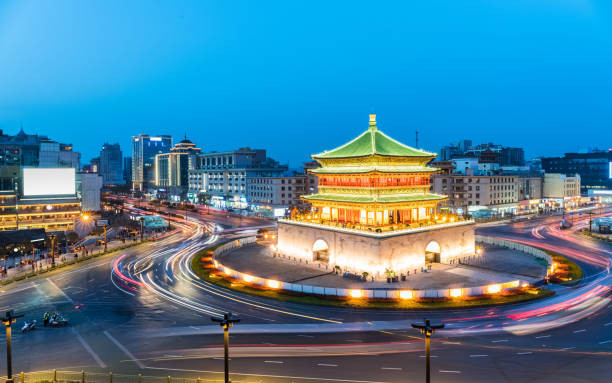 Landmark
The Bell Tower
Rising from the exact geographical center of ancient Xi'an, this magnificent Ming-dynasty tower once rang its bronze bells at dawn to mark the start of each day. Climb inside for sweeping views over the old city grid and to see one of China's finest surviving wooden tower structures.
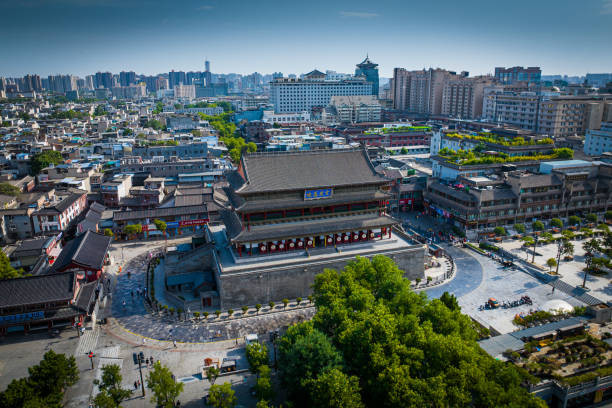 Landmark
The Drum Tower
A short walk west of the Bell Tower stands its counterpart - the Drum Tower, built in 1380, which once thundered its drums at dusk to signal curfew. Inside you'll find a fascinating collection of ancient drums and traditional percussion instruments.
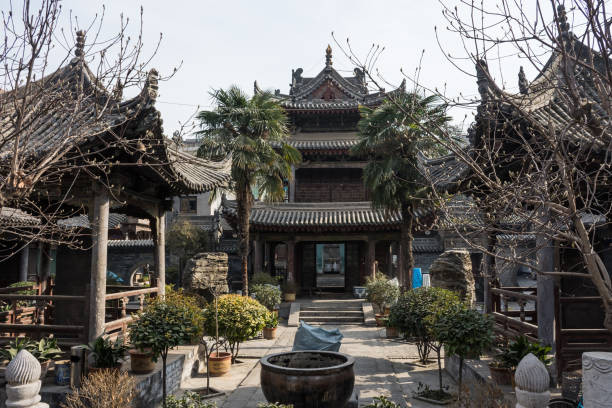 Mosque
Hua Jue Lane Mosque
One of the oldest and most important Islamic sites in China - a stunning fusion of Tang Chinese architecture and Islamic geometry. Its serene courtyards, carved archways, and minaret disguised as a pagoda reveal centuries of the Silk Road's cultural blending.
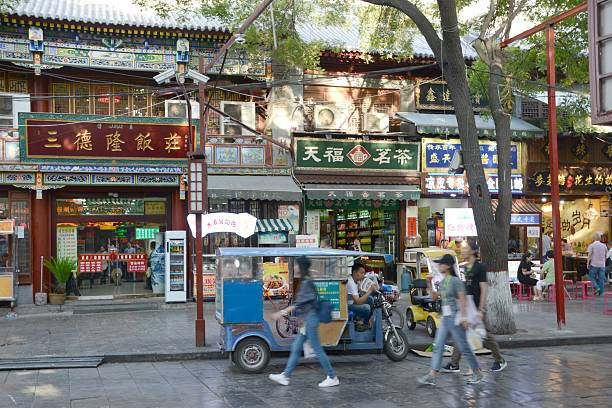 Food Street
Hui Muslim Street
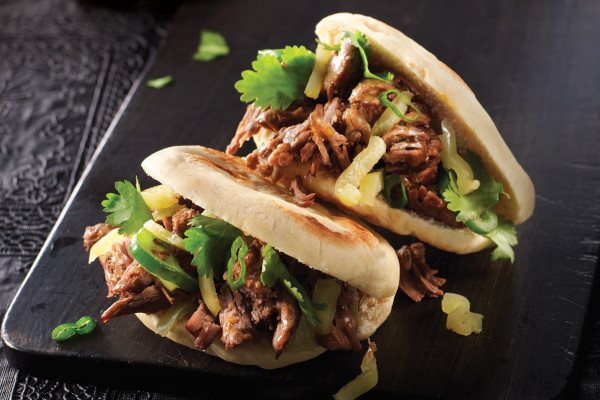
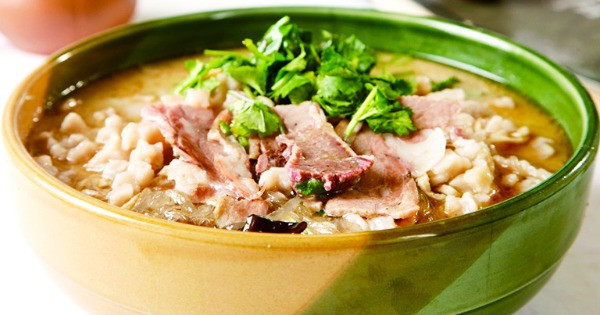
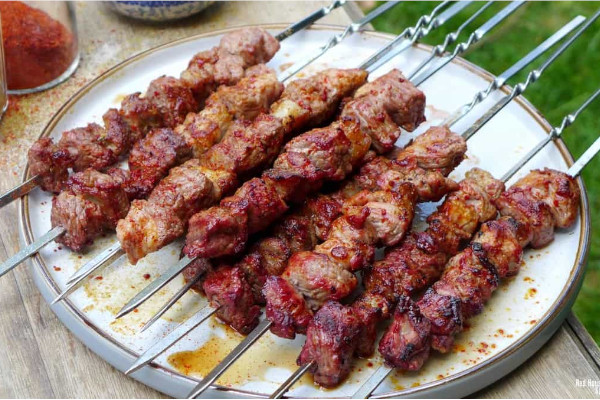
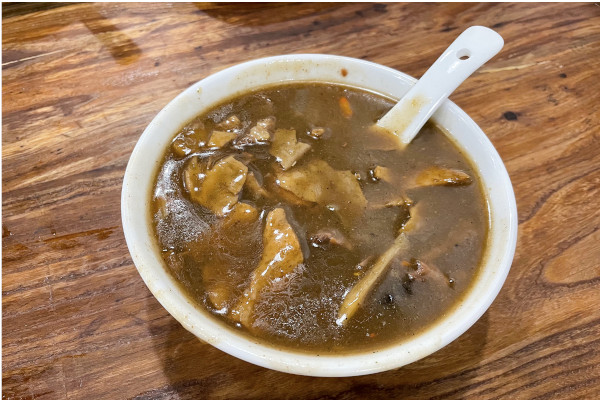
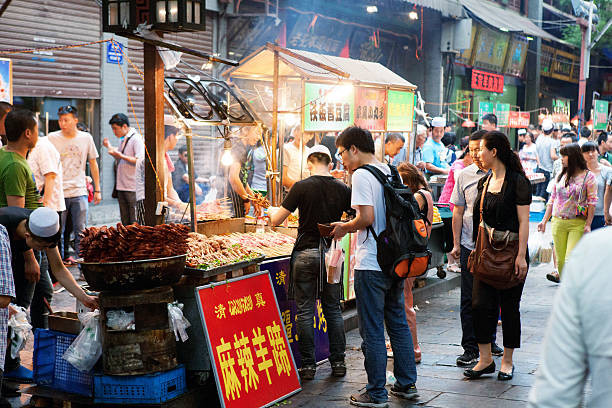
This legendary food street is Xi'an's most vibrant culinary corridor. Sizzling lamb skewers, pillowy roujiamo (Chinese "burgers"), steaming bowls of paomo lamb soup, and pomegranate juice freshly pressed at the stalls - lunch here is an event in itself.
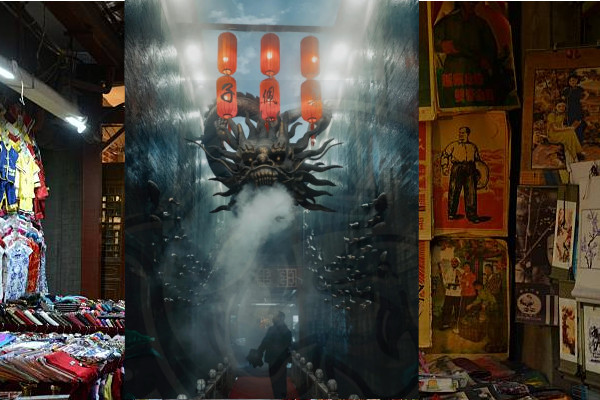 Photo Spot
Zi Pei Collection Photo Spot
Shop primarily specializing in silver jewelry. At the entrance, a lifelike dragon coils around, and as soon as you step inside, you’ll be captivated by a dragon that emits mist, creating an enchanting and mysterious atmosphere. It’s a perfect spot for taking photos and checking in.
 UNESCO Site
Terracotta Warriors Museum
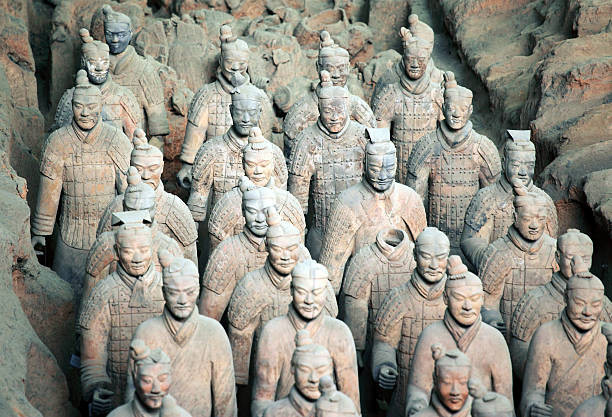
Over 8,000 life-sized clay soldiers, each with a unique face, were buried here in 210 BC to guard the emperor Qin Shi Huang in the afterlife. The three excavation pits are vast and breathtaking. One of the greatest archaeological discoveries.
 Palace
Huaqing Palace
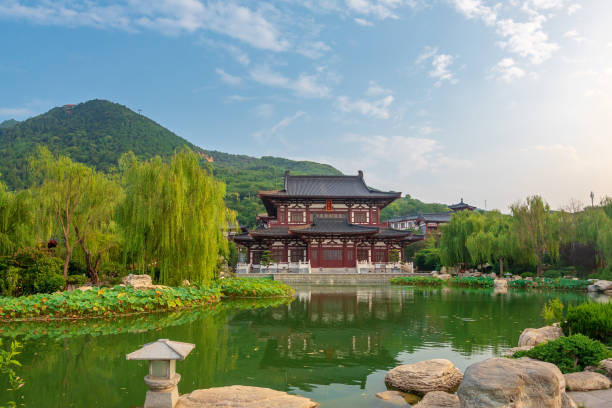
Nestled at the foot of Mount Li near the Terracotta Warriors, this ancient imperial resort is famous for its natural hot springs - favoured by emperors for over 3,000 years. The complex tells the legendary love story of Emperor Xuanzong and consort Yang Guifei, with pavilions, lotus ponds, and bathhouses.
 Performance
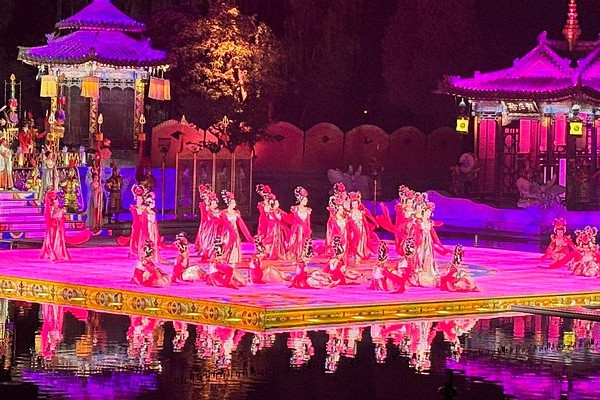
Song of Everlasting Sorrow
An extraordinary open-air spectacle staged on the lake of Huaqing Palace itself. Hundreds of performers re-enact the doomed love story of Emperor Xuanzong and Yang Guifei against a backdrop of real mountains, water reflections, and dramatic lighting.
 Nightlife
Nightlife at Muslim quarter
Return to the Muslim Quarter after dark and experience a completely different atmosphere. The red lanterns glow deeper, the crowds thicken, and the food stalls roar back to life with even more energy than during the day.
City Walls, Culture & Tang Splendour
Xi'anMaking the Most of Day 2 in Xi'an
Start at the South Gate
to rent a bicycle and ride the full 14km circuit of the city walls before the heat
builds - the morning light across the rooftops is extraordinary and the wall is virtually empty at
this hour
Rent bikes at the South Gate rental station
(bring your passport as deposit); allow 1.5–2 hours for the full loop at a leisurely pace
The Giant Wild Goose Pagoda North
Square fountain show runs at set times in the evening - it's one of Asia's largest musical
fountain displays and not to
be missed
Datang Everbright City is purely an evening
destination - arrive after 6pm when the Tang-dynasty costumes, illuminated architecture,
and street performances are in full swing; visiting in daylight strips it of all atmosphere
 City Wall
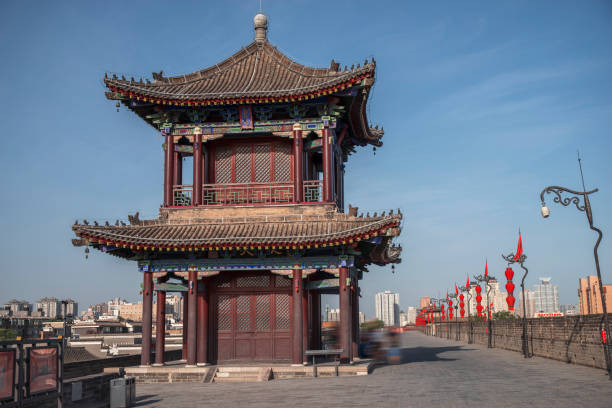
The South Gate
Begin your second Xi'an day at the grandest entrance to the world's best-preserved ancient city wall. The South Gate — known as Yongning Gate — dates from the Ming dynasty and marks the main ceremonial entry into the old city. 🗺️ TOUR
 Bar Street
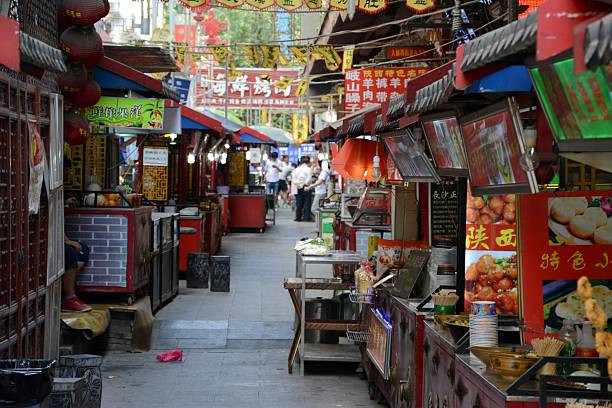
Defu Alley
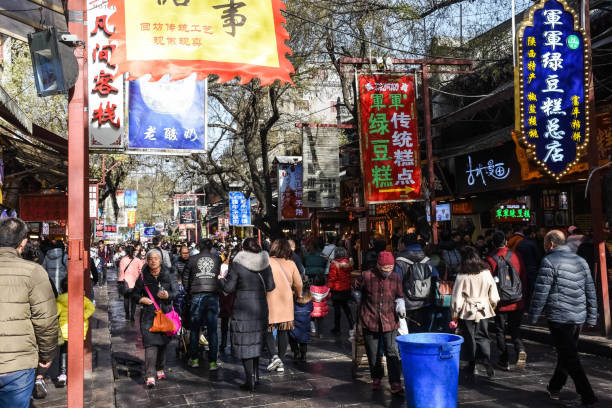
Just inside the South Gate, Defu Alley is Xi'an's most celebrated bar and café lane - a cobbled corridor of heritage buildings repurposed into coffee shops, craft beer bars, and art galleries. By day it's a relaxed spot for a post-wall browse; by night it transforms into one of the city's liveliest social hubs.
 Cultural Street
Shuyuanmen Street
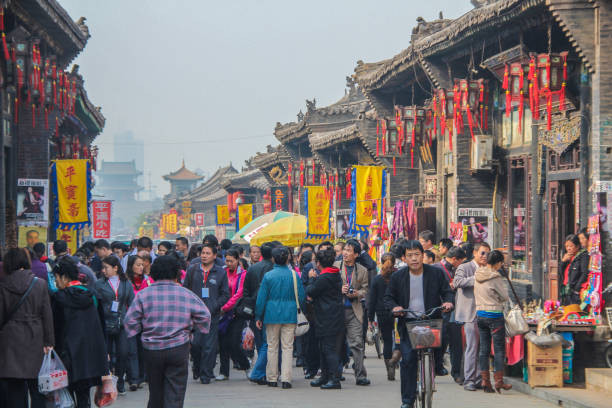
A short walk from the South Gate, this elegant cultural street is Xi'an's hub for traditional arts and crafts. Stone-flagged and lined with studio shops, it specialises in Chinese calligraphy, ink paintings, shadow puppets, and antique rubbings from ancient steles.
 Creative District
Laocaichang District
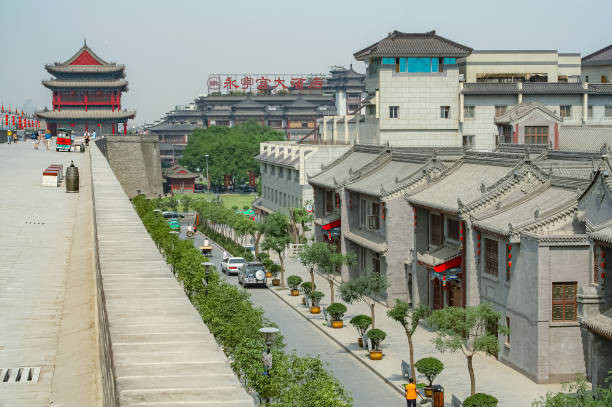
A lovingly restored industrial complex turned creative village, celebrating Shaanxi folk culture through art studios, local design shops, street food stalls, and pop-up performances. The mix of weathered brick, colourful murals, and handmade crafts.
 Neighbourhood
Sajinqiao
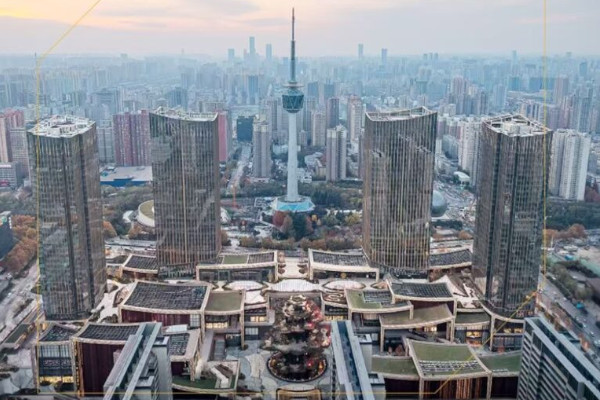
One of Xi'an's most atmospheric old neighbourhoods - a tangle of narrow lanes, traditional courtyard homes, and local eateries that have changed little in decades. Follow the smell of cumin and charcoal, and discover a side of Xi'an that exists far from the tourist trail.
 Shopping
Optional
Shopping
Optional
MixC City
Xi'an's most stylish modern shopping and lifestyle complex - a sleek, multi-level destination with international brands, local designer boutiques, rooftop dining, and some of the city's best contemporary restaurants. A great place to recharge with a meal, or a coffee.
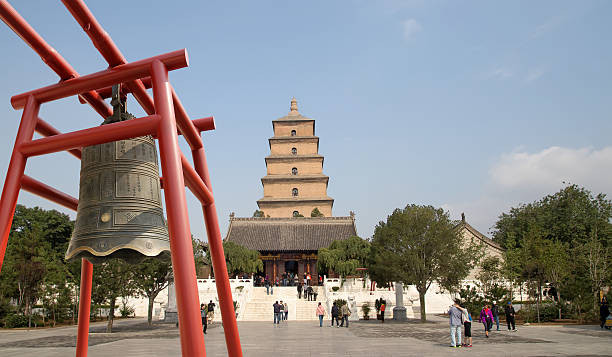 UNESCO Site
Giant Wild Goose Pagoda
One of the most iconic Buddhist monuments in all of China - a 64-metre Tang-dynasty tower built in 652 AD to house sacred scriptures brought from India by the monk Xuanzang. Climb its seven tiers for panoramic views over the city.
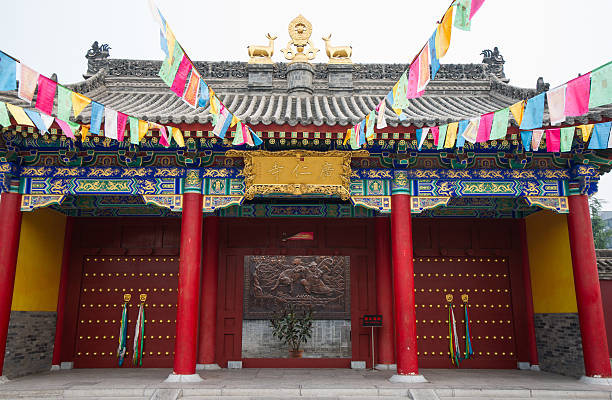 Temple
Daci'en Temple
Sharing its walled complex with the Giant Wild Goose Pagoda, Daci'en Temple is one of Xi'an's most revered Buddhist sanctuaries. Originally built in 648 AD by Emperor Taizong in honour of his mother, it remains an active place of worship.
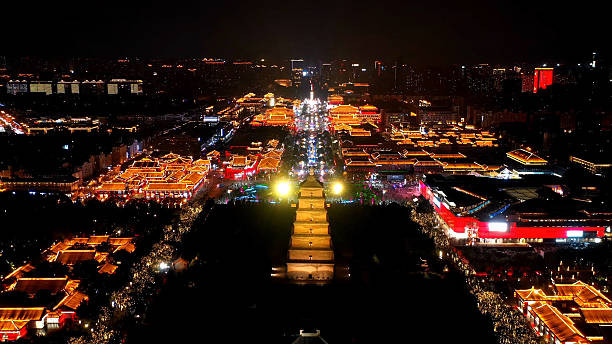 Night Street
Datang Everbright City
As dusk falls, this spectacular Tang-dynasty-themed pedestrian boulevard erupts into colour. Actors in flowing Tang costumes stroll the lantern-lit streets, musicians play ancient instruments, and elaborate light shows project onto classical facades. 🗺️ TOUR
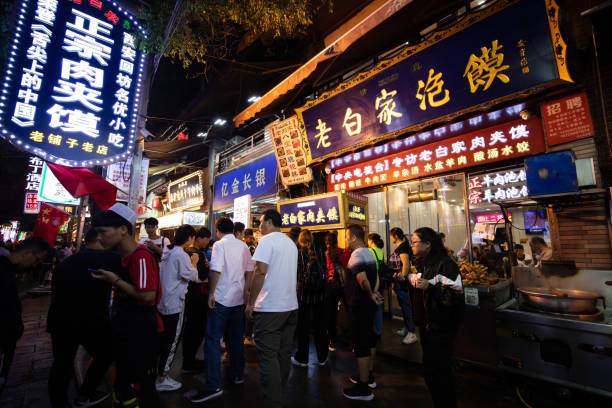 Nightlife
Nightlife at Xiaozhai
The beating heart of the city's younger, modern nightlife. The streets around Xiaozhai are packed with late-night hotpot restaurants, karaoke bars, live music venues, and bubble tea shops buzzing well past midnight. It's loud, fun, and utterly local.
Giant Buddha & City of Contrasts
Leshan → ChengduMaking the Most of Day 1 in Chengdu
Depart for Leshan to catch the first river
cruise of the day and return to Chengdu by early afternoon with enough time for the city stops
The boat approach gives the only perspective that reveals the full scale of the
71-metre figure
Yulin Road is Chengdu's most authentic
neighbourhood for an
afternoon coffee or snack stop - the teahouses and local eateries here are frequented almost entirely
by residents rather than tourists
The Global Center is
worth entering just to experience the scale - it contains an indoor beach, a waterpark, and a cinema
complex inside a single building that is the largest in the world by floor area
Anshun Bridge after 8pm - the lantern reflections on
the Jin River are at their most photogenic
 UNESCO Site
Leshan Giant Buddha
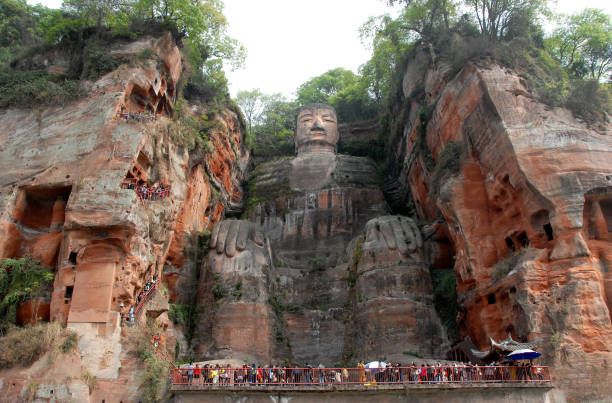
Carved into a red sandstone cliff at the confluence of three rivers, the Leshan Giant Buddha stands 71 metres tall - the world's largest stone Buddha, completed in 803 AD. Take the river cruise for the most dramatic perspective: only from the water can you truly grasp the sheer scale of this ancient marvel.
 Food Street
Wangping Street
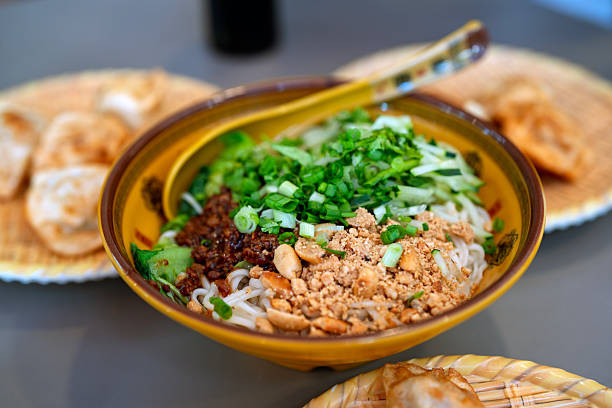
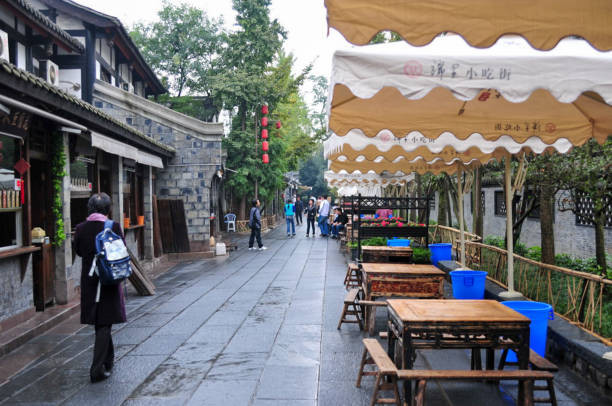
Wangping Street is a favourite among residents for its honest, unpretentious Sichuan staples - mapo tofu, dan dan noodles, skewers slicked in chilli oil, and cold rabbit ears. No tourist menus, no inflated prices; just the real taste of Chengdu street life at its best.
 Neighbourhood
Yulin Road
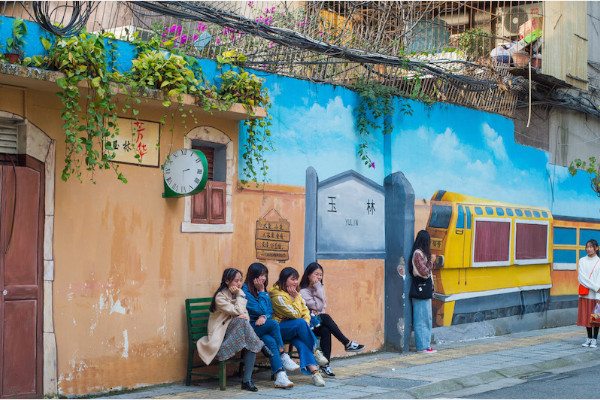
A tree-lined residential boulevard that captures the easy, unhurried soul of Chengdu better than anywhere else. Elderly residents play mahjong outside teahouses, barbers set up chairs on the pavement, and cats nap in potted-plant gardens. Grab a seat at a bamboo-chair teahouse, order a pot of Sichuan jasmine tea. 🗺️ TOUR
 Architecture
Twin Towers
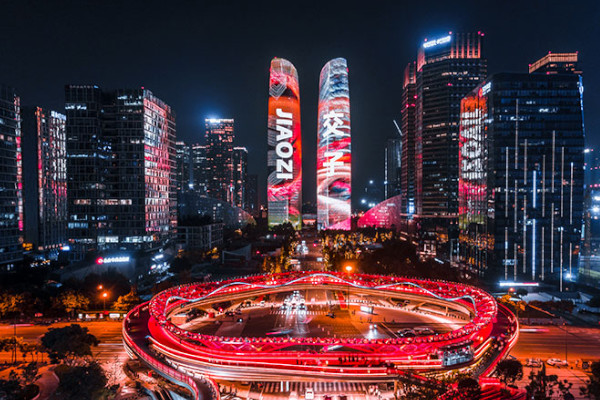
The Chengdu Financial City Twin Towers are the defining icons of the city's modern skyline - two soaring glass-and-steel spires connected by a dramatic sky bridge, rising from the heart of the CBD. Best seen from below as the late-afternoon light catches their facades, or from the surrounding plaza.
 Landmark
Global Center
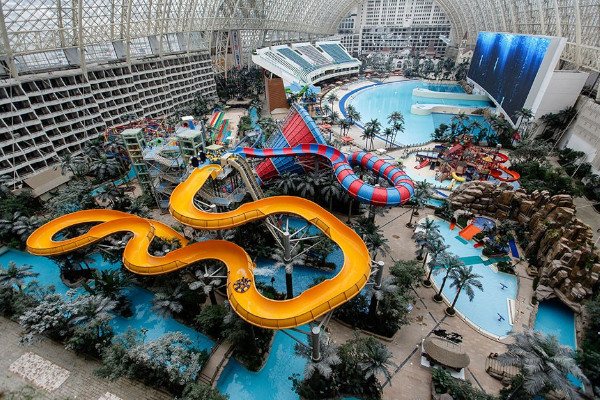
Step inside the New Century Global Center - the largest single building on Earth by floor area. This colossal structure houses a full-sized artificial beach and ocean, a waterpark, an IMAX cinema, hotels, a skating rink, and hundreds of shops and restaurants - all under one roof.
 Luxury Retail
SKP — Tower of Vitality
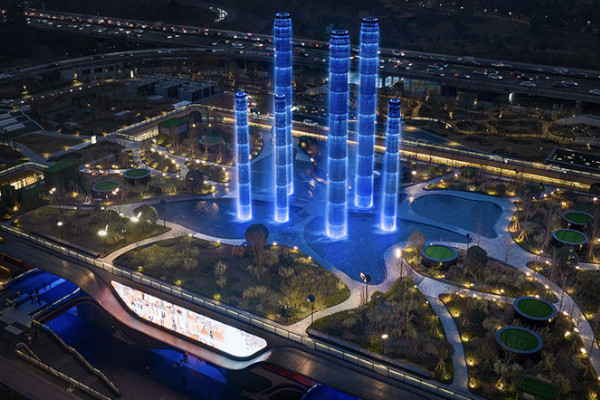
One of China's most architecturally daring retail spaces - a futuristic, organically shaped tower designed by UK studio Sybarite, its spiralling interior clad in shimmering surfaces that blur the line between art installation and shopping mall. The attraction: a visual spectacle of flowing forms.
 Nightlife
Nightlife at Anshun Bridge
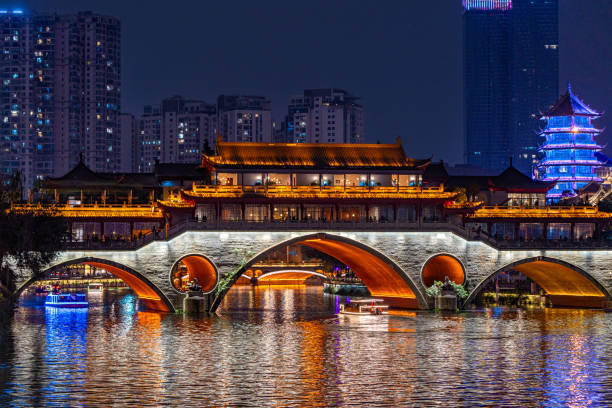
A covered corridor bridge straddling the Jin River, glowing with lantern light and reflected neon on the water below. The surrounding riverside promenade is one of Chengdu's most scenic night spots, packed with bars, open-air restaurants, and live performers. Order a local Qingcheng Mountain beer.
Pandas, Parks & the Heart of Chengdu
ChengduMaking the Most of Day 2 in Chengdu
Start at China Panda
Valley early as pandas are most
active in the early morning and are often asleep or hidden by 11am
Book panda base tickets online well in advance - entry
slots
are strictly capped and sell out days ahead during peak season
People's Park teahouse is the perfect midday
reset - order a
gaiwan tea, sit in a rattan chair, and allow yourself at least an hour of doing absolutely nothing
Wide & Narrow Alleys are best explored before 5pm as
the evening crowds are very heavy; visit Wuhou Shrine and Jinli immediately after as the lanterns come
on at dusk
Save Chunxi Road, Taikoo Li, and Daci Temple
for the evening when the atmosphere peaks, Chengdu's Lan Kwai
Fong stays lively until 3–4am
 Nature Reserve
China Panda Valley
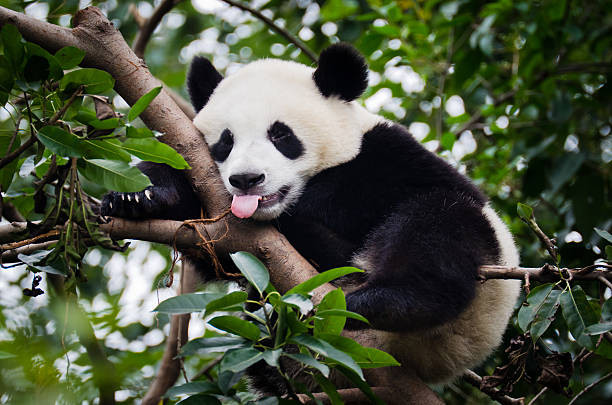
A lush conservation centre home to giant pandas in spacious, forested enclosures that feel nothing like a zoo. Arrive early (before 9am) when the pandas are most active and the morning mist still hangs between the bamboo groves. Watch them tumble, eat, and climb with a contentment that is entirely infectious. 🗺️ TOUR
 Architecture
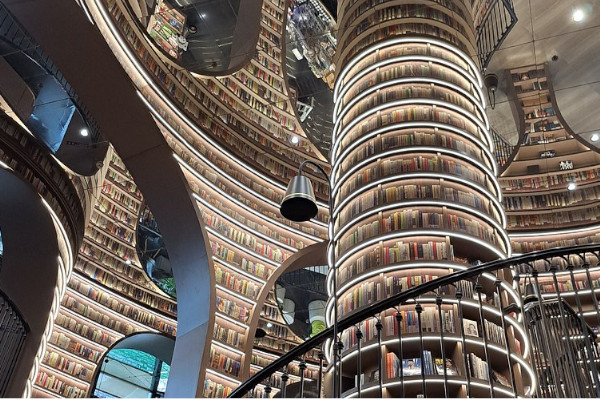
Zhongshuge Bookstore
One of the world's most visually stunning bookshops - a cavernous, dreamlike interior of soaring mirrored shelves, cascading staircases, and undulating walls housing hundreds of thousands of volumes. Designed by X+Living studio, it's as much an architectural installation as it is a place to browse books.
 Bridge
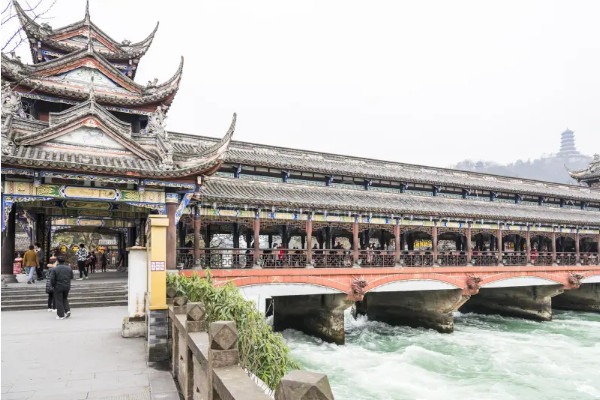
Nanqiao Bridge
A graceful historic bridge spanning the Min River, framed by willow trees and traditional pavilions that have stood since the Song dynasty. In the morning light it offers one of Chengdu's most serene and photogenic scenes - particularly beautiful when reflected in the still water below.
 UNESCO Site
Optional
UNESCO Site
Optional
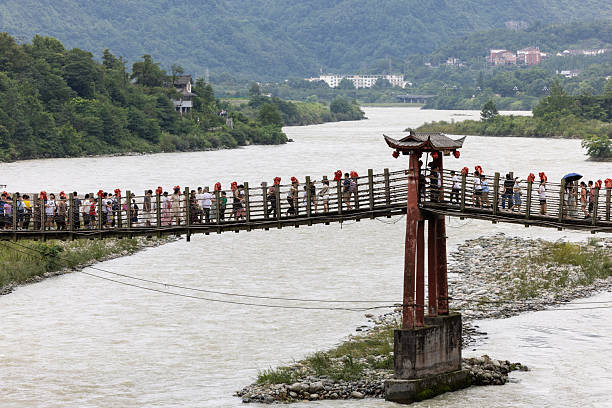
Dujiangyan Irrigation System
Built in 256 BC by engineer Li Bing, this ancient water management system is one of the world's oldest and still fully operational for over 2,000 years without a single dam. Walk the fish-mouth levees above roaring channels, cross suspension bridges, and marvel at an engineering achievement that predates the Roman aqueducts.
 Ancient Town
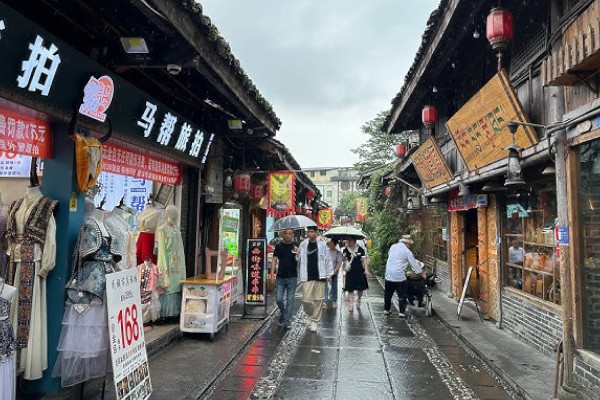
Guanxian Ancient Town
This well-preserved ancient market town retains the character of a Qing-dynasty river settlement. Cobbled lanes wind between wooden shophouses selling local snacks, hand-carved souvenirs, and fragrant dried herbs. Grab a bowl of local beef noodles here before heading back toward the city.
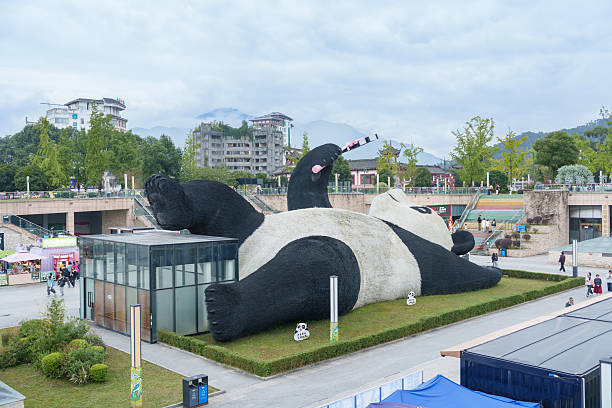 Square
Yangtianwo Square
Designed by Dutch artist Florentijn Hofman (creator of the famous Rubber Duck), this 26-meter-long, 11-meter-wide, and 12-meter-high sculpture weighs 130 tons, making it one of the largest panda sculptures in the world. The playful design features a giant panda lying on its back, holding up a smartphone for a selfie.
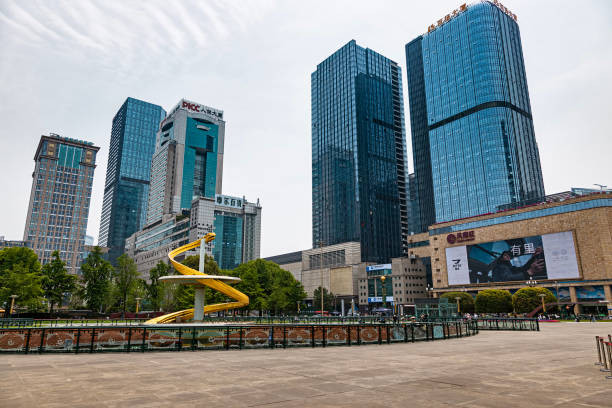 City Center
Tianfu Square
The vast ceremonial heart of modern Chengdu, dominated by a monumental statue of Mao Zedong and ringed by the Sichuan Science Museum, the city government buildings, and the busiest metro interchange in southwest China. It's the symbolic anchor of the city - dramatic in scale and endlessly busy.
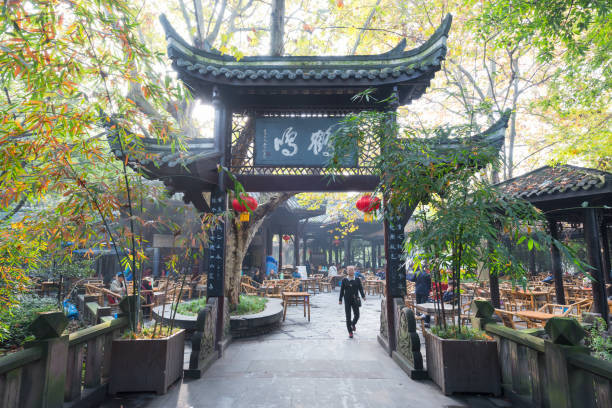 Park
Park
People's Park
Chengdu's most beloved public green space, it's where the city's soul lives. On any given afternoon, the park's lakeside teahouses are packed with locals sipping gaiwan tea in rattan chairs while ear-cleaners offer their services and ballroom dancers twirl on open plazas. The famous "marriage market" runs every weekend. 🗺️ TOUR
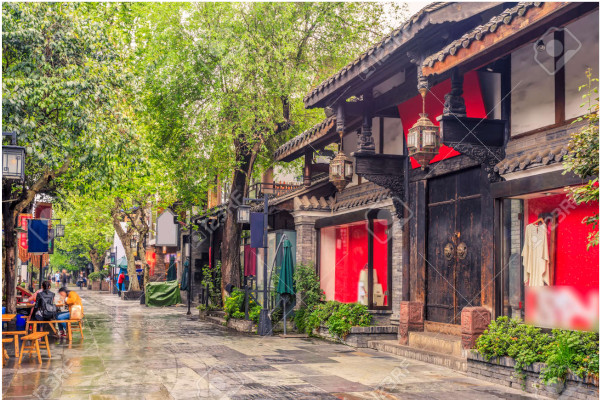 Historic District
Kuanzhai Alley
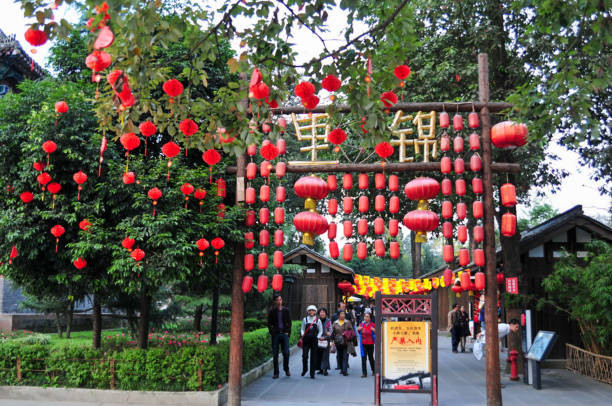
Three parallel lanes of immaculately restored Qing-dynasty courtyard architecture form Chengdu's most iconic historic precinct. Wide Alley (Kuan Xiangzi) is quieter and more refined; Narrow Alley (Zhai Xiangzi) hums with tea shops and craft studios; Well Alley (Jing Xiangzi) is the liveliest, packed with street food and bars.
 Shrine & Street
Wuhou Shrine & Jinli Street
Most visited Three Kingdoms-era memorial honours Zhuge Liang, legendary strategist of the Shu Han kingdom, within a complex of ancient cypresses, moss-covered stone tablets, and ornate red-walled halls. Exit back gate onto Jinli Ancient Street: a lantern-strung corridor of wooden shophouses selling Sichuan opera masks, spiced almonds and rice cakes. 🗺️ TOUR
 Shopping
Chunxi Road
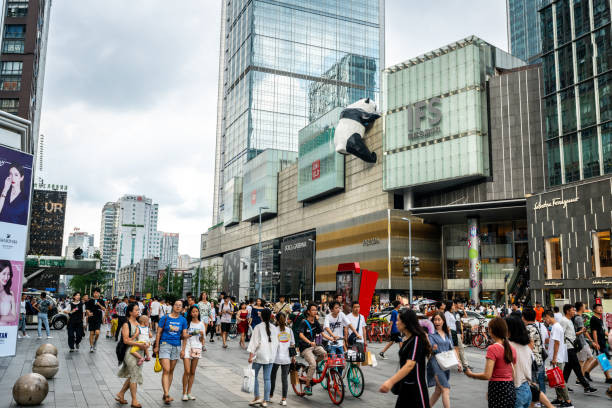
Chengdu's premier pedestrian shopping boulevard has been the city's commercial heart for nearly a century. Today it's a dazzling mix of flagship international stores, local fashion labels, street food vendors, and neon signage that reflects off polished marble underfoot. At night - one of China's great urban spectacles. 🗺️ TOUR
 Lifestyle Complex
Taikoo Li
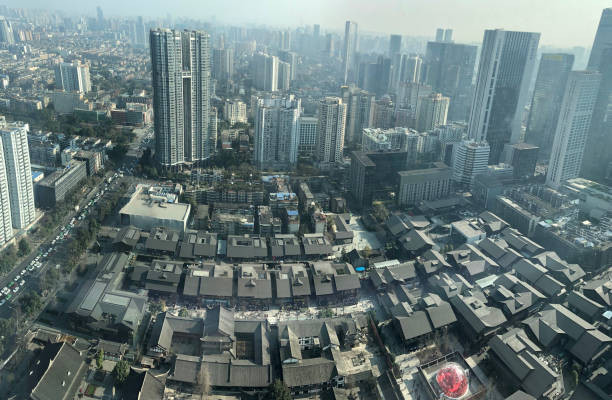
Sino-Ocean Taikoo Li is one of Asia's most admired open-air lifestyle destinations - a low-rise grid of glass pavilions and heritage lane houses wrapped around the ancient Daci Temple. Luxury boutiques, concept restaurants, and design-led cafés spill onto covered walkways.
 Temple
Optional
Temple
Optional
Daci Temple
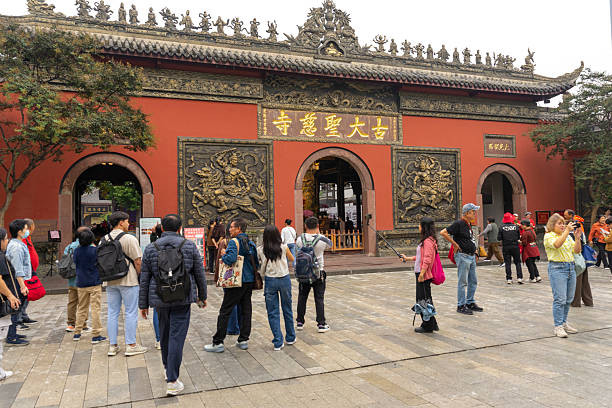
This Tang-dynasty Buddhist temple has stood on this site since the 5th century - a striking counterpoint to the designer boutiques that surround it. The ginkgo trees in its courtyard are over 400 years old. Monks still chant here at dusk; the scent of incense drifts through the space with a calm.
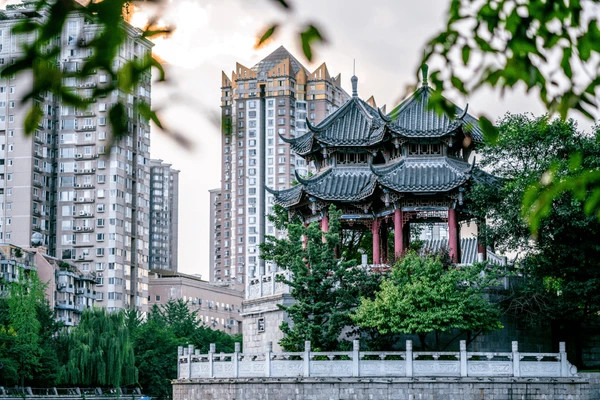 Pavilion
Hejiang Pavilion
A beautifully restored riverside pavilion perched at the confluence of the Fu and Jin rivers — one of Chengdu's most storied spots for poets and scholars throughout history. Today its multiple tiers offer lovely views over the illuminated riverbanks and the willow-lined promenade stretching in both directions.
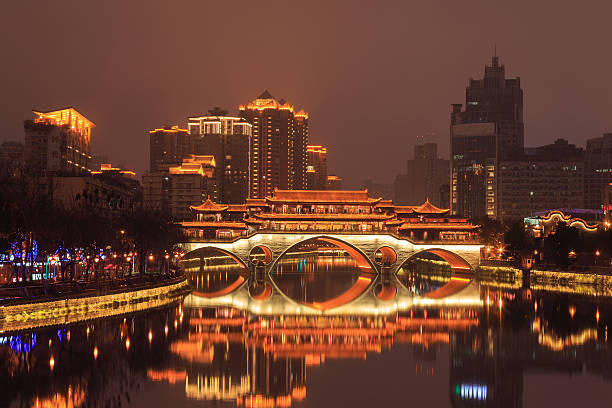 Bridge
Anshun Covered Bridge
Chengdu's most photographed bridge glows magnificently after dark - a traditional covered corridor bridge spanning the Jin River, its red-lacquered railings and paper lanterns reflected in the water below. The scene: lit willows on both banks, river cruise boats passing beneath, and the gentle murmur of the water. 🗺️ TOUR
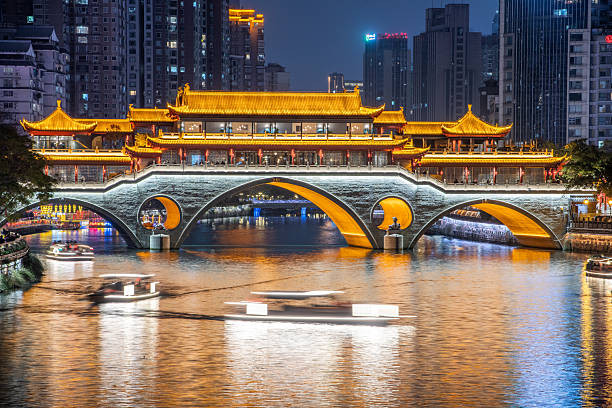 Scenic Walk
Jiuyan Bridge Scenic Walk
A leisurely riverside stroll along the promenade flanking the Nine-Eye Bridge - one of Chengdu's ancient landmarks, originally built in the Ming dynasty with its characteristic nine arches. By night the waterfront buzzes with bar terraces, street musicians, and crowds of young locals.
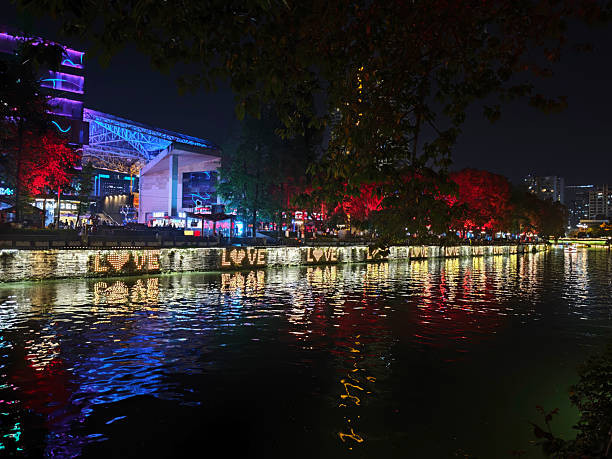 Nightlife
Nightlife at Lan Kwai Fong
Named after the legendary Hong Kong nightlife district - is a concentrated strip of high-energy bars, live music clubs, and outdoor terraces that stays packed well into the early hours. The crowd is young, international, and infectiously enthusiastic, this is where the city comes to celebrate.
The Mountain City — Chongqing Unfiltered
ChongqingMaking the Most of Your Day in Chongqing
Chongqing is built across steep mountain ridges and river
gorges - comfortable shoes with grip are non-negotiable;
the city involves constant climbing, descending, and navigating wet stone steps
Start at Arhat Temple by 8:30am before the CBD fills with
office workers, then work your way through the Jiefangbei and riverside stops in the morning while the
city is at its most navigable
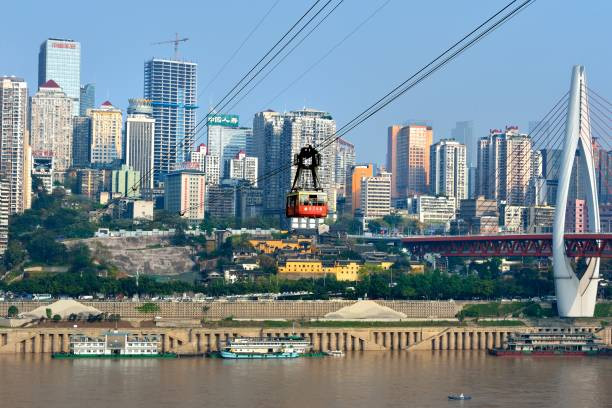
The Yangtze River Cableway runs
from Xinhua Road station on the Yuzhong side to Longtou Temple on the south bank; the late afternoon
crossing westbound has the best
light on Hongya Cave
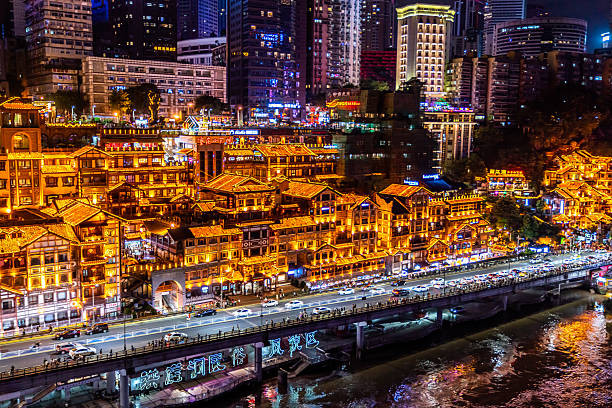
Hongya Cave is best visited between
7-9pm when fully illuminated but before the peak evening crowd; arrive at Jiangbeizui Park
opposite first to photograph it from across the river
Book the
WFC observation deck tickets online in advance and aim for the 8-9pm slot for the most
dramatic night views
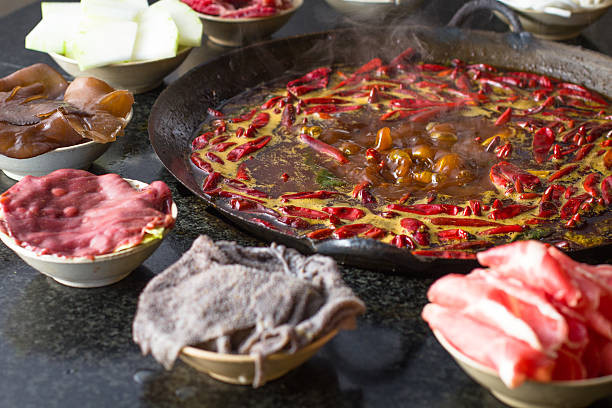
Chongqing's famous mala hotpot is a mandatory
dinner experience - the spice level is genuinely intense; order "mild" (微辣)
Nine Street does not get going until after midnight - eat late,
start the night late
 Temple
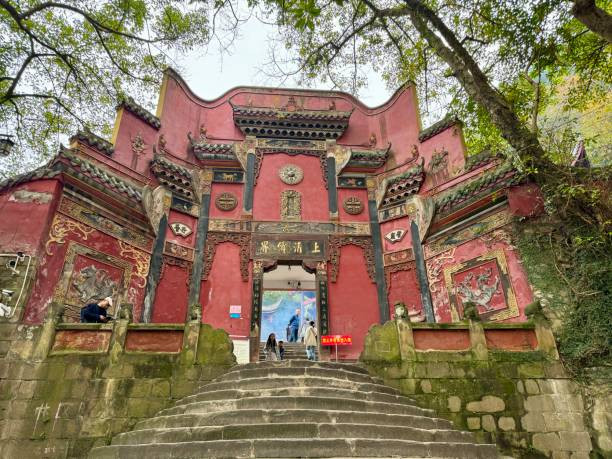
Arhat Temple (Luohan)
Hidden in a canyon of skyscrapers in the very heart of Chongqing's CBD, this ancient Buddhist temple has survived since the Song dynasty. Its most famous feature is the Hall of 500 Arhats - a tunnel of life-sized clay monks, each with a completely unique, uncannily expressive face.
 Landmark
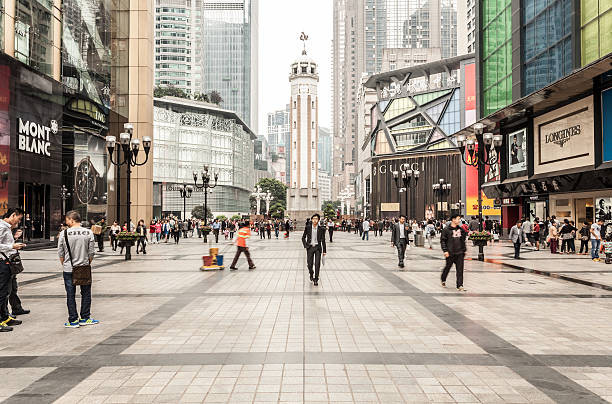
Liberation Monument
The soaring Jiefangbei clock tower - built in 1947 to commemorate victory over Japan - stands at the absolute epicenter of Chongqing's commercial district, surrounded by a galaxy of luxury boutiques, department stores, and Chongqing's legendary hotpot restaurants. It's the busiest pedestrian intersection in southwest China.
 Arts Center
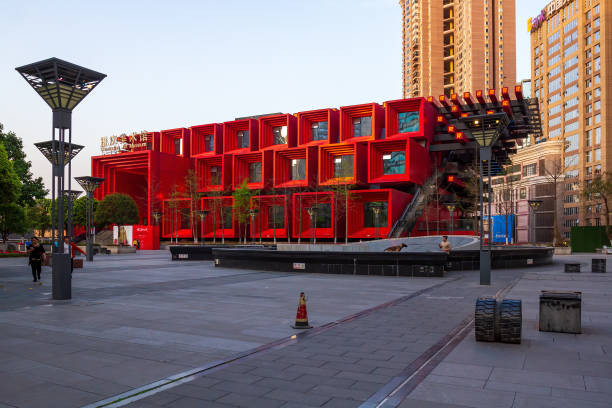
Guotai Art Center
A striking piece of contemporary architecture rising dramatically from the hillside near the CBD - its interlocking red-lacquered steel frames reference traditional Chinese window lattice at an enormous scale. Home to the Chongqing Grand Theatre and a concert hall, the building is worth seeing from the outside alone.
 Pavilion
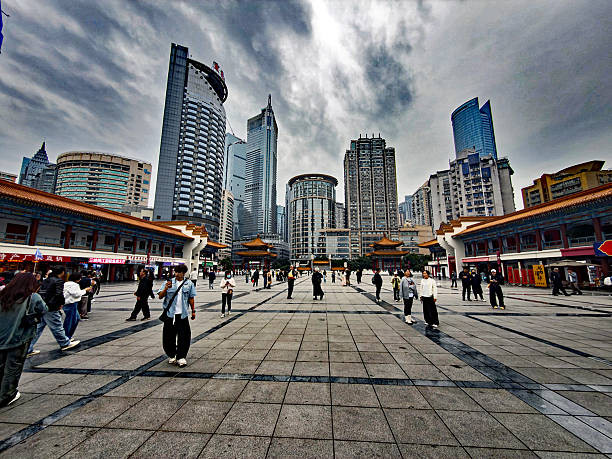
Kuixinglou
As you walk along, you might think you're on the first floor, but you're actually on the 22nd, showcasing Chongqing's magical "8D" terrain. The most amazing part is not the tower itself but the two suspended pedestrian bridges between the square and an office building, that connect the square's first-floor level to the opposite building's 22nd-floor rooftop.
 Architecture
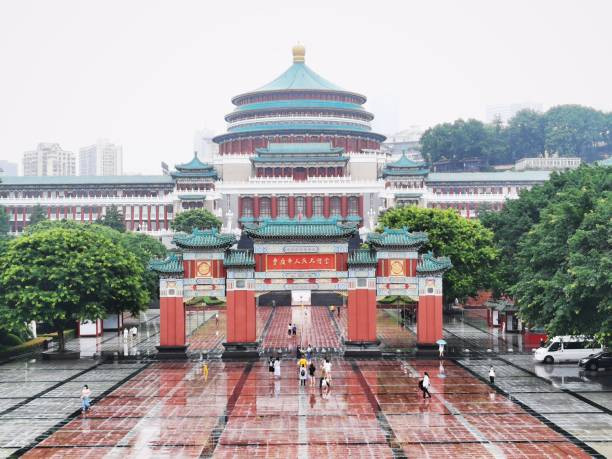
People's Great Hall
One of the most magnificent pieces of architecture in China - a colossal civic auditorium built in 1954, modelled on the Temple of Heaven with a towering cobalt-blue dome, sweeping colonnaded wings, and a vast ceremonial plaza. It remains fully operational as a performance venue and is free to enter during the day.
 Urban Curiosity
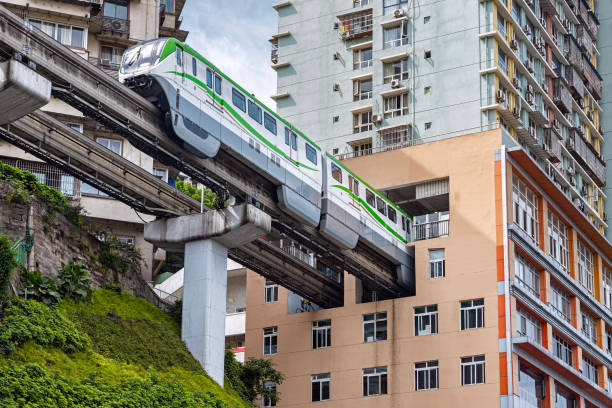
Liziba Subway Station
Only in Chongqing: a monorail that passes directly through the 6th and 7th floors of a 19-storey apartment block. Liziba Station on Line 2 is one of the city's most photographed urban spectacles - trains glide in and out of the building's belly while residents live just metres away on either side.
 Hike & Temple
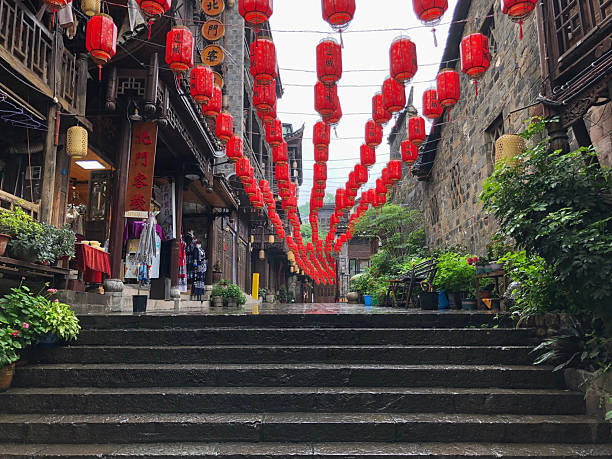
Huangge Road & Laojun Cave
A rewarding hillside trail along an ancient stone-paved road leading to Laojun Cave - a Taoist temple complex carved into the cliff face of Chongqing's southern mountains. Worn stone steps wind past incense-filled shrines, weathered stone carvings, and sweeping views over the city.
 Street & District
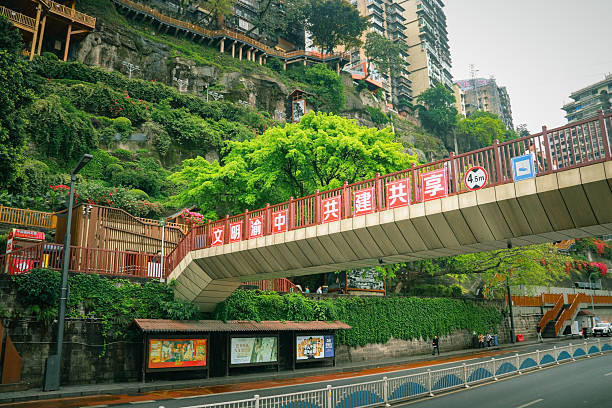
Longmen Road & Xiahaoli
Two adjacent lanes that together capture Chongqing's most creative urban character - Longmen Road with its art studios, vintage shops, and independent cafés built into the hillside terraces, and Xiahaoli with its lantern-hung staircases and street-food vendors selling spicy skewers and cold noodles.
 Cableway
Yangtze River Cableway
One of China's last surviving urban aerial tramways, the Yangtze Cableway has been ferrying commuters and visitors across the river since 1987. As the gondola swings out over the Yangtze at dusk - 120 metres above the churning brown water, the illuminated cliffs of Chongqing rising on both banks.
 Historic Steps
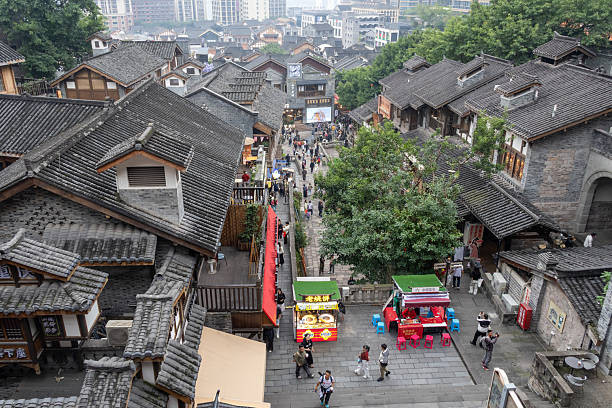
Shibati (Eighteen Stairs)
An ancient stone staircase descending from the upper city down to the Yangtze riverbank - one of Chongqing's oldest and most storied thoroughfares, recently restored as a living museum of wartime and Republican-era architecture. Teahouses, old barber shops, and 1940s-style canteens line the terraced descent.
 Historic Complex
Hongya Cave (Hongyadong)
Chongqing's most iconic image: an 11-storey stilted wooden complex clinging to a cliff above the Jialing River, ablaze with golden lantern light at night. Inspired by the ancient diaojiaolou stilted architecture of Chongqing's mountainous hinterland, Hongyadong houses restaurants, bars, and boutiques across its cascading terraces.
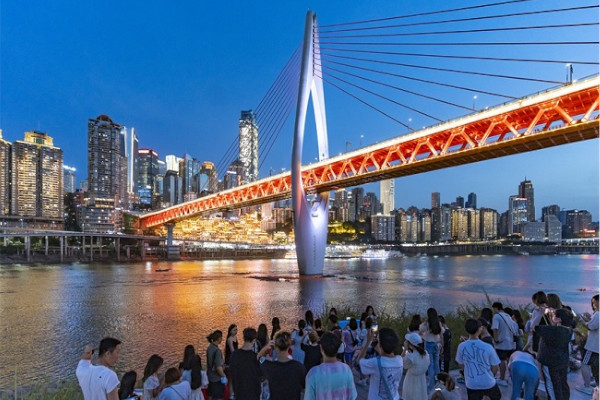 Riverside Park
Jiangbeizui Riverside Park
Cross to the north bank and walk the sweeping Jiangbeizui promenade - a beautifully landscaped riverside park offering some of the finest panoramic views of Chongqing's skyscraper-studded peninsula skyline. As the towers illuminate at dusk and the Yangtze reflects the glow, the scale of this mountain city becomes breathtakingly clear.
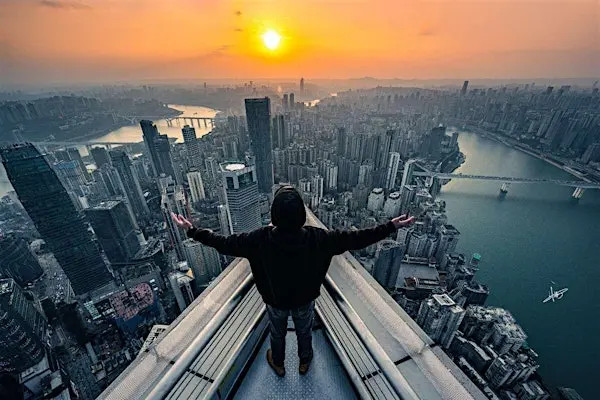 Observation Deck
Sky View at WFC Huixianlou
Ascend to the 73rd floor of the World Financial Centre - Chongqing's tallest building - for a 360° night view that may be the most dramatic urban panorama in all of China. The city sprawls across mountain ridges, rivers, and gorges in every direction, a sea of light stretching to the horizon.
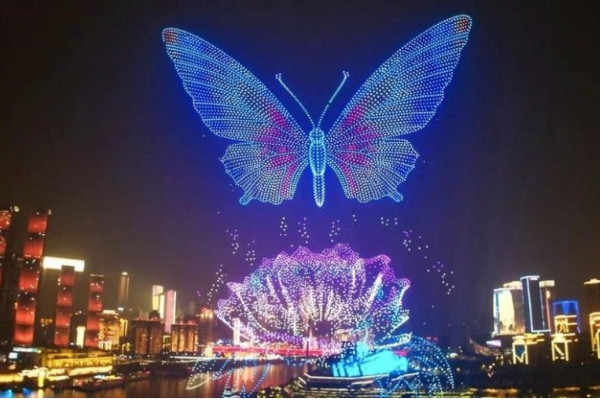 Spectacle
Drone Show
Chongqing stages one of the world's most spectacular drone light shows - thousands of illuminated drones forming animated shapes, characters, and city landmarks across the night sky above the Yangtze. The show holds multiple Guinness World Records.
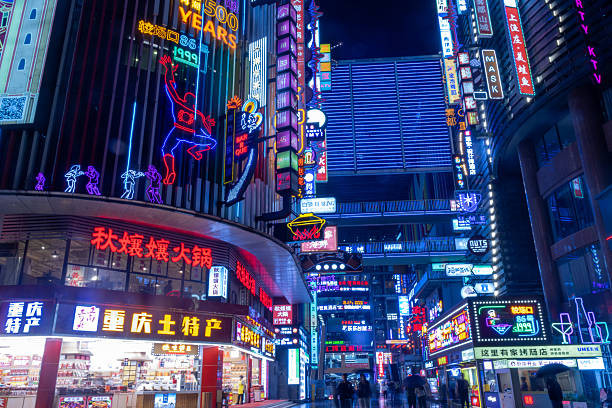 Lifestyle Complex
Deyi World
A high-concept entertainment and dining district that bills itself as a 24-hour city within a city - terraced open-air plazas lined with concept restaurants, immersive art installations, live music stages, and rooftop bars.
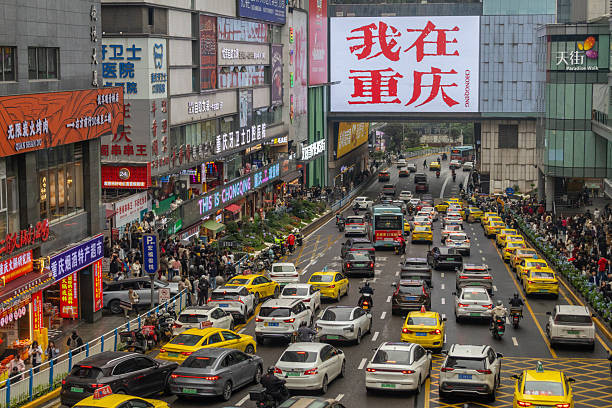 Shopping Street
Guanyinqiao Pedestrian Street
Chongqing's second great commercial boulevard - wider, more local, and arguably more alive than Jiefangbei at night. Department stores, street food stalls, and neon-lit bubble tea shops line a kilometre of pavement teeming with evening shoppers.
 Nightlife
Ninth Street (Jiujie)
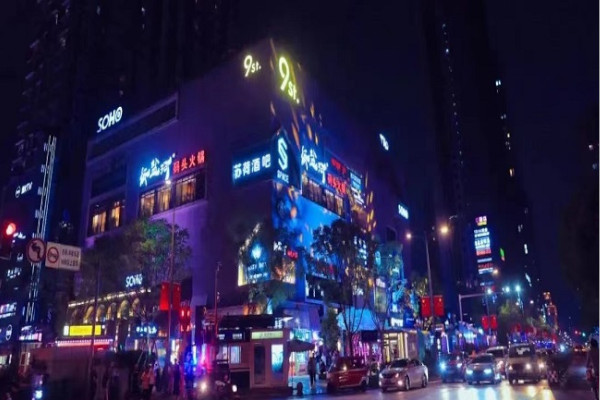
Chongqing's most celebrated nightlife corridor occupies a riverside stretch that comes fully alive after midnight. Nine Street's bars, rooftop clubs, and open-air terraces attract a passionate local crowd who take their nightlife as seriously as their hotpot.
Avatar Mountains & Ancient Towns
Zhangjiajie · Fenghuang · Furong TownMaking the Most of Day 1 in Zhangjiajie
Start at Tianmen Mountain early to board the first cable
car before queues build; the mountain can absorb 3–4 hours
easily and you will want the full morning for it
Book Tianmen
Mountain tickets online in advance - the all-inclusive pass covers the cable car, shuttle
buses, and glass walkway and is significantly cheaper than buying components separately
The glass walkway fills quickly after 10am; head there
immediately
upon reaching the summit before exploring the rest of the plateau
Tianmen Mountain A: Cable car⬆️Upper station⬆️Yunmengxian
Peak⬇️Upper station➡️West line⬆️Tianmen Temple➡️East line
⬇️Tianmen Cave⬇️999 Steps⬇️Shuttle down
Fenghuang Ancient Town and Furong
Town are each 2–3 hours from Zhangjiajie city and are best treated as a dedicated separate
day trip or overnight stay rather than add-ons to an already full day
 Scenic Area
Tianmen Mountain
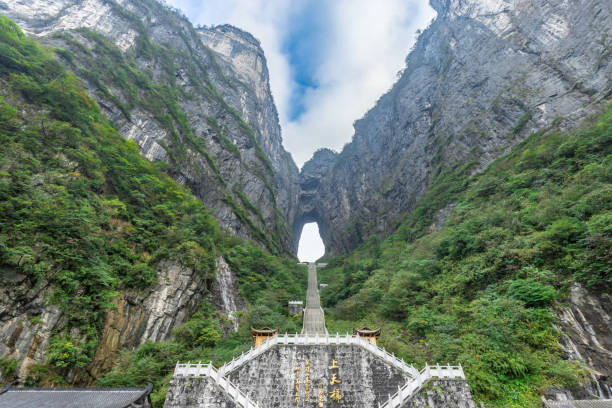
World's longest passenger cable car - a 7.5km ride ascending through clouds to the summit plateau of Tianmen Mountain. At the top, the dizzying glass-floored walkway clings to a vertical cliff face 1,400 metres above the valley floor, and the legendary Tianmen Cave - a natural arch large enough to fly planes through. 🗺️ TOUR
 Scenic Area
Optional
Scenic Area
Optional
Grand Canyon
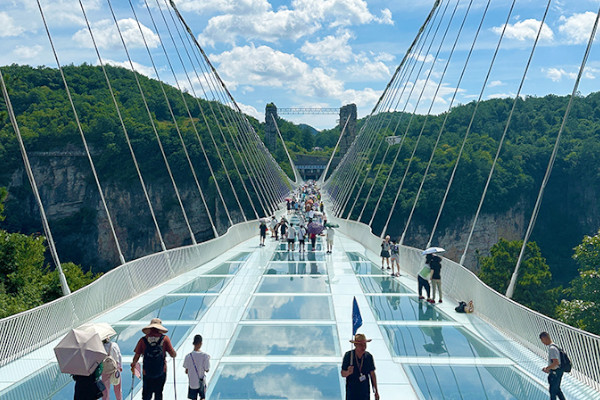
Grand Canyon is a magnificent gorge of emerald pools, hanging forests, and mist-covered cliffs - crowned by the world's longest and highest all-glass suspension bridge, stretching 430 metres above the canyon floor. Walking it on a clear day is one of the most exhilarating things you can do in China.
 Ancient Town
Fenghuang Ancient Town
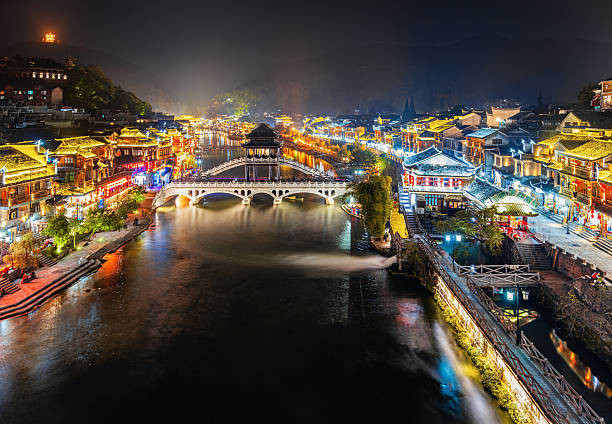
One of China's most beautifully preserved ancient towns - a living Ming and Qing-dynasty settlement of stilted wooden houses (diaojiaolou) rising on pillars directly from the Tuojiang River. Red lanterns reflect on the dark water, stone bridges arch between the banks. 🗺️ TOUR
 Ancient Town
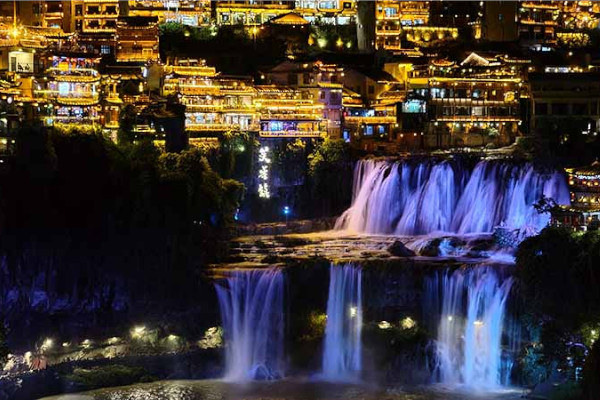
Furong (Hibiscus) Town
A breathtaking Tujia minority settlement built across a series of terraces beside a 60-metre waterfall that thunders through the centre of town - one of the most dramatic settings of any ancient town in China. 🗺️ TOUR
 Cultural Complex
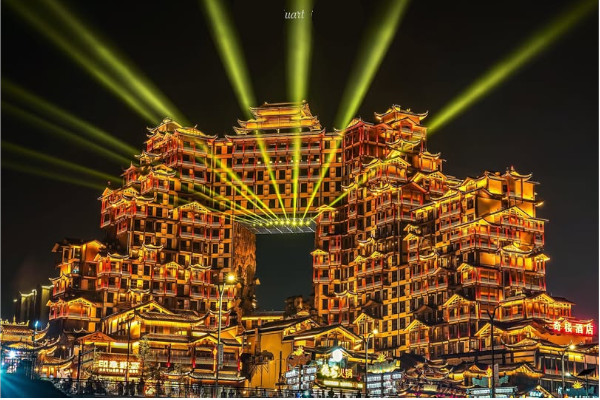
72 Scenes Building
Multi-storey cultural and entertainment complex built into the cliffside of Zhangjiajie, named after the 72 legendary peaks of the Tianmen Mountain. Comes alive after dark - its facade lit in cascading colours, its terraces offering elevated views over the illuminated canyon town below. Inside, the complex houses live folk performances celebrating Tujia and Miao minority culture: acrobatic shows, traditional music, fire dancers, and dramatic theatrical recreations of local legend.
A World That Shouldn't Exist
Zhangjiajie National Forest ParkMaking the Most of Day 2 in Zhangjiajie — National Forest Park
Expect 15–20km of walking across uneven
stone paths, steep staircases, and mountain trails at altitude; Wear proper hiking shoes, carry water,
and bring layers as summit temperatures are 5–8°C cooler than the valley
Arrive at Wulingyuan gate by 7am - the park opens at
7:30am and
the first cable cars fill within minutes of opening
The 4-day
park pass (valid across all zones, cable cars, and the Bailong Elevator) is the only
sensible option even for a single full day - buy it online before arrival
Route A: East Gate➡️Tianzishan cable car⬆️Tianzi Mountain
area➡️Yangjiajie area➡️Yuanjiajie area⬇️Bailong Elevator➡️Golden Whip Stream➡️Huangshizhai cable
car⬆️Huangshi⬇️Huangshizhai cable car➡️South Gate
The Bailong Elevator queue can reach 45–60 minutes at
peak times
(10am–2pm) - time your descent to avoid this window if possible
Pack a packed lunch or snacks - park restaurants
are expensive, limited, and slow; the Golden Whip Stream walk has no food options for its entire 7.5km
length
 UNESCO World Heritage
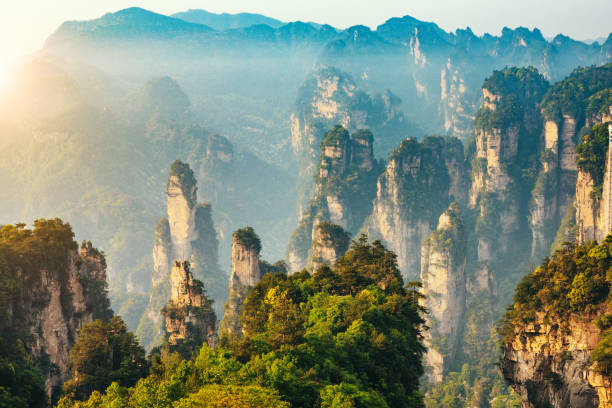
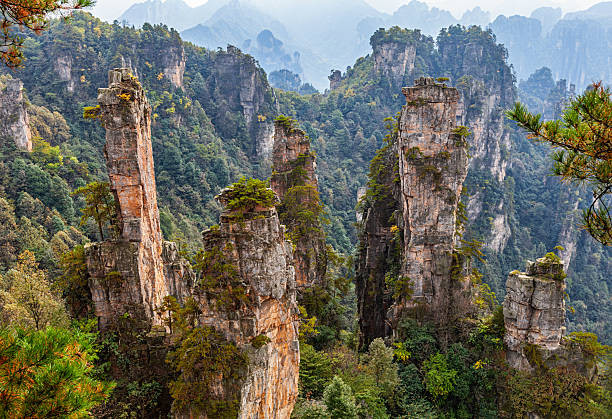
Zhangjiajie National Park
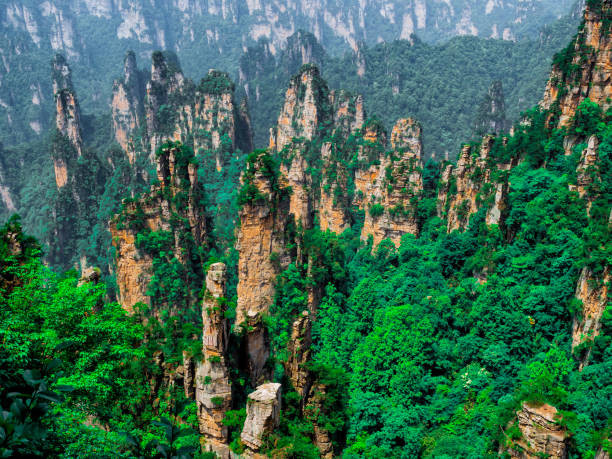
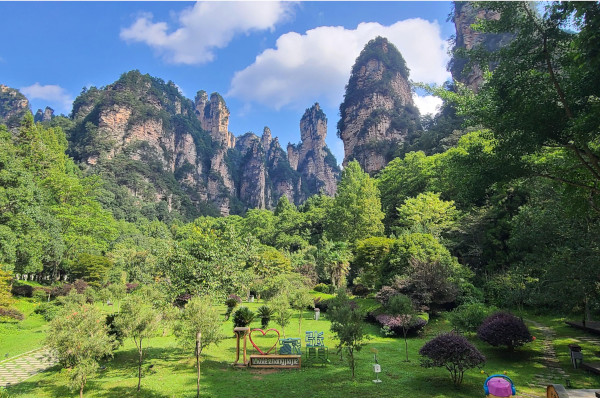
The park that inspired James Cameron's Pandora in Avatar. Over 3,000 quartzite sandstone pillars rise vertically from the forested valley floor, some exceeding 200 metres, draped in hanging vegetation and drifting cloud. No photograph prepares you for the reality. 🗺️ TOUR
 Scenic Zone
Tianzi Mountain
The northern summit zone of the park offers the grandest elevated perspectives — cable car to the top, then walk the ridge-line trails past the Avenue of Stars and the Imperial Brush Peak viewpoints. When cloud fills the valleys between the pillars here, the scene resembles ink-wash paintings that the landscape itself seems to have inspired.
 Scenic Zone
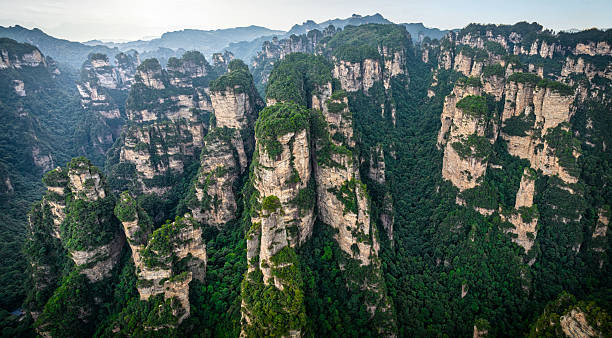
Yangjiajie Scenic Zone
The quietest and least visited of the park's major zones - and for that reason one of the most rewarding. Yangjiajie's sandstone pillars are denser and more tightly clustered than Yuanjiajie, creating a more claustrophobic, primeval atmosphere as you walk the ridge trails between formations that lean and tower overhead.
 Scenic Zone
Yuanjiajie Mountain
The Southern Sky Column, renamed Hallelujah Mountain after Avatar's release, floats above the gorge like a geological miracle. Walk the cliff-edge boardwalks to First Bridge Under Heaven and Fairy Tale Terrace for the park's most surreal panoramas.
 Engineering Wonder
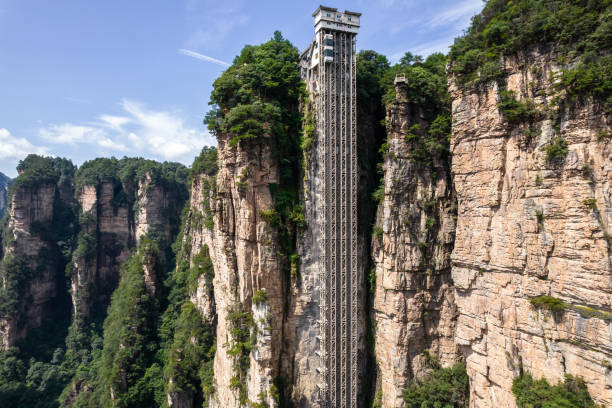
Bailong Elevator
The world's tallest and heaviest outdoor elevator - a glass-fronted double-deck lift scaling 326 metres of sheer cliff face in under two minutes. Descending in the glass cabin, the sandstone pillars spread out at eye level in every direction as the valley floor rushes up to meet you.
 Forest Walk
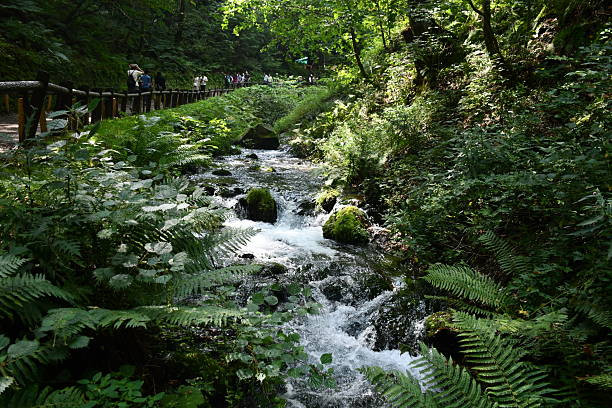
Golden Whip Stream
A 7.5km trail following a crystal-clear stream through the valley floor between towering pillars. Macaque monkeys swing overhead, pheasants cross the path, and the sandstone formations close in on both sides as the late-afternoon light filters through the canopy.
 Summit Viewpoint
Optional
Summit Viewpoint
Optional
Huangshi Zhai
The highest accessible viewpoint in the entire National Forest Park at 1,048 metres - and the one that rewards the most strenuous approach. The trail ascends 3,878 stone steps carved directly into the cliff face; the climb takes 1.5–2 hours but the panorama from the summit plateau is unmatched.
Karst Peaks & Lantern-Lit Rivers
GuilinMaking the Most of Your Day in Guilin
Solitary
Beauty Peak - the climb to the summit takes only
15 minutes but the views over the city and Li River are best in the soft morning light before haze
builds
The
Sun and Moon Pagodas are worth visiting twice — briefly
in the morning to appreciate the lakeside setting, and again after dark from the cruise boat when they
are fully illuminated
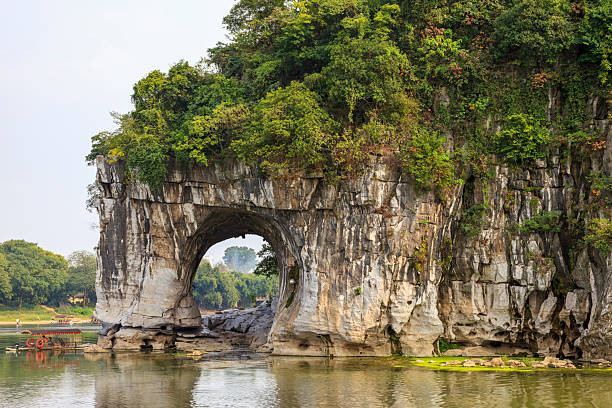
Elephant Trunk
Hill is best photographed from the opposite bank of the Li River rather than from inside
the park - the elephant shape is only clearly visible from a distance and the exterior view is free
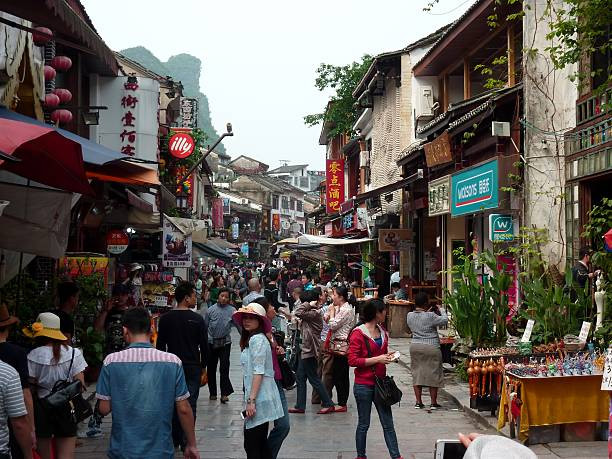
Allow a full 1.5 hours for East & West Alleys - eat
dinner here before the night market; the local Guilin rice noodles (mifen) served in the alley
restaurants are among the best in the city and far cheaper than Zhengyang
Road
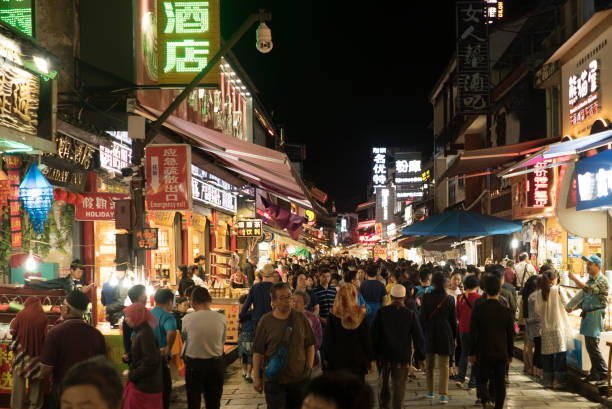
Zhengyang Night Market is for browsing and
atmosphere rather than eating - the street food quality is variable; stick to drinks, snacks, and
souvenir shopping here
 Historic Site
Beauty Peak & Prince City
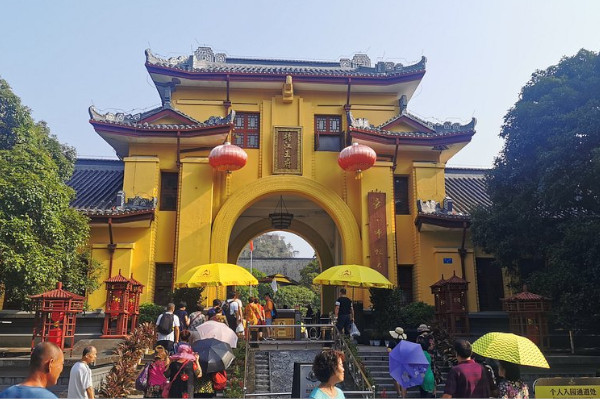
A single limestone pinnacle rising 152 metres from the centre of the city - Guilin's most recognisable landmark and the literal heart of its former Ming-dynasty royal complex. The Jingjiang Prince City surrounds the base: a remarkable walled precinct of ceremonial gates, ancient trees, and stone-carved inscriptions stretching back 600 years.
 Historic Tower
Xiaoyao Tower
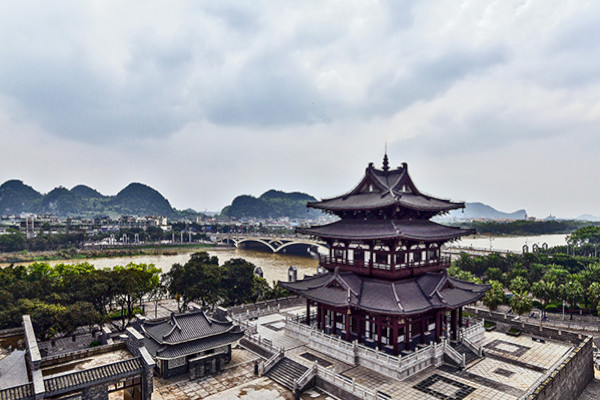
Perched on a riverside promontory between Jiefang Bridge and Fubo Hill, this graceful Tang-dynasty pavilion has been a place of literary gathering and scenic contemplation for over 1,300 years. Poets of the Tang and Song dynasties wrote verses here gazing out at the Li River. The restored tower offers lovely views over the river and the karst peaks.
 Landmark
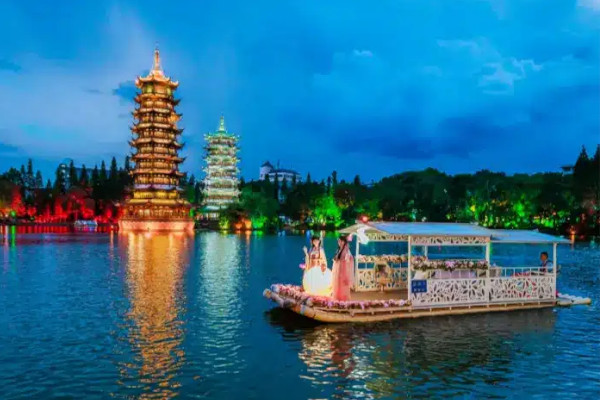
Sun and Moon Pagodas
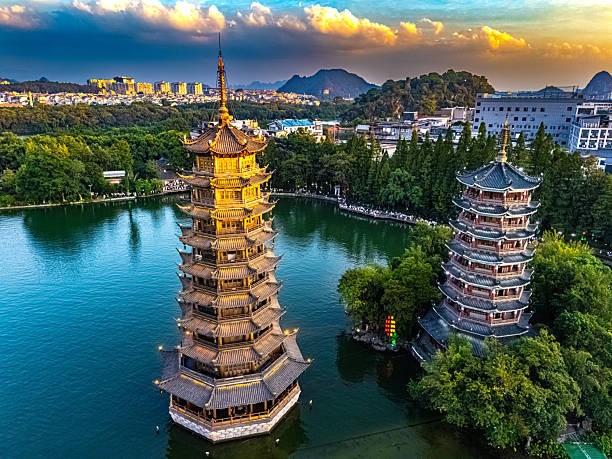
Twin pagodas rising from Shanhu (Fir) Lake in the heart of the old city - the golden Sun Pagoda and the silver Moon Pagoda connected by an underwater tunnel, making this one of the most distinctive architectural compositions in southern China. By day their reflections shimmer on the lake surface; after dark they become Guilin's most photographed illuminated landmark.
 Natural Landmark
Elephant Trunk Hill
Guilin's most beloved natural symbol - a limestone formation that has eroded over millions of years into the uncanny likeness of an elephant drinking from the Li River, its "trunk" forming a perfect arch over the water. The park surrounding it is peaceful and verdant, with caves honeycombing the rock and Song-dynasty carvings hidden in the cliff faces.
 Historic District
East & West Alleys
Two parallel pedestrian lanes of immaculately preserved Republican-era architecture that together form Guilin's most charming historic precinct. The alleys are lined with craft workshops, local snack stalls, Guilin rice noodle shops, and small galleries. The East Alley (Dong Xiang) is quieter and more refined; the West Alley (Xi Xiang) is livelier.
 Night Market
Zhengyang Night Market
As evening falls, Guilin's main pedestrian boulevard ignites with lantern light and the smell of grilled river fish, spiced tofu, and sweet osmanthus wine - the city's signature fragrance. Browse the night market stalls for local crafts, painted fans, and Guangxi silk, then walk south along the Li River Waterfront Promenade.
 Night Cruise
Night Cruise
A one-hour electric boat cruise through the system of interconnected lakes and rivers that loop through the old city. The Sun and Moon Pagodas, the solitary karst peaks, and the ancient bridges are all illuminated in spectacular fashion, their reflections stretching across the still dark water as the boat glides silently beneath them.
River Life & Karst Magic
YangshuoMaking the Most of Your Day in Yangshuo
Start the Yulong River
bamboo raft early - the mist sits lowest on the water at dawn and the karst peaks are
most dramatic in the early light; by 10am the river fills with tourists
Arrange your raft operator the evening
before through your hotel or a local guesthouse - independent operators offer the same
experience at half the price of tour agency packages and give you more flexibility
Rent bicycles in
Yangshuo town for the Ten-Mile Gallery - the route is flat, clearly signed, and takes 1.5–2
hours at a relaxed pace; electric bikes are available if you prefer
The Internet-Famous Swing has queues of 20–40 minutes by
mid-morning - visit immediately after the Ten-Mile Gallery while numbers are still manageable
For
Xingping and Lao Zhai Mountain, hire a driver or take the
local bus from Yangshuo bus station (40 min, ~€1.50) and allow the full afternoon - the sunset from
Lao Zhai is one of the most extraordinary natural spectacles
Arrive at Lao Zhai summit at least 45 minutes before
sunset to secure a viewpoint position; the ridge fills quickly on clear days
Book Impression Liu Sanjie tickets well in advance; the
later show is less crowded; Bring a light jacket to the show as it is performed entirely
outdoors on the river and evenings can be cool even in summer
West Street is best enjoyed as a pre-show drink and
browse
rather than a destination in itself - 45 minutes is sufficient before heading to the performance
venue
 River Experience
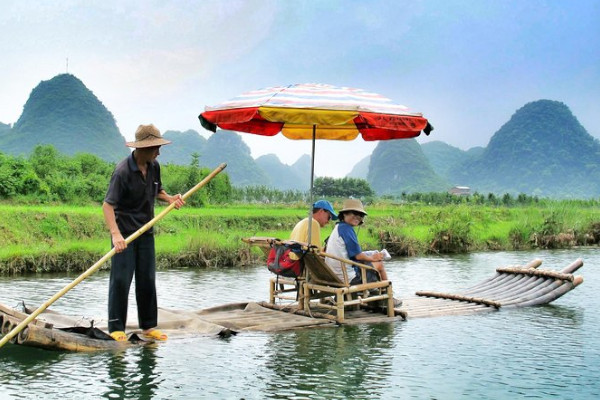
Yulong River Bamboo Rafting
The Yulong River winds through rice paddies and beneath ancient stone arch bridges with karst peaks rising on every side. Your bamboo raft is poled silently downstream by a local boatman; mist drifts off the green water, egrets fish on the banks, and the only sounds are birdsong and the gentle push of the pole. 🗺️ TOUR
 Cycling Route
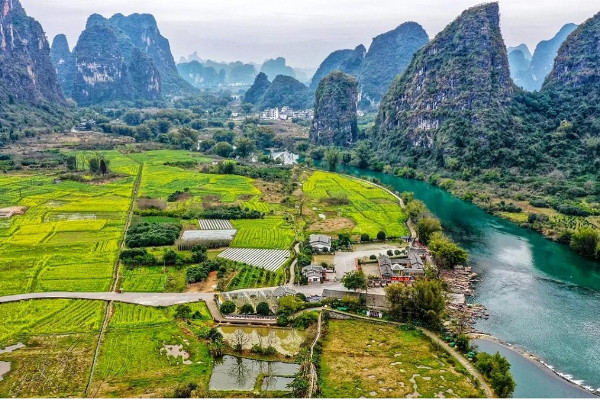
Ten-Mile Gallery
Rent a bicycle and roll along a 10km country road flanked by a continuous panorama of karst peaks, water buffalo in emerald fields, and Zhuang minority villages. The route passes Moon Hill, the Dragon Bridge, and several quiet villages where farmers still work the fields by hand. 🗺️ TOUR
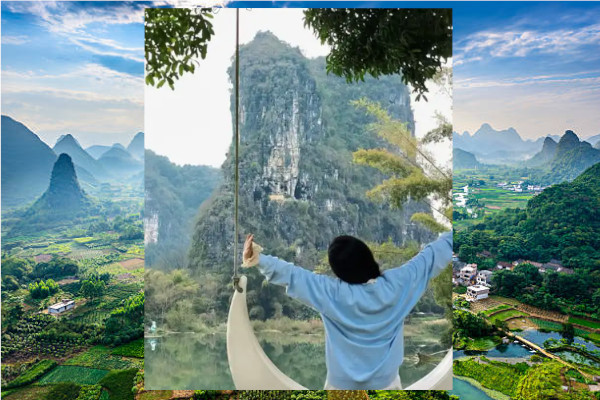 Photo Spot
Internet-Famous Swing
One of the most photographed spots in the Yangshuo countryside - a simple rope swing suspended from a tree on the banks of the Yulong River, with a picture-perfect backdrop of stone arch bridge, river reflections, and karst peaks receding into the haze. It's unashamedly photogenic and completely magical.
 Historic Bridge
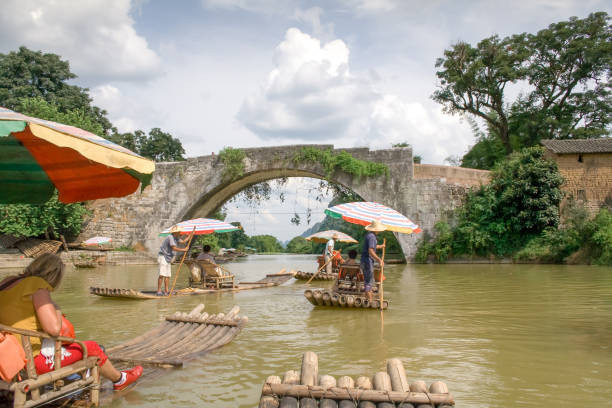
Fuli Bridge
A graceful Ming-dynasty stone arch bridge spanning the Yulong River - one of the oldest and most photogenic bridges in the Yangshuo countryside, beloved by photographers for the way its reflection forms a perfect circle in the water below.
 Ancient Town
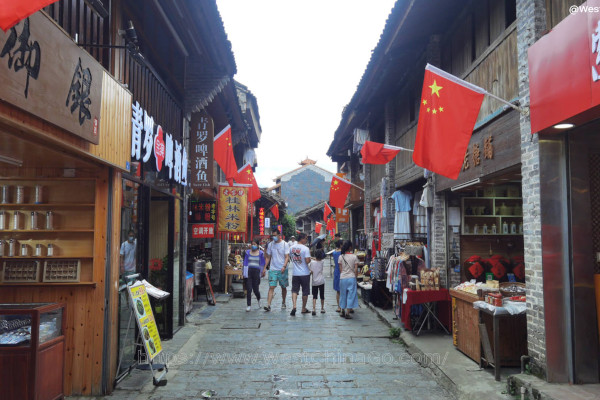
Xingping Ancient Town
A 1,500-year-old fishing town perched on the Li River, surrounded by the most dramatic karst scenery on the entire river. Narrow lanes of weathered Ming-dynasty shophouses wind between the riverbank and the hillside - this is the landscape printed on China's 20-yuan banknote.
 Sunset Viewpoint
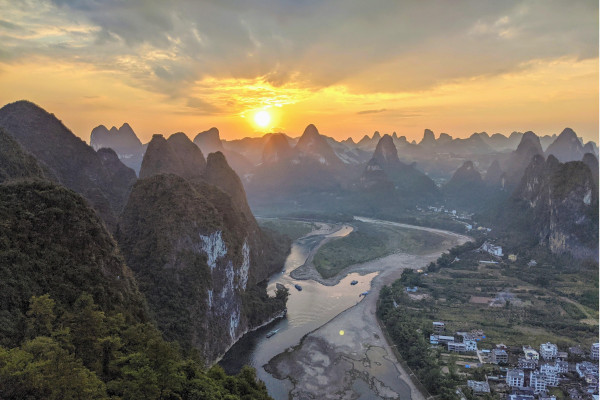
Sunset at Lao Zhai Mountain
A 20-minute climb above Xingping brings you to the most celebrated sunset viewpoint on the Li River. As the sun descends behind the karst peaks, the river below turns molten gold and the silhouetted limestone formations create a panorama of extraordinary, layered beauty. 🗺️ TOUR
 Night Street
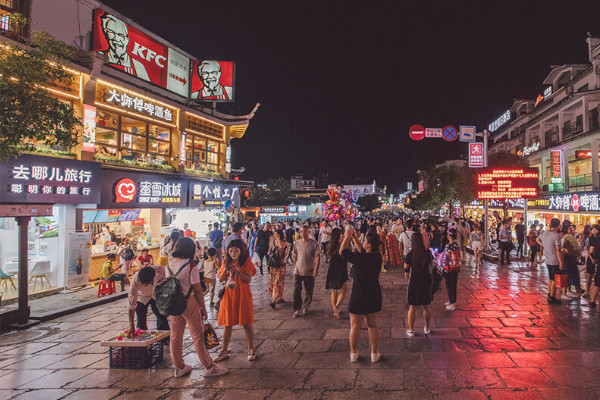
West Street by Night
This ancient cobbled lane is unlike any other in China - a genuine fusion of local Guangxi character and international backpacker energy, where hole-in-the-wall beer bars sit beside Zhuang embroidery shops, and craft cocktail lounges share walls with noodle stalls.
 Performance
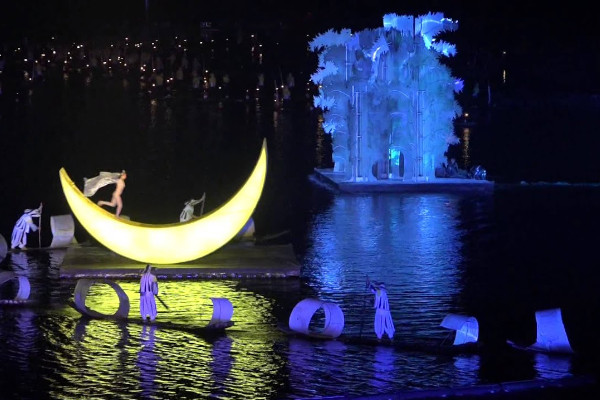
Impression Liu Sanjie
Zhang Yimou's legendary outdoor spectacle uses the Li River itself as its stage and twelve karst peaks as its backdrop. Six hundred performers - fishermen, Zhuang minority singers, and dancers - move across the water in an immersive show of light, music, and ancient folk legend.
Dragon's Backbone & Into Shanghai
Guilin → Longsheng → ShanghaiMaking the Most of Longji Rice Terraces — Day 12
Buy the terrace
entrance ticket at the Longsheng scenic area gate (~€8); this covers access to both the
Jinkeng (Red Yao) and Ping'an (Zhuang) terrace zones.
Take the
shuttle bus from the car park to the upper village trailhead - it saves 40 minutes of steep
road walking each way and costs approximately €2
The best terrace season is
late
May to early June (flooded terraces mirror the sky) and late September to October (golden harvest);
both
offer dramatically different but equally spectacular landscapes
The
Huangluo
hair-combing performance typically runs at 10am, 11:30am, and 2pm - time your visit to
Huangluo village to coincide with one of these slots
Have lunch
on the ridge before descending - the bamboo-tube rice (竹筒饭) cooked over
open
fire in the guesthouse restaurants here is one of the most memorable meals and
costs
almost nothing
Guilin Liangjiang Airport is 30
minutes from the city centre and international check-in closes 90 minutes before departure
 UNESCO Candidate
Longji Rice Terraces
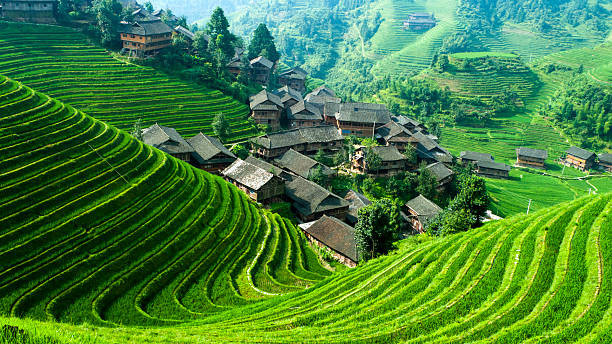
The Longji "Dragon's Backbone" terraces cascade down the mountain slopes in long, undulating ribbons - carved by Zhuang and Red Yao minority farmers over 700 years, rising from 300 to 1,100 metres. The view from the upper ridges, with the terraces sweeping away on all sides and the cloud filling the valleys below. 🗺️ TOUR
 Minority Village
Huangluo Yao Village
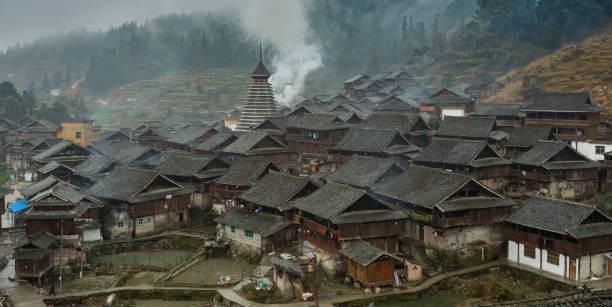
Huangluo is the world's most famous "long hair village" - home to Red Yao women who hold the Guinness World Record for the longest average hair length of any community on Earth. Women here grow their hair to lengths of 1.4–2 metres throughout their lives, cutting it only once at age 18 in a coming-of-age ceremony. Watch the extraordinary daily hair-combing ritual performed in the village square.
 Minority Village
Jinkeng Village
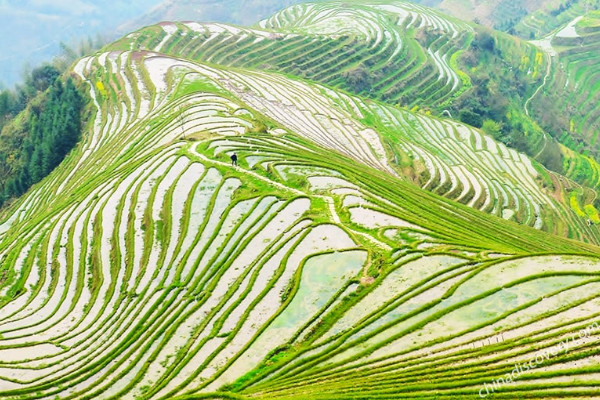
The Jinkeng (Golden Pit) area is the most dramatic section of the terraces, home to the Red Yao minority whose women are famed for their extraordinary hair - grown to floor length and worn coiled in elaborate traditional styles. The panoramic "Seven Stars and Moon" viewpoint here offers the most sweeping terraced landscape in the entire Longji system.
 Minority Village
Optional
Minority Village
Optional
Ping'an Zhuang Village
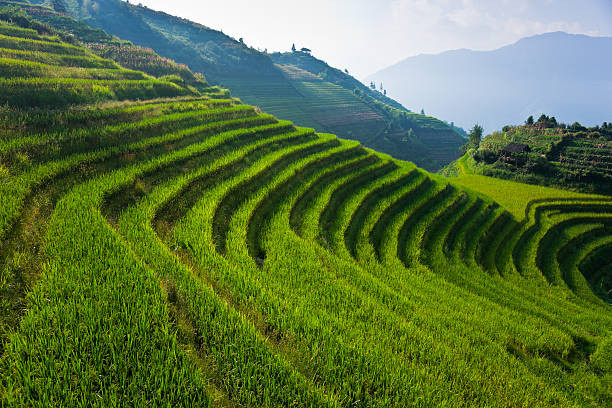
The older and more atmospheric of the two major terrace villages - a Zhuang minority settlement of traditional wooden guesthouses, small restaurants serving bamboo-tube rice and local mountain vegetables, and viewpoints named "Nine Dragons and Five Tigers" and "Two Dragons Playing with Water."
Guilin → Shanghai
Return from the terraces to Guilin by early afternoon and head to Guilin Liangjiang International Airport. The flight to Shanghai Hongqiao or Pudong takes approximately 2 hours, with multiple daily departures. Aim to land by early evening to have time for a first taste of Shanghai at night — ideally approaching the Bund from the Pudong side to see the historic waterfront skyline reveal itself across the Huangpu River.
 Iconic Landmark
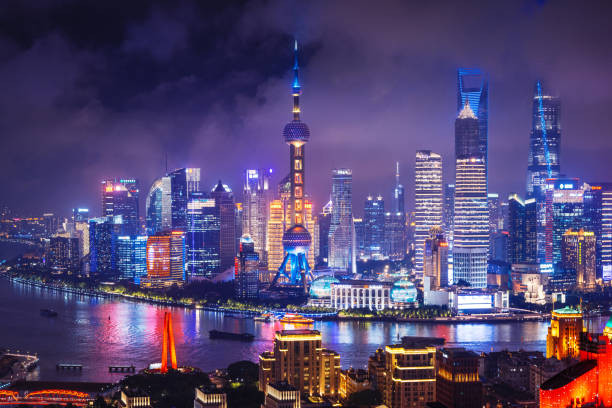
Arrival in Shanghai
The 1.5km waterfront promenade along the Huangpu River is flanked on one side by a parade of 1920s–30s European-style banking palaces and on the other by the futuristic Pudong skyline - the Oriental Pearl Tower, the Shanghai Tower, and the Jin Mao Building blazing across the water.
 Nightlife
Optional
Nightlife
Optional
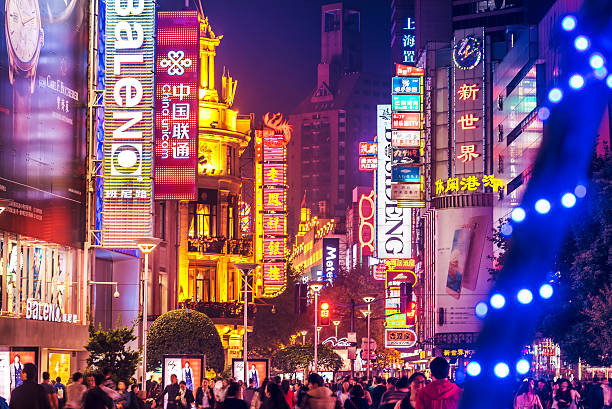
Nanjing Road
A five-minute walk from the Bund, Nanjing Road is China's oldest and most famous shopping boulevard - 5.5km of relentless neon, department stores, street food carts, and crowds that pulse with energy well past midnight. By day it's commerce; by night it becomes theatre.
Two Banks of the Huangpu
ShanghaiMaking the Most of Day 1 in Shanghai
Begin on Nanjing Road
early
before the shopping crowds arrive - the boulevard is most atmospheric in the morning
when delivery workers, tai chi practitioners, and early commuters share the pavement with the first
tourists
The Jinling East Road Ferry
is one of Shanghai's great hidden pleasures - for €0.30 you cross the Huangpu River on a public
commuter boat with unobstructed views of both the Bund and Pudong
Book Shanghai Tower observation deck tickets online well
in
advance - timed entry slots sell out days ahead and the last entry slot of the evening (typically
9:30pm) offers the most dramatic night views
The North Bund area offers
some of the finest unobstructed views of the Pudong skyline from the north - a perspective most
visitors never see - and is worth the morning detour before crossing to Pudong
For the Huangpu River
evening, the Bund promenade between Waibaidu Bridge and the former French Concession
waterfront is best walked from north to south as the Pudong towers are directly ahead of you the
entire way
 Shopping Boulevard
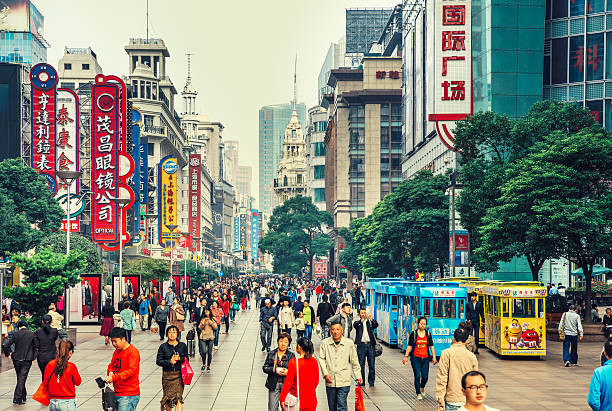
Nanjing Road
By morning light, Nanjing Road reveals a different character - flagship department stores, century-old brands, and the city's most concentrated stretch of urban energy. Walk its full length east toward the Bund, past the Art Deco facades and neon signs, stopping for a local breakfast.
 Historic Bridge
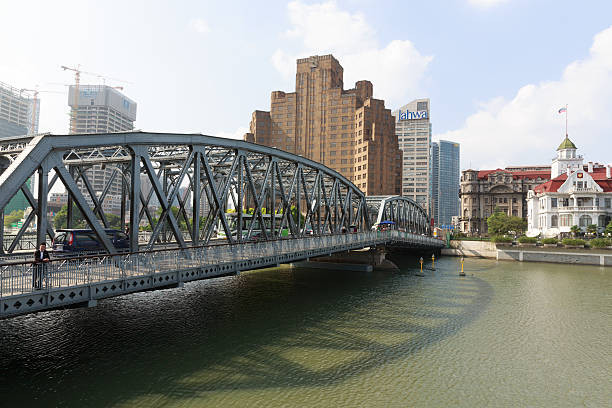
Waibaidu Bridge
At the northern tip of the Bund where Suzhou Creek meets the Huangpu River stands Shanghai's most beloved historic bridge - a 1907 steel truss span that has appeared in more films, photographs, and literary descriptions of the city than any other structure.
 Historic Mansion
Optional
Historic Mansion
Optional
World Reception Room
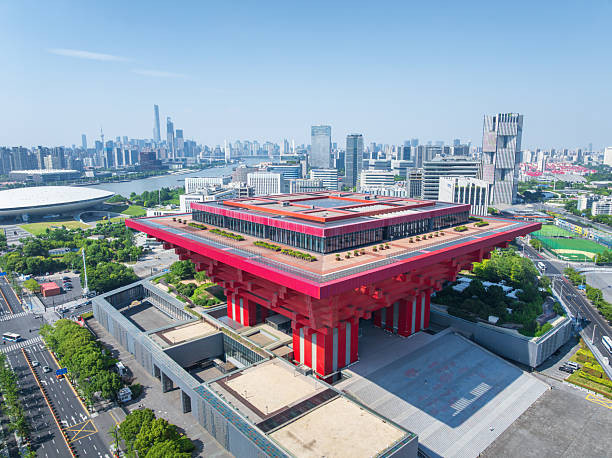
One of the finest surviving examples of Shanghai's golden-age grandeur - a magnificent heritage reception hall used for state banquets and diplomatic functions, its interiors a showcase of gilded plasterwork, hand-laid parquet, and period chandeliers that evoke the cosmopolitan Shanghai of the 1920s and 30s.
 Architecture
Optional
Architecture
Optional
North Bund Guoke Center
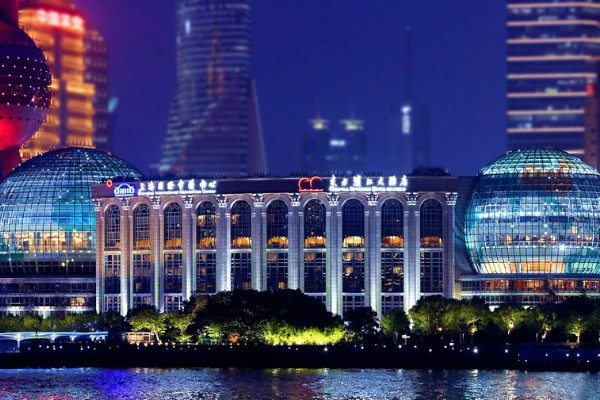
The centrepiece of the North Bund's ambitious regeneration - a sweeping contemporary complex of cultural venues, public plazas, and waterfront promenades that is rapidly becoming one of Shanghai's most exciting new urban spaces. The elevated riverside walkways offer some of the best views of Pudong's skyline.
 Exhibition
International Exhibition
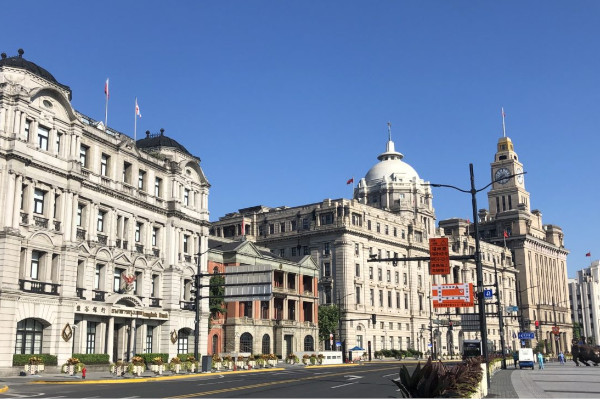
Shanghai hosts some of Asia's most ambitious architectural exhibition programmes - showcasing both the city's own extraordinary building heritage (Art Deco shikumen lane houses, Soviet-era public works, and cutting-edge contemporary towers) alongside international design.
 River Ferry
Jinling East Road Ferry
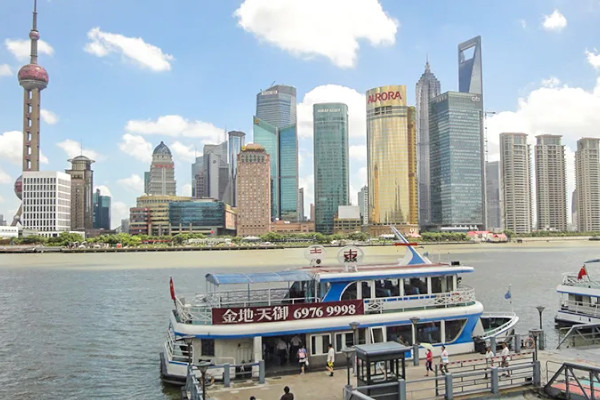
One of Shanghai's great hidden pleasures - a public river ferry crossing that takes just 8 minutes but delivers a front-row perspective of the Huangpu River and both its banks. For the price of a local bus ticket, you float past container ships, river tugs, and cruise liners with the Bund's colonial facade on one side and Pudong's glass towers on the other.
 Skyscraper
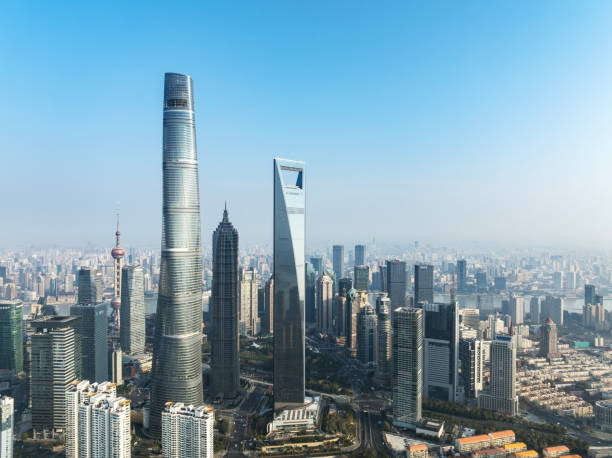
Shanghai Tower
The world's second tallest building and China's tallest — a twisting 632-metre glass spiral that dominates the Pudong skyline and houses the world's highest observation deck open to the public at 546 metres. The express elevator ascends at 20 metres per second, reaching the 118th floor in under a minute. From the top, Shanghai spreads in every direction to the horizon.
 Memorial Hall
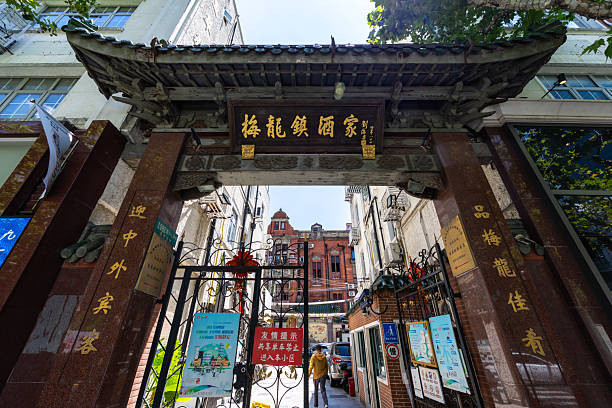
Wu Changshuo Memorial Hall
A refined, contemplative gallery dedicated to Wu Changshuo - one of the most revered Chinese painters, calligraphers, and seal carvers of the late Qing dynasty, whose bold, expressive brushwork bridged classical tradition and modernist energy. The memorial hall occupies a beautifully preserved shikumen lane house in the old city, documenting his extraordinary creative life.
 Art Museum
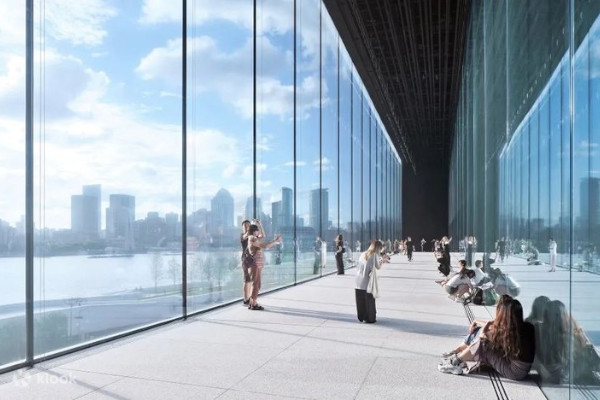
Pudong Art Museum
Cross to Pudong and visit one of Shanghai's newest and most architecturally striking cultural institutions - a monumental white stone building on the waterfront designed by Ateliers Jean Nouvel, its layered facade framing the Bund's colonial skyline like a living painting.
 Nightlife
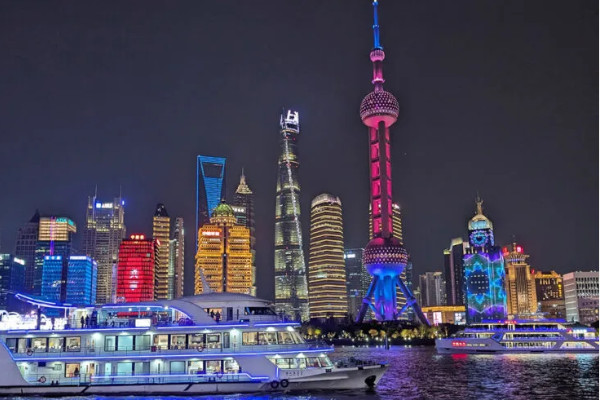
Nightlife at Huangpu
The Bund's bar terraces, rooftop lounges, and riverside restaurants light up after dark, and the view across to Pudong's illuminated skyline - towers reflected in long columns of gold and white across the Huangpu - is one of the great urban night scenes on Earth.
Old Shanghai Soul
ShanghaiMaking the Most of Day 2 in Shanghai
Arrive at Yu Garden early - it is one of Shanghai's most
visited attractions and the difference in crowd
levels between 9am and 11am is dramatic
Buy Yu Garden tickets
online the day before to skip the entrance queue entirely
The City
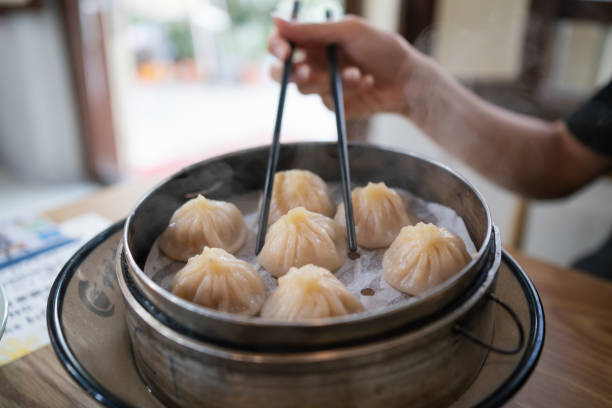
God Temple Commercial Street is best for breakfast - the soup dumpling (xiaolongbao) stalls
and glutinous rice ball shops open early and serve the best versions you will find in the old city
Laoximen and the Old West
Gate neighbourhood are disappearing rapidly to redevelopment - wander the remaining lilong
alleys without a map and accept that getting slightly lost is the point
Xintiandi and Sinan Mansion are best in the early
afternoon
when the lunch crowds have cleared and the stone-lane atmosphere is most relaxed - allow time for a
coffee at one of the heritage courtyard cafés before moving on
Tianzifang becomes very crowded after 3pm on weekends -
arrive
by 2pm at the latest for a manageable Experience
Wukang Road and Anfu Road are at their most beautiful in
the
late afternoon when the plane tree canopy filters the golden hour light - allow at least 45 minutes on
each street
Jing'an Temple is open until 5pm - time your arrival for
4:30pm
to catch the dusk light on the golden rooftops and the evening chanting before the gates close;
Evening lighting hours 6-10pm on weekends
Shanghai's best clubs — Arkham, Taxx, and The Shelter -
do not fill until after midnight; dinner first, then a Bund cocktail bar, then the clubs from 12:30am
onward
 Classical Garden
Yu Garden
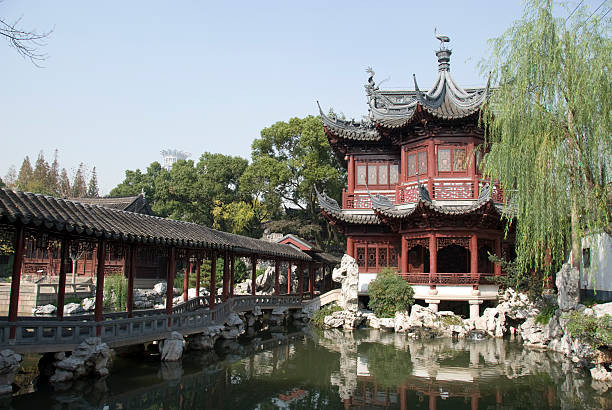
One of China's finest surviving Ming-dynasty gardens - a five-acre masterpiece of rockeries, koi ponds, covered walkways, and moon gates that has remained virtually unchanged for 450 years. The zigzag bridge over the central lotus pond, the Grand Rockery, and the Exquisite Jade Rock are most celebrated features. 🗺️ TOUR
 Temple
City God Temple
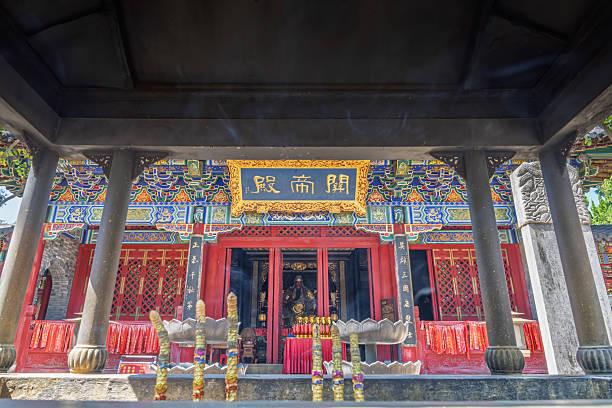
City God Temple (Chenghuang Miao) is Shanghai's most important Taoist sanctuary - a complex of ornate halls, incense-thick courtyards, and gilded deities that has served as the spiritual heart of the old Chinese city since the Ming dynasty. Worshippers light coils of incense before the city's divine protector while fortune-tellers and calligraphers ply their trade at the gate.
 Commercial Street
City God Temple Commercial Street
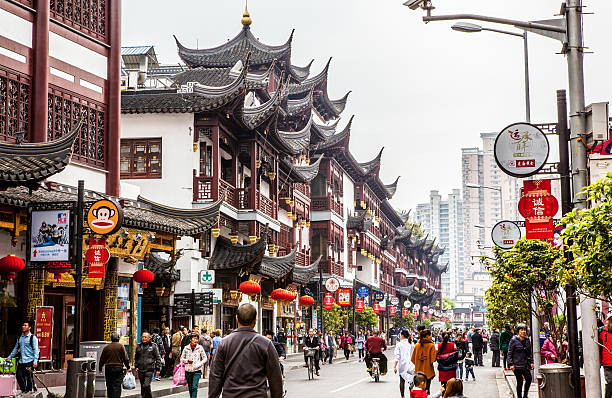
The bustling bazaar surrounding the temple is Shanghai's oldest continuously operating market - a labyrinthine maze of two-storey wooden shophouses selling everything from silk fans and jade carvings to xiaolongbao (soup dumplings), glutinous rice balls, and candied hawthorn skewers. It's overwhelming, joyful, and completely irresistible.
 Historic Gate
Old West Gate
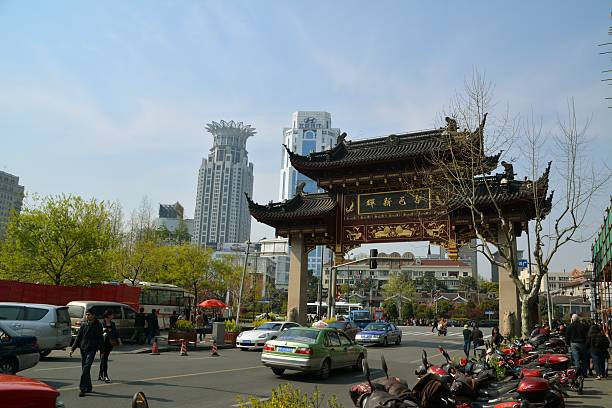
One of the last vestiges of Shanghai's original city wall - a reconstructed Ming-dynasty gate tower marking the western entrance to the old Chinese city. Standing here, it's possible to trace the circular footprint of the ancient walled town that once existed entirely separately from the foreign concessions surrounding it.
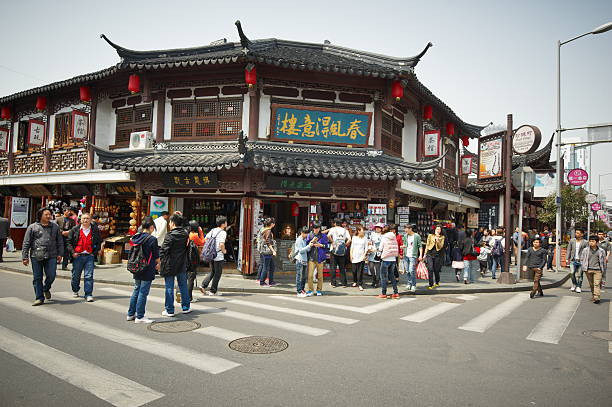 Neighbourhood
Laoximen
The "Old West Gate" neighbourhood immediately around the historic gate is one of Shanghai's most fascinating urban transitions in progress - traditional shikumen lane houses sitting alongside new development, elderly residents doing tai chi in courtyards that have been home to the same families for generations.
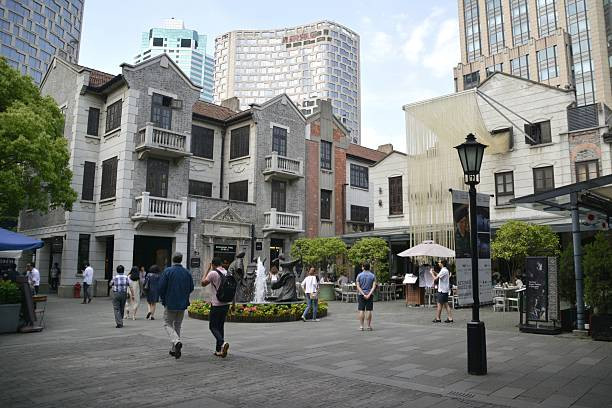 Heritage District
Xintiandi
Shanghai's most successful heritage reinvention - two city blocks of 1920s shikumen stone-gate houses meticulously restored and converted into a upscale pedestrian precinct of restaurants, bars, boutiques, and cultural venues.
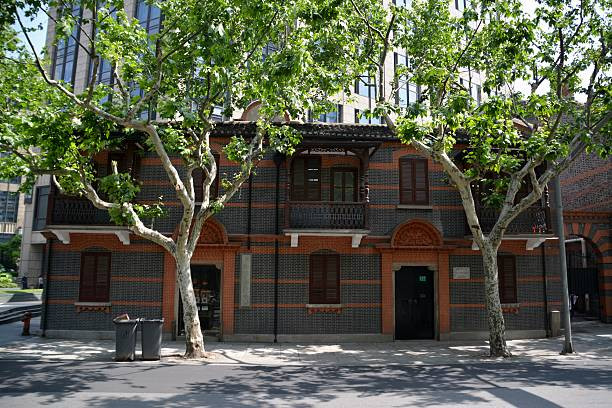 Historic Villas
Sinan Mansion
Sinan Road is lined with an extraordinary collection of 1920s–30s European-style garden villas - former residences of diplomats, industrialists, and literary figures - now repurposed as boutique hotels, concept restaurants, and cultural spaces.
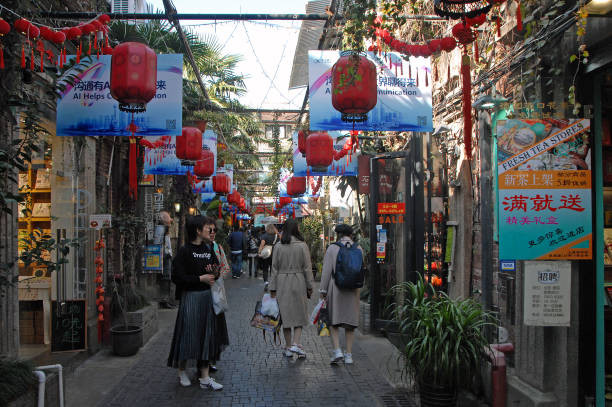 Arts District
Tianzifang
The most labyrinthine and characterful of Shanghai's creative districts - a maze of interconnected shikumen laneways converted organically into studios, galleries, indie boutiques, and hole-in-the-wall cafés. Tianzifang retains genuine spontaneity: residents still live in the upper floors, laundry hangs over alley entrances. 🗺️ TOUR
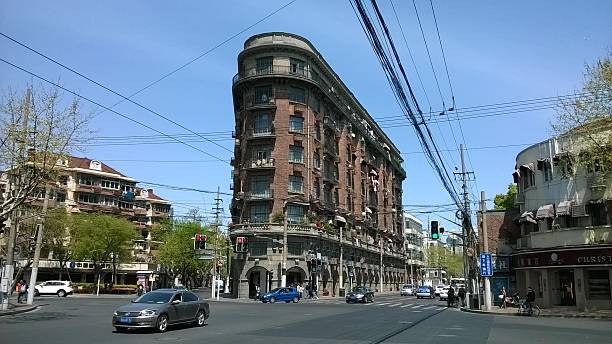 Scenic Road
Wukang Road
Shanghai's most beautiful street - a sweeping boulevard of plane trees and Art Deco heritage buildings that reaches its most photogenic point at the Wukang Mansion, a 1924 curved Renaissance-style apartment building where the road bends. Lined with concept cafés, Japanese-style stationery shops, and neighbourhood bakeries.
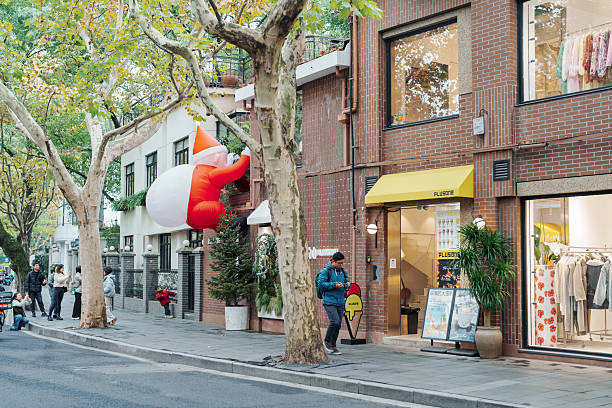 Lifestyle Street
Anfu Road
Anfu Road is Shanghai's most quietly fashionable street - a low-rise canopy of parasol trees shading a string of independent bookshops, natural wine bars, specialty coffee roasters, and designer flower studios. The pace here is slow, considered, and deeply pleasurable.
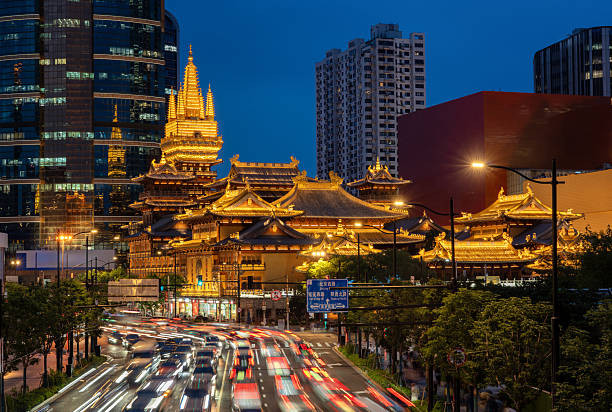 Temple & District
Jing'an District
Shanghai's most cosmopolitan district, anchored by the gilded splendour of Jing'an Temple, whose golden rooftops and sweeping eaves rise incongruously from amid a forest of luxury towers and high-end retail. Light an incense stick at the temple as dusk falls, then step back out into the Jing'an district's brilliant evening energy.
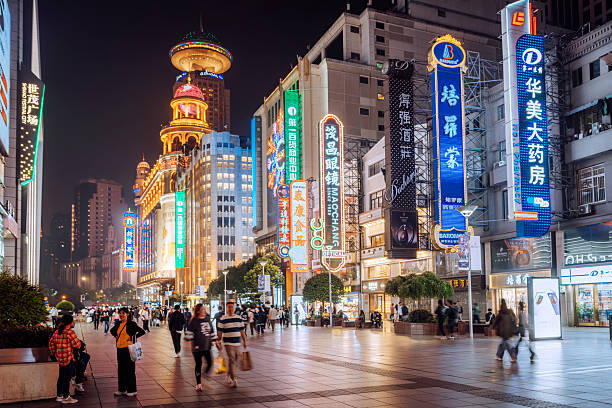 Nightlife
Shanghai Nightlife
Shanghai's club and bar scene is the finest in Asia - from the legendary Arkham and Taxx underground clubs to rooftop bars at the Peninsula and Waldorf Astoria with unobstructed Bund views, and intimate jazz clubs in repurposed French Concession villas.
Gardens, Canals & a Lake at Night
SuzhouMaking the Most of Your Day in Suzhou
Arrive at Humble Administrator's Garden early before the
tour
groups descend - it is Suzhou's most visited attraction and crowd levels triple between 9am and 11am
Buy garden tickets online the evening before to skip
entrance queues at both the Humble Administrator's Garden and Lion Grove Garden
Allow 30 minutes between the two gardens — Lion
Grove is a
10-minute walk from Humble Administrator's and the rockery maze requires genuine time and energy to
navigate properly; do not rush through it
Pingjiang Road is best
for lunch - the canal-side noodle restaurants serve Suzhou-style sweet broth mifen that is
entirely unlike anything eaten elsewhere on the trip; sit outside overlooking the water and allow a
full hour
Zhouzhuang requires a 45-minute drive from
Suzhou city - hire a driver for the afternoon (~€30 return) rather than taking the bus; the last
direct bus back from
Zhouzhuang departs at 5:30pm
Shantang Street is best after
5pm when the lanterns come on and the canal reflects the warm evening light
The Jinji Lake
Music Fountain runs on weekends evenings - check the
current schedule; position yourself on the north promenade for the best
unobstructed view with the Oriental Gate towers behind the fountain
Book the Wanghuge boat trip at the lakeside ticket office
upon
arrival at Jinji Lake - last departures are typically at 9:30pm
The Suzhou Eye Ferris Wheel runs until 10:30pm on
weekends; the slow rotation gives you 20 minutes to absorb the full panorama of a city
 UNESCO Garden
Humble Administrator's
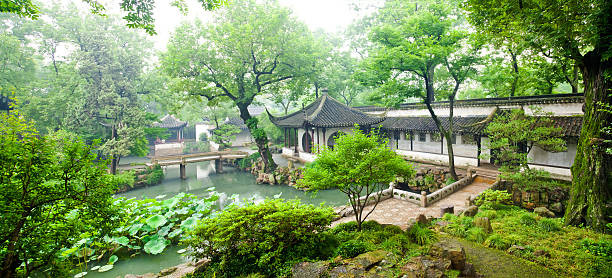
The largest and most celebrated of Suzhou's classical gardens - a 5-hectare UNESCO World Heritage masterpiece of interlocking lakes, covered walkways, pavilions, and sculpted rockeries built by a retired Ming-dynasty official in 1513. The garden's three interconnected sections use water, stone, and carefully framed views. 🗺️ TOUR
 UNESCO Garden
Lion Grove Garden
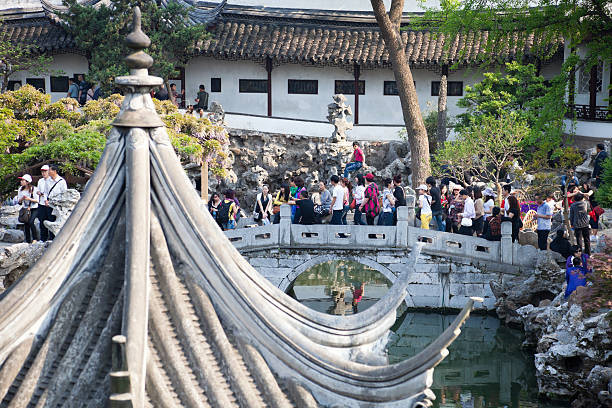
The most extraordinary of Suzhou's classical gardens - and the most playful. Built in 1342, its centrepiece is a labyrinthine rockery of grotesque Taihu limestone formations said to resemble crouching lions, forming a 3D maze of caves, tunnels, and hidden courtyards that visitors wander through in genuine bewilderment. 🗺️ TOUR
 Historic Canal Street
Pingjiang Road
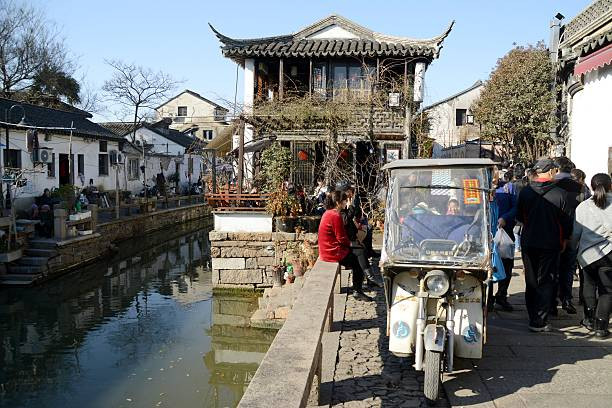
Suzhou's most beloved historic street runs for 1.6km alongside the Pingjiang canal - a perfectly preserved Song-dynasty waterway flanked by whitewashed houses, stone arch bridges, and weeping willows. Gondola-style wooden boats glide past as residents hang laundry from upstairs windows and cats doze on canal walls. 🗺️ TOUR
 Commercial Street
Guanqian Street
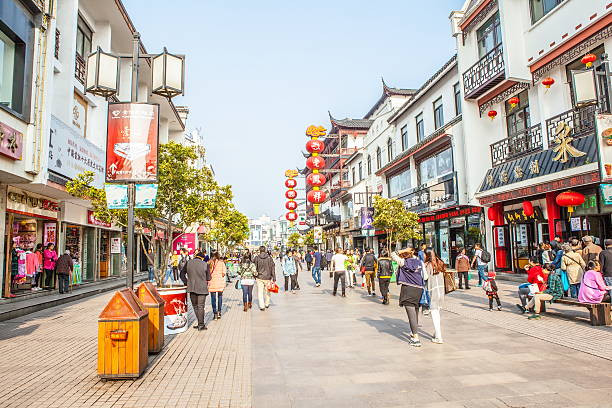
Suzhou's main pedestrian commercial boulevard - a bustling stretch of shops, snack stalls, and department stores anchored at one end by the Xuanmiao Temple, one of the oldest Taoist complexes in the Yangtze Delta. Browse the local silk vendors, pick up Suzhou's famous sugar-dusted pine nut candy.
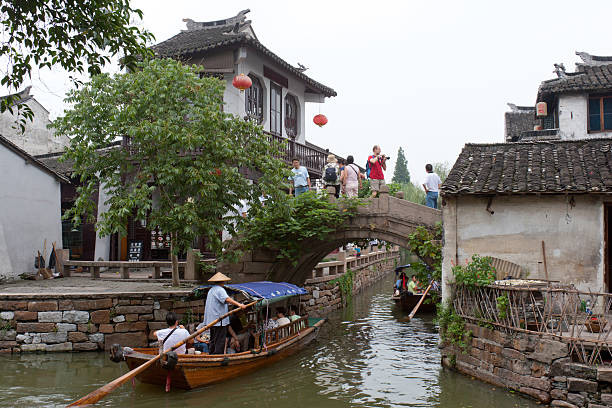 Ancient Water Town
Zhouzhuang Ancient Town
China's most famous water town - a living Ming and Qing dynasty settlement criss-crossed by canals, arched stone bridges, and rows of whitewashed merchants' houses whose reflections shimmer in the green water below. The town has barely changed in 900 years. 🗺️ TOUR
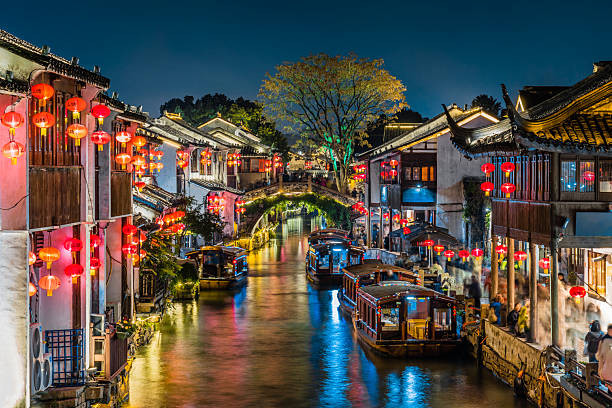 Scenic Canal Street
Shantang Scenic Area
A 3.5km canal-side promenade built by the Tang-dynasty poet Bai Juyi in 825 AD, lined with willow trees, lantern-hung tea houses, and traditional merchant residences. The street is at its most enchanting in the late afternoon when the golden light falls across the water and gondoliers begin their evening runs.
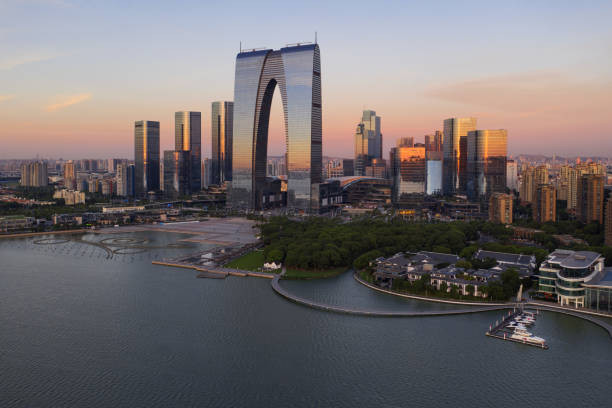 Architecture
Oriental Gate & Jinji Lake
The Oriental Gate - a pair of sweeping curved towers forming a monumental arch - frames Jinji Lake's waterfront in one of eastern China's most photographed skyline compositions. The lakefront promenade stretches for kilometres, its glass and steel towers reflected in the lake surface. 🗺️ TOUR
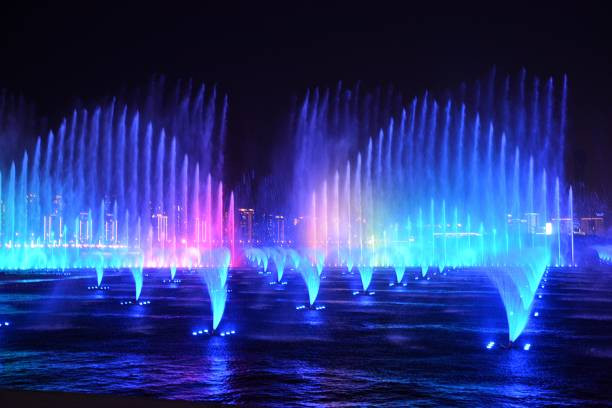 Fountain Show
Jinji Lake Music Fountain
One of the largest music fountain shows in China - a choreographed spectacle of water jets reaching 100 metres, synchronised to music and coloured by dynamic lighting across the full width of Jinji Lake. The Oriental Gate towers frame the backdrop.
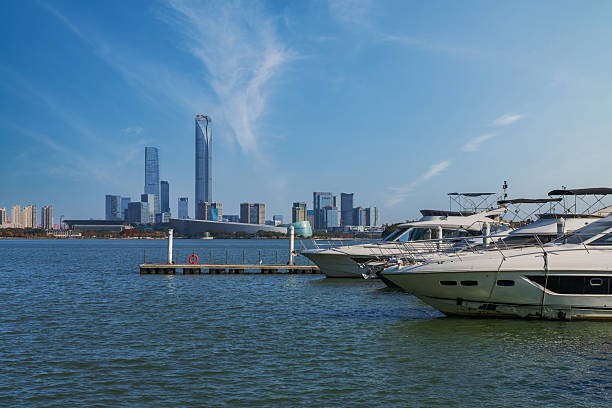 Lake Cruise
Wanghuge Boat Trip
Take an evening boat cruise across Jinji Lake to Wanghuge - a classical garden pavilion on a small island at the lake's centre, reached only by water. From the boat, the illuminated skyline of the SIP towers surrounds you on all sides while the ancient pavilion looms ahead.
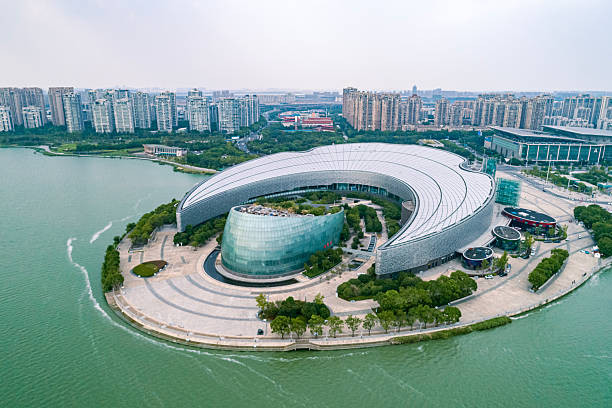 Architecture
Culture and Arts Center
One of China's most visually arresting contemporary buildings - Paul Andreu's design wraps a continuous ribbon of metal cladding around a series of performance halls and exhibition spaces beside Jinji Lake. The building glows beautifully at night, its curving facade reflecting off the water.
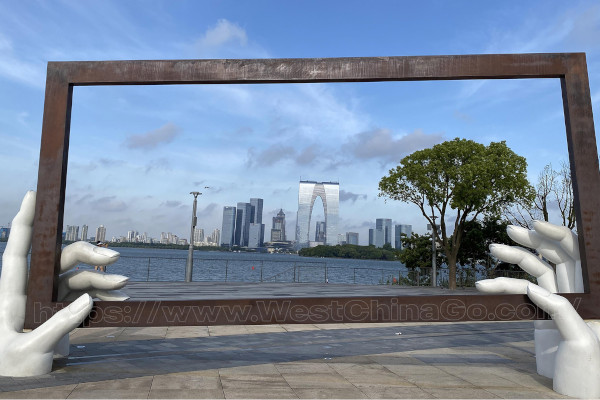 Photo Spot
Oversized Picture Frame
Suzhou's most-shared photo opportunity - a giant illuminated picture frame installation on the Jinji Lake waterfront that perfectly frames the Oriental Gate towers and the glittering lakeside skyline behind it. Queue for your shot, because the composition is genuinely spectacular.
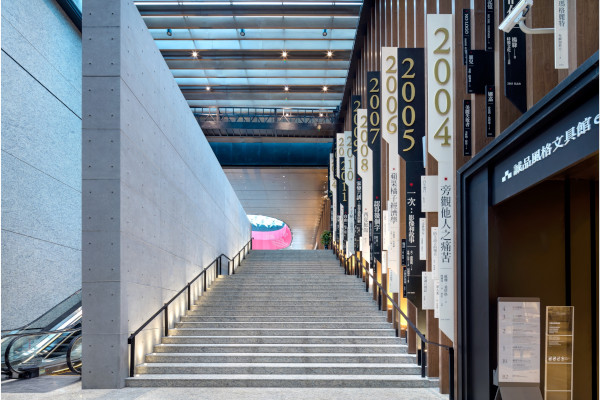 Bookstore
Eslite Bookstore
China's most design-forward independent bookshop concept - the Suzhou branch of Librairie Avant-Garde (Elite) occupies a dramatically styled interior of soaring shelves, curated art objects, and beautifully produced Chinese and international books.
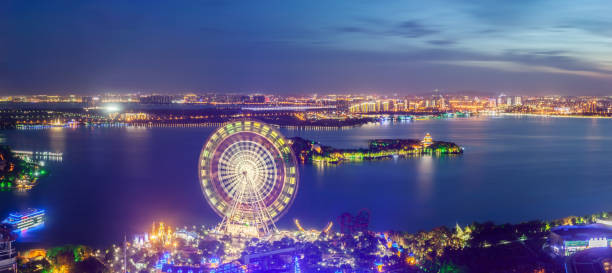 Observation Wheel
Eye Ferris Wheel
A 120-metre illuminated observation wheel rising from the Jinji Lake waterfront. The slow rotation lifts you above the lake, the Oriental Gate, the Arts Center, and the glittering industrial park skyline in one continuous panoramic sweep.