The Dragon City
Ljubljana, SloveniaGetting the most from the Dragon City
Car-free old town — the historic centre
(Stare
Mesto) is pedestrianised; the free Kavalir electric buggy runs through the zone and
will pick
you up anywhere if you wave it down
Plečnik Architecture Tour — the
self-guided route
covering the architect's major works is marked with bronze plaques throughout the
city; allow 2
hrs
Ljubljana Card (~€35/24 hrs) covers the
castle
funicular, tower, public transport, and free entry to a dozen museums — good value
if you plan
an active day
Central Market closes by 2pm; visit in
the morning
for the full experience and pick up Karst prosciutto and local wine for a picnic on
the castle
hill
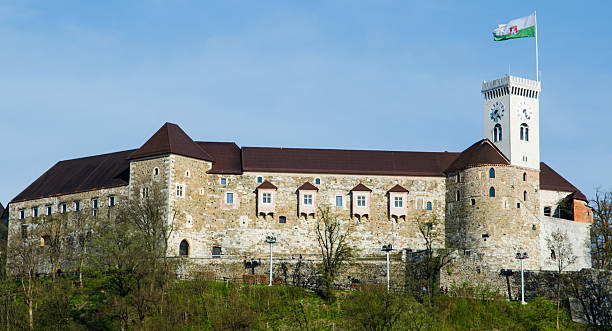 Medieval Castle
Ljubljana Castle
The symbolic heart of the city, perched on a 375-metre wooded hill that has been fortified since Celtic times. Today's castle is a layered complex of towers, courtyards, and ramparts rebuilt through the centuries - take the funicular from Krekov trg or walk the wooded path through the castle park.
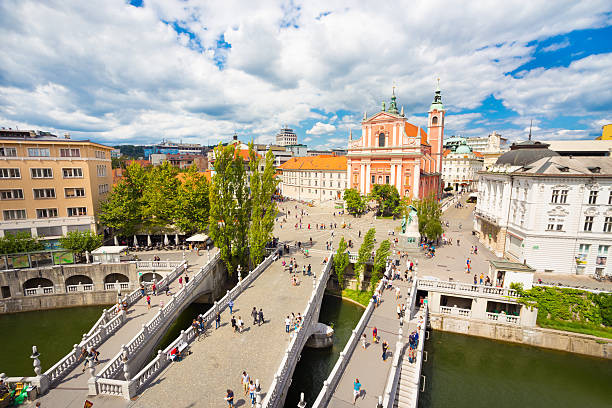 Landmark Bridge
Tromostovje — Triple Bridge
The most photographed structure in Slovenia and the signature work of architect Jože Plečnik, who transformed a single medieval bridge into a fan of three parallel spans between 1929 and 1932. The central stone bridge dates to 1842; Plečnik added the flanking pedestrian bridges.
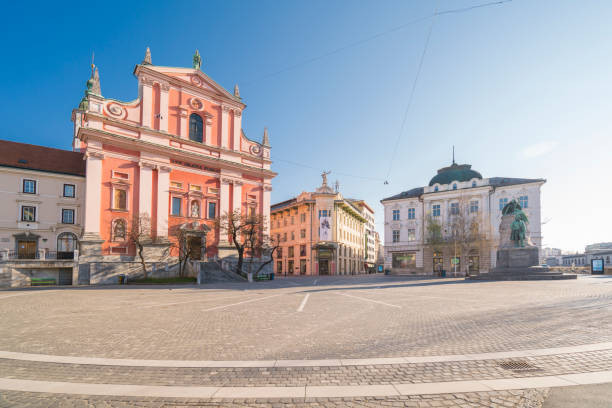 Main Square
Prešernov trg
The social and ceremonial heart of Ljubljana, named after France Prešeren, the Romantic poet whose verse forms the text of the Slovenian national anthem. The square is anchored by his bronze monument and overlooked by the salmon-pink Franciscan Church of the Annunciation (1660).
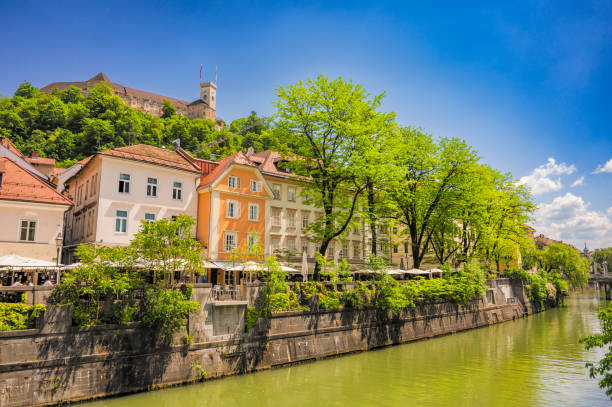 Riverside Promenade
Ljubljanica Riverbanks
The twin embankments - Gallusovo nabrežje on the castle side and Cankarjevo nabrežje on the opposite bank - are the living room of Ljubljana. Plečnik redesigned them in the 1930s with colonnaded market halls, weeping willows, and flights of steps down to the water.
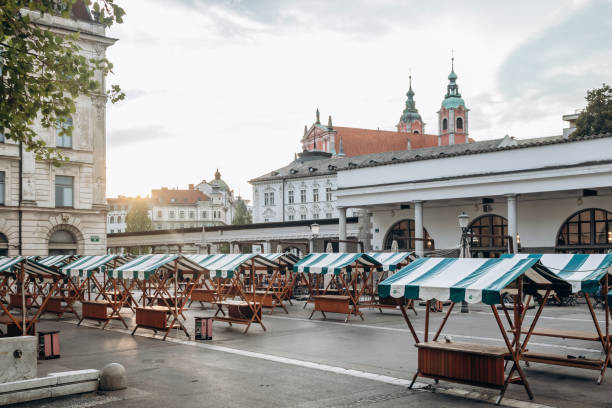 Market
Plečnik's Central Market
A long colonnade of arches running along the Ljubljanica that shelters the open-air food market and encloses the covered indoor market below. Built between 1940 and 1944, it is the definitive expression of Plečnik's vision for Ljubljana: a modern city rooted in classical antiquity.
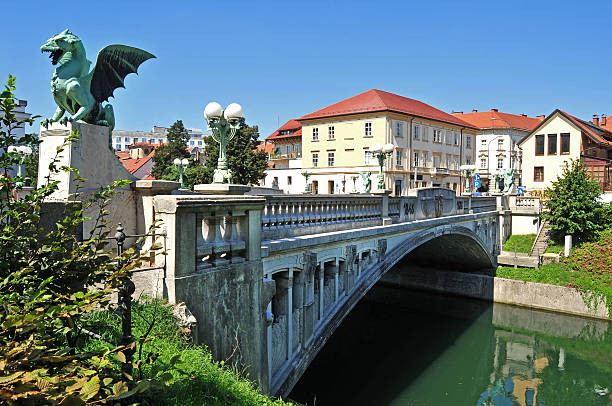 Art Nouveau Bridge
Zmajski Most
Ljubljana's most dramatic piece of urban theatre - a reinforced concrete bridge completed in 1901 and guarded at each corner by a magnificent winged dragon cast in bronze. The dragon is the city's heraldic symbol, said to have been slain by Jason of the Argonauts on the marshes south of the city.
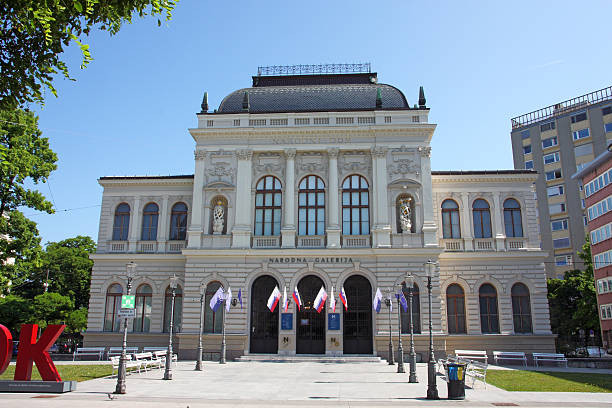 Art Museum
Optional
Art Museum
Optional
Narodna Galerija
Slovenia's principal collection of fine art, housed in a handsome neo-Renaissance palace supplemented by a modern wing, tracing Slovenian painting from the medieval period through to the early 20th century.
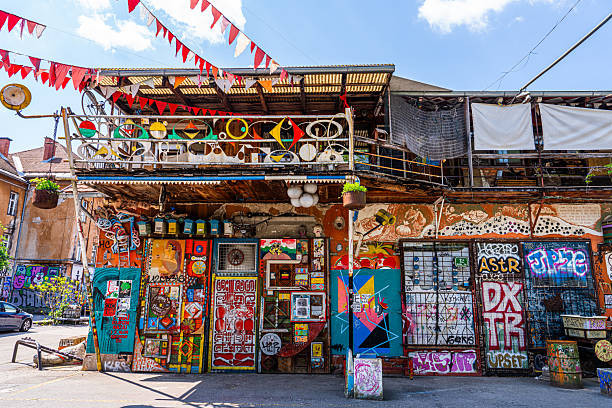 Cultural Quarter
Optional
Cultural Quarter
Optional
Metelkova Mesto
An autonomous social centre occupying a former YU army barracks that was squatted by artists and activists in 1993 after independence. Today is one of the most vibrant alternative cultural spaces in Europe - its courtyard walls covered in murals, its converted barracks housing clubs, galleries, studios and bars.
La Serenissima — Venice Eternal
VeneziaMaking the Most of Day 1 in Venice
Arrive at St Mark's Basilica early — it
opens at 9:45am but the queue forms well before that
Book the Palazzo Ducale
online at least 3–5 days in advance — timed entry is mandatory and
popular slots sell out fast
The Secret Itineraries tour of the
Doge's
Palace (book separately, strictly limited numbers) unlocks the hidden chancellery
rooms, torture chambers, and the cell from which Casanova escaped
The Ponte dei Sospiri is best
photographed from
the Ponte della Paglia on the Riva degli Schiavoni — position yourself on the right
side of the bridge
Rialto Market is a morning-only
experience;
it closes by 1pm and the fish stalls shut even earlier — visit on your way from San
Marco rather than as an afternoon detour
For the Gallerie dell'Accademia, book
online —
queues without reservation can reach 45 minutes
The cicchetti bars of Cannaregio —
particularly
along Fondamenta della Misericordia and Fondamenta degli Ormesini — open from 6pm;
arrive before 7:30pm
A Vaporetto day pass
(~€20) covers all water bus travel and is essential — buy it at any
ACTV ticket booth on arrival
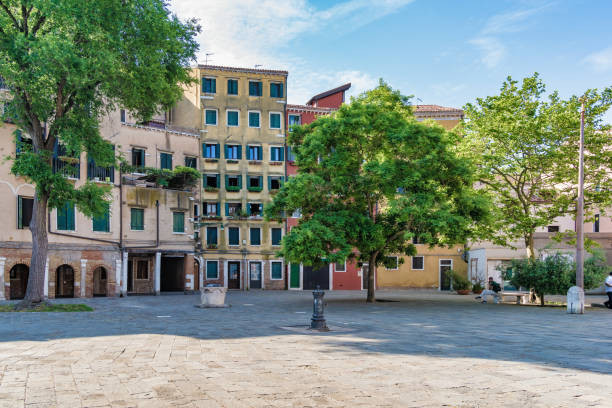 Historic Quarter
Jewish Ghetto
The word "ghetto" itself was born here - Venice's Jewish quarter in Cannaregio, established in 1516, gave the world the term from the Venetian word for foundry (geto) that once occupied this island. The oldest ghetto in Europe is a place of remarkable atmosphere.
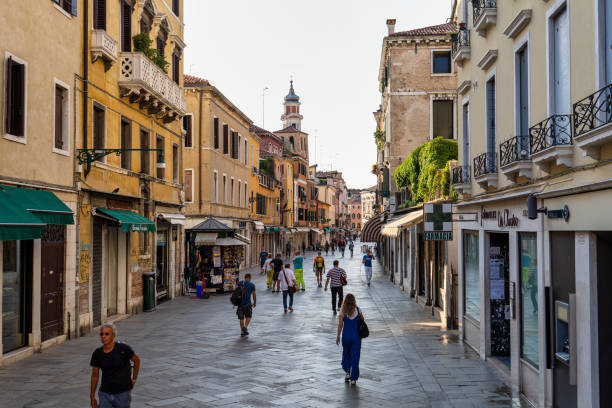 Main Street
Strada Nova
Wide, unusually direct pedestrian boulevard cut through the Cannaregio sestiere in the 19th century to connect the train station to the Rialto, unique in a city of winding alleys and dead-end calli. The Strada Nova is where Venice goes about its daily life and have nothing to do with tourism.
 Landmark Bridge
Ponte di Rialto
The oldest and most iconic of the four bridges crossing the Grand Canal - a single white marble arch of elegant audacity, completed in 1591 after decades of controversy. The bridge is flanked by two rows of shops and its central walkway offers the most celebrated view of the Grand Canal in either direction.
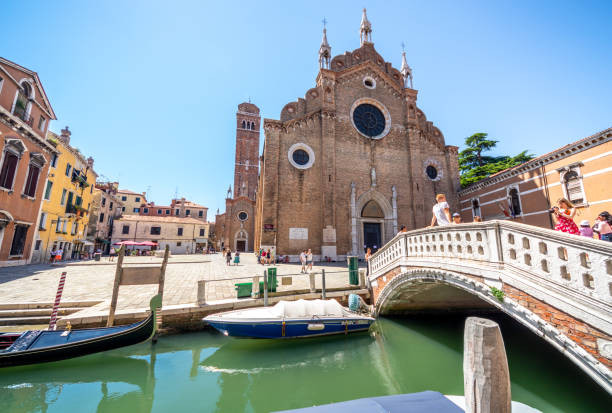 Gothic Basilica
Basilica dei Frari
Venice's greatest Gothic church and one of the finest interiors in Italy - a soaring brick Franciscan basilica in the San Polo sestiere that contains more masterpieces per square metre than almost any building in the city. Titian's Assumption of the Virgin above the high altar (1518) is the supreme achievement of Venetian Renaissance painting.
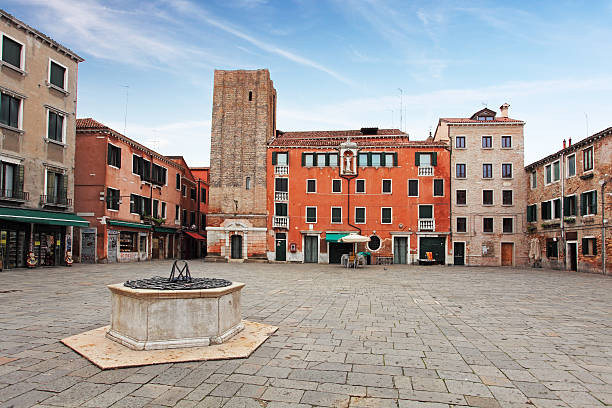 Neighbourhood Square
Campo Santa Margherita
The most alive campo in Venice - a wide, irregularly shaped square in the heart of Dorsoduro that functions as the social centre of the neighbourhood and the student quarter of the city. No tourist performance, no overpriced menus - just Venice living as it does every day.
 Art Gallery
Optional
Art Gallery
Optional
Gallerie dell'Accademia
The greatest collection of Venetian painting in the world - Bellini, Carpaccio, Giorgione, Titian, Tintoretto, and Veronese fill room after room of this former monastery and scuola, tracing the full arc of the Venetian school from Byzantine gold to Renaissance light. Veronese's monumental Feast in the House of Levi covers an entire wall.
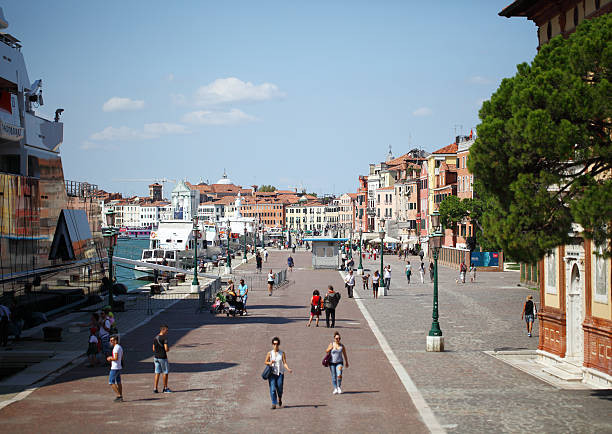 Waterfront Promenade
Le Zattere
Venice's finest waterfront promenade - a long, sun-drenched fondamenta running the entire southern edge of Dorsoduro along the Giudecca Canal, facing the island of Giudecca across 300 metres of open water. Named after the timber rafts (zattere) that once moored here, the promenade is wide; the views at sunset are among the most beautiful in the city.
 Historic Square
Piazza San Marco
Napoleon called it "the drawing room of Europe" - and the largest piazza in Venice remains exactly that. Flanked by the arcaded Procuratie Vecchie and Procuratie Nuove, anchored by the basilica and watched over by the famous twin columns on the waterfront, it is the ceremonial heart of a city that ruled the Mediterranean for five centuries.
 UNESCO Basilica
Basilica di San Marco
The most opulent church in Christendom, its five Byzantine domes and facade encrusted with over 8,000 square metres of shimmering gold mosaic that have been accumulating since the 11th century. The interior is a vision of overwhelming splendour: gilded vaults, ancient columns plundered from Constantinople, and the jewelled Pala d'Oro altarpiece.
 Palace
Palazzo Ducale
The seat of Venetian power for a thousand years - a masterpiece of Gothic architecture whose delicate pink and white marble facade belies the gravity of what took place within. Walk the gilded council chambers, stand beneath Tintoretto's Paradise, and descend into the fearsome prison cells from which Casanova famously escaped.
 Historic Bridge
Ponte dei Sospiri
The Bridge of Sighs connects the Doge's Palace to the New Prison across the narrow Rio di Palazzo - its name coined by Byron, who imagined condemned prisoners sighing their last glimpse of Venice through its stone-latticed windows. It is best seen from the Ponte della Paglia on the waterfront, where the white Istrian stone arch frames perfectly against the canal.
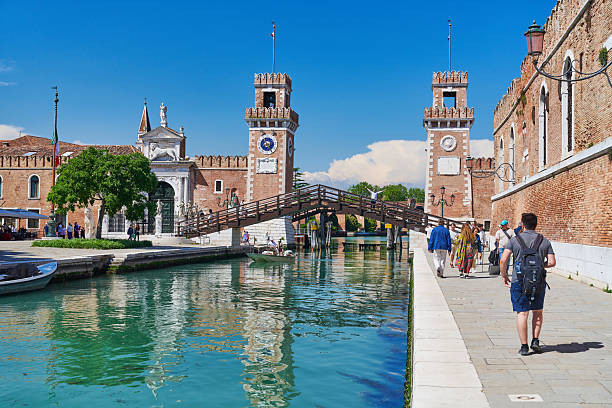 Historic Arsenal
Arsenale di Venezia
The industrial heart of the Venetian Empire - the Arsenale was the largest shipyard in the medieval world, a walled complex of dry docks, rope factories, and workshops covering 46 hectares where at its peak 16,000 workers (arsenalotti) could build a complete warship in a single day using the world's first assembly-line production system.
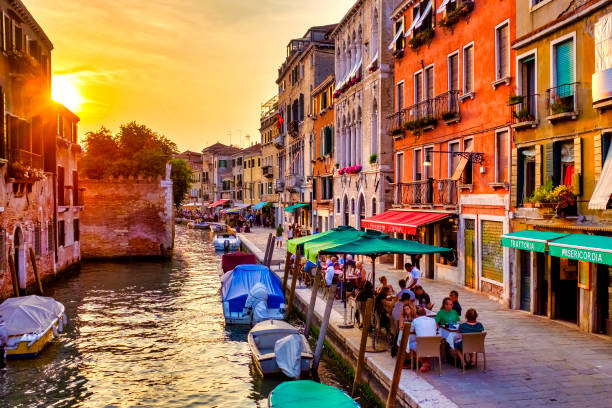 Canal Street · Bars
Fondamenta della Misericordia
The beating heart of Venetian nightlife - a long canal-side fondamenta in northern Cannaregio lined on one side by a continuous row of bacari, osterie, and bars whose tables and chairs overflow onto the pavement above the canal every evening from 6pm onwards. This is where Venetians of every age actually drink.
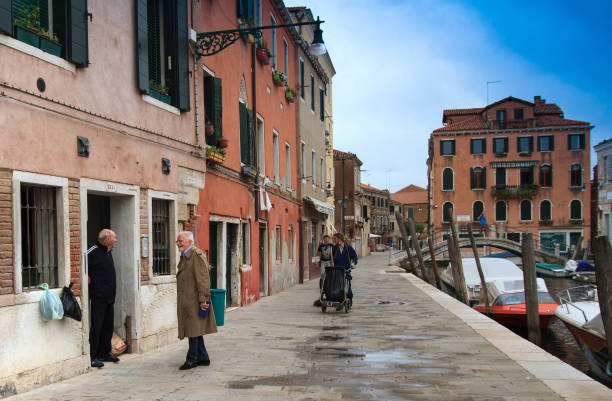 Canal Street · Evening
Fondamenta degli Ormesini
Running directly beside the Misericordia, together with Fondamenta degli Ormesini form the most characterful drinking and dining corridor in Venice. The Ormesini side tends to be slightly quieter, with older and more neighbourhood-focused bacari whose cicchetti are prepared fresh in small open kitchens you can watch from the street.
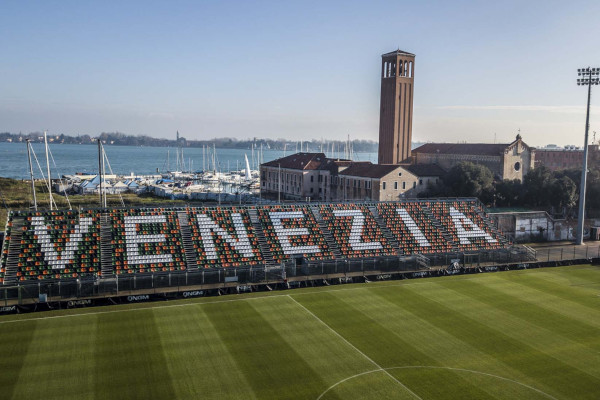 Serie A Game
Optional
Serie A Game
Optional
Venezia F.C.
Stadio Pier Luigi Penzo is the historic home of Venezia FC, located on the island of Sant’Elena in Venice. Opened in 1913, it is one of the oldest football stadiums still in use in Italy. Its setting makes it especially unusual: surrounded by the Venetian Lagoon, many supporters arrive at matches by boat or vaporetto.
 Canal Experience
Grand Canal at Sunset
Take Vaporetto Line 1 from San Marco to Piazzale Roma - the slowest and most scenic route down the Grand Canal's entire 3.8km length, passing 200 palazzi in varying states of splendid decay as the sun turns the water gold. For the most romantic version, hire a gondola for the classic 30-minute circuit through the back canals of San Marco sestiere at dusk.
Islands of the Lagoon
Murano · Burano · TorcelloMaking the Most of Day 2 — The Lagoon Islands
The lagoon islands are best visited
early
before the day-trip crowds from Venice arrive around 10:30am
Take Vaporetto Line 4.1 direct to
Murano (15
minutes); a day pass covers all island travel and is the only sensible option for
this
itinerary
Glass furnace
demonstrations on Murano are free and run continuously at most
factories
throughout the morning - no booking required, simply walk in
Lunch on Murano
rather
than Burano - the restaurants on Fondamenta Manin are local, unhurried, and
significantly cheaper
For Burano, the best photography light
is
between
2pm and 4pm when the sun is at the right angle to illuminate the coloured facades
directly
The leaning bell tower of San Martino
church
(Burano's own miniature Pisa) is most visible from the main piazza and makes an
excellent focal point for photographs of the island
Torcello is best visited in late
afternoon
when
the day-trippers have left and the marshland silence returns
 Glass Island
Murano Island
This small island has been the centre of Venetian glassmaking since 1291 - when the Republic ordered all glassblowers to move here to protect Venice from fire and their trade secrets from rivals. Wander the island's quiet canals, browse the glass shops, and visit the Museo del Vetro for the full history.
 Museum
Optional
Museum
Optional
Museo del Vetro
Housed in the 17th-century Palazzo Giustinian, Murano's glass museum traces seven centuries of the island's extraordinary craft - from ancient Roman vessels to Renaissance millefiori masterpieces, from Murano chandeliers that lit the courts of Europe to the revolutionary modernist designs of the 20th century.
 Island Walk
Fondamenta dei Vetrai
The Fondamenta dei Vetrai on one bank and the Fondamenta Manin on the other. It has all the character of Venice with a fraction of the crowds: neighbourhood cats on bridge railings, locals eating lunch at canal-side tables, and the faint glow of furnaces through workshop windows.
 Coloured Island
Burano Island
No photograph adequately prepares you for Burano's colour. A fishing village since Roman times, the island's houses are painted in a regulated palette of the most vivid, saturated hues - canary yellow, cobalt blue, vermillion, lime green, shocking pink - each shade recorded in a municipal register that must be consulted before repainting.
 Craft Museum
Optional
Craft Museum
Optional
Museo del Merletto (Lace)
The extraordinary tradition of Venetian needle lace, a technique so intricate that a single tablecloth could take decades to complete and cost more than a palazzo. The Museo del Merletto traces the craft from its 16th-century origins through to the present day, with surviving examples of historical lacework that look more like frozen snowflakes than fabric.
 Ancient Island
Optional
Ancient Island
Optional
Torcello Island
Venice's oldest island and its most haunting. Once a city of 20,000 people and the original heart of the lagoon civilisation, now almost entirely abandoned, its former streets reclaimed by marsh grass. Remains: cathedral dating from 639 AD with Byzantine mosaics of stunning power, the enigmatic stone throne of Attila the Hun, and a bell tower that predates St Mark's.
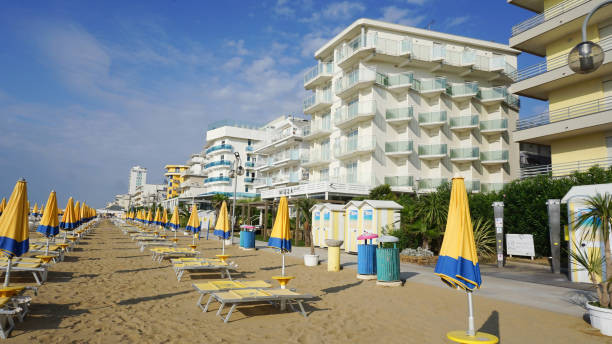 Island · Beach
Lido di Venezia
The long, narrow barrier island that separates the Venetian lagoon from the open Adriatic Sea, and one of the most quietly extraordinary places in the entire Venice experience. The Lido is Venice's only island with roads and motor vehicles, its own bicycles, and a beach - a 12-kilometre arc of fine Adriatic sand lined on the lagoon side by the hotels.
 Return Journey
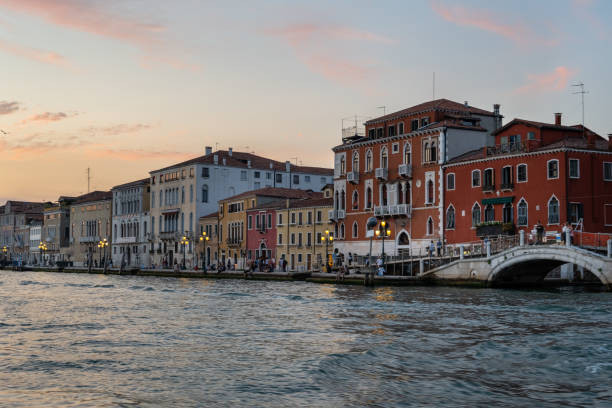
The Lagoon at Sunset
Time your return vaporetto from islands to arrive back in Venice around sunset - the slow crossing of the northern lagoon in fading golden light, with the skyline of Venice appearing on the horizon like a mirage, is one of the great arriving-moments in all of travel. Walk directly to the Zattere promenade on the Giudecca Canal for the best sunset views.
The Eternal City — Ancient Rome
RomaMaking the Most of Day 1 in Rome — Ancient City
Santa Maria Maggiore opens early and is
virtually empty; the 5th-century mosaics
above the nave are best appreciated in morning quiet before the tour groups arrive
at 10am
Book the Colosseum, Roman Forum and
Palatine Hill combined ticket online at least 2–3 weeks in advance
The Vittoriano rooftop is the
best free
panorama in Rome - take the lift to the first terrace at minimum, then pay the ~€7
for the Terrazza delle Quadrighe at the summit for the 360° view
Walk the Roman Forum before the
Colosseum - enter
from the Campidoglio side via the Tabularium terrace, then descend into the valley
and exit through the Arch of Titus toward the Colosseum
Allow 3.5 full hours for the Forum and
Colosseum combined - rushing either is a mistake that cannot be undone
The Aventine Keyhole closes at sunset -
time
your visit accordingly; the Orange Garden view is finest in the last hour of golden
light
Trastevere fills rapidly after
8pm on weekends - arrive by 7:30pm and walk to a restaurant in the
quieter streets north of Piazza Santa Maria rather than eating on the main square
where prices are significantly higher
 Papal Basilica
Basilica di Santa Maria Maggiore
One of the four great Papal Basilicas, built in 432 AD on the Esquiline Hill following a miraculous August snowfall. The interior is a breathtaking accumulation of 16 centuries: 5th-century mosaic panels along the nave that are among the finest Early Christian mosaics in existence, a coffered Renaissance ceiling gilded with the first gold.
 Historic Square
Piazza Venezia
The chaotic, magnificent hub around which all Rome revolves - a vast piazza presided over by the blinding white marble of the Vittoriano and flanked by the Renaissance Palazzo Venezia, from whose balcony Mussolini once harangued the crowds. Stand at the centre of the roundabout and observe the city's seven hills converging here.
 National Monument
Vittoriano - Altare della Patria
Romans call it "the typewriter" or "the wedding cake" - the Vittoriano is Rome's most polarising monument, a colossal white Brescian marble complex built between 1885 and 1935 to honour unified Italy's first king. Whatever one thinks of its architectural exuberance, the free rooftop terrace offers the single finest 360° panorama over Rome.
 Ancient Hill
Campidoglio - Capitoline Hill
Climb Michelangelo's cordonata to the artist's perfectly proportioned oval piazza, flanked by the twin Capitoline Museums and centred on a gilded bronze equestrian statue of Marcus Aurelius. The museums inside hold Rome's greatest collection of ancient sculpture: the Capitoline Wolf, the Dying Gaul, and Marcus Aurelius on horseback.
 Ancient Ruins
Foro Romano - Roman Forum
The civic heart of the ancient world for over a thousand years. The Via Sacra runs through the centre past the Temple of Saturn, the Arch of Septimius Severus, and the Basilica of Maxentius. The combined ticket with the Colosseum and Palatine Hill is the only way to enter.
 UNESCO Monument
Il Colosseo - The Colosseum
The greatest monument of antiquity still standing - the Flavian Amphitheatre, begun by Vespasian in 72 AD and completed by Titus in 80 AD, held up to 80,000 spectators for gladiatorial combat, animal hunts, and public executions over four centuries.
 Ancient Arena
Circo Massimo - Circus Maximus
The ancient world's greatest chariot-racing track, 600 metres long and capable of holding 250,000 spectators, making it the largest stadium ever built. Almost entirely unexcavated, it is now a grassy valley between the Palatine and Aventine hills.
 Secret Viewpoint
Aventine Hill & Orange Garden
Climb the Aventine Hill to the Giardino degli Aranci (Orange Garden) - for one of Rome's least-known and most breathtaking panoramas: a perfect framed view of St Peter's dome across the entire city, best at golden hour. Then walk 50 metres to the Piazza dei Cavalieri di Malta and peer through the keyhole of the Knights of Malta's priory gate.
 Evening
Trastevere — Rome After Dark
Rome's most atmospheric neighbourhood, a labyrinth of ochre-walled alleys, ivy-hung piazzas, and medieval churches that fills every evening with the most joyful street life in the city. The neighbourhood is at its best between 8pm and midnight: tables spill into the cobbled squares, street musicians set up in the piazzas.
Vatican, Baroque Fountains & the Gods of Rome
RomaMaking the Most of Day 2 in Rome — Vatican & Baroque
Book
the Vatican Museums for the 8am first-entry slot - this is the single
most important booking of the entire Rome visit
The museums receive 6 million
visitors per year; the Sistine Chapel by 11am is a wall-to-wall crowd. The
first-entry group moves through at a pace where genuine contemplation of the ceiling
is possible
Book at museivaticani.va
2–3 weeks ahead; if sold out, look for official Vatican guided tours which include
skip-the-line access
St Peter's Basilica is free
but has a strict dress code - shoulders and knees must be covered;
bring a scarf or be turned away at the door
The dome climb (551 steps, or lift to
the drum
then steps) is essential - the close-up view of Michelangelo's mosaic interior from
the drum gallery is one of the great artistic experiences in Rome
Book the Pantheon
online - a €5 timed
entry
ticket is now required and walk-ups face long queues; the experience inside is far
more powerful in a smaller group
The
Trevi Fountain is best at 9–10pm - visit after
dinner rather than in the
afternoon when it is most crowded
Campo de'
Fiori morning market (7am–2pm) is worth a brief visit on a different
morning if your schedule allows - the flower and produce stalls are among the most
beautiful in Rome
 UNESCO Museums
Musei Vaticani & Cappella Sistina
The Vatican Museums are the greatest collection of art in human history - a 7km succession of galleries, halls, and corridors accumulating 2,000 years of papal acquisitions, from Egyptian mummies to Raphael's Stanze to the Belvedere Torso that obsessed Michelangelo. The Sistine Chapel at the end is the climax of Western painting.
 Vatican Square
Piazza San Pietro
The great elliptical piazza whose sweeping colonnades Bernini described as "the motherly arms of the Church reaching out to embrace the faithful." The piazza holds 300,000 people; the 140 saints atop the colonnade gaze down at every angle; the Egyptian obelisk at the centre has stood here since 1586.
 Papal Basilica
Basilica di San Pietro
The largest church in the world and the centre of Catholic Christendom - built over the tomb of St Peter, redesigned by Bramante, continued by Michelangelo, and completed by Maderno and Bernini. Inside: Michelangelo's Pietà behind glass to the right, Bernini's extraordinary bronze baldachin over the papal altar, and the vertiginous 136-metre dome above.
 Castle · Museum
Castel Sant'Angelo
The most dramatic monument on the Tiber - a cylindrical fortress that began as the mausoleum of Emperor Hadrian in 139 AD, was converted into a castle and papal refuge connected to the Vatican by a secret passageway (the Passetto di Borgo), and became a prison whose cells held Giordano Bruno before his execution.
 Ancient Temple
Il Pantheon
The best-preserved ancient building in the world - a temple to all gods completed by Hadrian around 125 AD. The dome, 43.3 metres in diameter, remains the largest unreinforced concrete dome ever built; its oculus - the 9-metre circular opening at the apex - is the only source of light.
 Baroque Piazza
Piazza Navona
Built on the footprint of Domitian's ancient stadium, Piazza Navona is the most theatrical public space in Rome - an elongated oval of Baroque perfection anchored by Bernini's Fountain of the Four Rivers (1651), whose central obelisk and four colossal river deities represent the Nile, Ganges, Danube, and Río de la Plata.
 Baroque Fountain
Fontana di Trevi
The most famous fountain in the world - and the most overwhelming at night, when Nicola Salvi's 1762 masterpiece is floodlit and the roar of water fills the surrounding alleys before you even reach the piazza. Neptune's chariot surges from the rock face of the Palazzo Poli; two Tritons guide his seahorses; the water cascades 26 metres into a vast basin.
 Evening Square
Campo de' Fiori
By day a vibrant morning market of flowers, fruit, and spices presided over by the hooded statue of Giordano Bruno - burned here for heresy in 1600. By night, Rome's most convivial outdoor drinking square, its perimeter of bars and restaurants filling with students, locals, and travellers until late.
Hills, Gardens & the Grand Boulevard
RomaMaking the Most of Day 3 in Rome — Hills, Gardens & the Grand Boulevard
The
Borghese Gallery is the most difficult ticket in Rome to secure - entry
is strictly capped at 360 people per 2-hour slot, and tickets are released on a
rolling basis approximately 30 days in advance at tosc.it
The Pincian terrace at sunrise is the
finest view in Rome in the best possible light - set an early alarm; you will not
regret it
Piazza del Popolo's Caravaggio
paintings in the Cerasi Chapel of Santa Maria del Popolo are free,
entirely unguarded, and almost never mentioned in guidebooks
The Spanish Steps have a sitting ban
enforced
with fines - do not sit on the steps themselves; stand or photograph from the base
or the top
Monti is at its most alive
between 8pm and midnight - the Piazza della Madonna dei Monti fountain square is
Rome's best free aperitivo scene, BYO wine from any nearby enoteca.
 Panoramic Terrace
Il Pincio - Pincian Hill Terrace
The Pincian Hill terrace at the northern edge of Villa Borghese are looking west over the entire expanse of the city. The view stretches from the dome of St Peter's across the roofscape of the historic centre to the Janiculum hill, with Piazza del Popolo's oval below and the twin churches of Santa Maria dei Miracoli and Santa Maria in Montesanto framing the 3 roads south.
 Park · Gardens
Villa Borghese Gardens
Rome's most beautiful park - 80 hectares of formal gardens, shaded avenues, artificial lakes, and scattered temples draped across the Pincian Hill above the city. Rent a rowboat on the Giardino del Lago, cycle the pine-shaded allées, or simply walk the terraced gardens above Piazza di Spagna in the morning cool.
 Historic Piazza
Piazza del Popolo
A vast oval anchored by a 3,200-year-old Egyptian obelisk, flanked by Bernini's twin Baroque churches, and framed by the three ancient roads that converge here from the south. For centuries this was the first sight of Rome for travellers arriving from the north - the moment of arrival in the Eternal City.
 Art Gallery
Galleria Borghese
The most perfect museum in Italy - a cardinal's private villa containing the greatest collection of Bernini sculpture in existence alongside Titian, Raphael, Caravaggio, and Canova in 20 sublime rooms. Bernini's Apollo and Daphne is here, alongside the Rape of Proserpina, David, and Aeneas and Anchises, all carved before Bernini turned 26.
 Historic Café
Via Condotti
Descend from Villa Borghese into Rome's most glamorous street, the axis of Italian luxury with Valentino, Bulgari, Gucci, and Cartier facing each other across the cobblestones toward the Spanish Steps. Halfway down, step into Antico Caffè Greco - Rome's oldest café, open since 1760, whose mirrored rooms and red velvet banquettes have hosted Goethe, Byron, Keats, Liszt, and Casanova.
 Baroque Fountain
Piazza di Spagna
The piazza at the foot of the Spanish Steps - an elongated butterfly shape centred on Pietro Bernini's sunken fountain of a half-submerged boat, commissioned by Pope Urban VIII to commemorate the Tiber flood of 1598 that deposited a boat in this exact spot. The surrounding streets - Via Borgognona, Via Frattina, Via della Croce are Rome's most elegant for window-shopping.
 Iconic Staircase
Scalinata di Trinità dei Monti
The widest and most theatrical staircase in Europe - 135 steps in 12 flights of rosy travertine, built between 1723 and 1725 to connect the French church of Trinità dei Monti at the top to the Spanish Embassy at the bottom. In spring the entire structure is carpeted in azaleas; year-round it functions as Rome's grandest amphitheatre of street life.
 Baroque Fountain
Fontana di Trevi — At Dusk
Walk 10 minutes east from the Spanish Steps through the elegant streets of the Tridente to arrive at the Trevi Fountain as the floodlights come on at dusk - the single most dramatic moment to see it, when the transition from natural to artificial light transforms the fountain from a daytime spectacle into something genuinely supernaturaln.
 Evening Neighbourhood
Monti — Rome's Hippest Village
End the day in Monti - Rome's most characterful neighbourhood, tucked between the Colosseum and the Vittoriano, a dense grid of medieval streets that has reinvented itself as the city's most creative quarter without losing its soul. The Piazza della Madonna dei Monti fills every evening with local residents of all ages drinking wine on the fountain steps.
Medieval Tuscany
ToscanaMaking the Most of Day 1 in Tuscany — Siena, Val d'Orcia, San Gimignano & Surroundings
ZTL
warning for every Tuscan hill town - all historic centres have
restricted traffic zones with
automatic camera enforcement. Park outside the town walls at the designated car
parks
Montepulciano ZTL - park
at Porta al Prato at the base of the hill (free or ~€2/hr) and walk up the Corso to
the summit Piazza Grande; the entire climb takes 20 minutes and the cantina tastings
are accessed from the piazza at the top
Pienza produces its own iconic
product: Pecorino di Pienza sheep's milk cheese, sold in every shop along the
Corso Rossellino in three ages from milky fresh to hard and pungent
Val d'Orcia photography - the Podere
Belvedere cypress avenue viewpoint near San Quirico d'Orcia is a roadside lay-by on
the SP146; park and photograph on foot, do not attempt to drive the private cypress
avenue. The best light is dawn
Montalcino - The Enoteca La Fortezza
inside the castle walls is the
finest place in the world to taste Brunello - the views from the fortress
battlements across the Val d'Orcia while holding a glass of a 15-year-old
Brunello are perfect
San
Gimignano must be visited before 10am - the town receives several
thousand day-trippers daily. The World
Gelato Championship-winning Gelateria Dondoli (Piazza della Cisterna). Walk the Via
San Giovanni from the south gate through to the conjoined Piazza della Cisterna and
Piazza del Duomo. Climb the Torre Grossa (54 metres) for a 360°
panorama across the Elsa valley to the Chianti hills.
 Iconic Staircase
Montepulciano
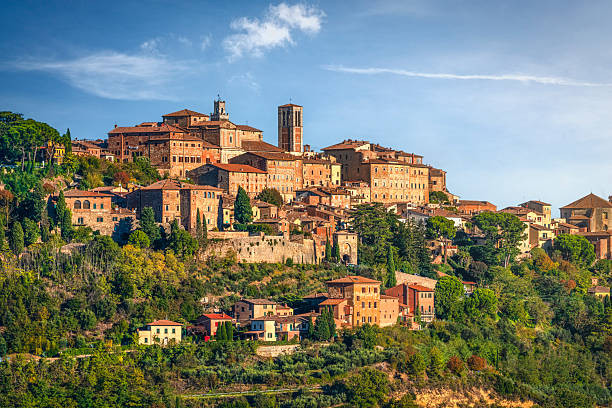
The highest and most theatrical of the Tuscan hill towns - Montepulciano climbs steeply from its Renaissance gate at the base to the Piazza Grande at the summit (605 metres), its main street the Corso lined with Renaissance palazzi by Antonio da Sangallo, medieval towers, and wine cantinas built directly into the volcanic tufa cliff face beneath the town.
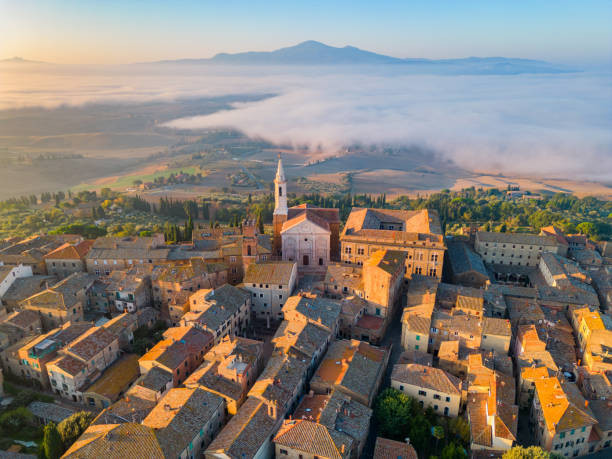 UNESCO · Renaissance Town
Pienza
The most perfect small town in Italy - commissioned in its entirety by Pope Pius II in 1459 as the world's first planned Renaissance city and completed in just three years by the architect Rossellino. A cathedral, papal palace, bishop's palace, and town hall arranged around a single piazza of ideal proportions, with a loggia opening onto one of the finest views.
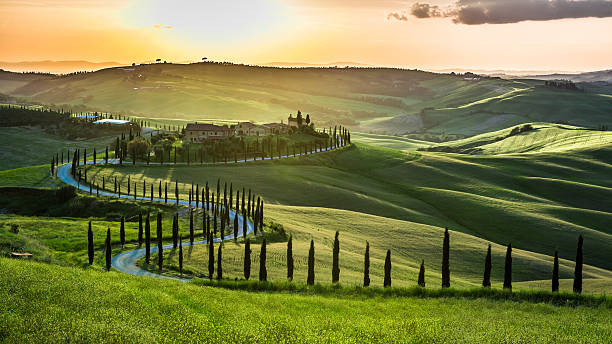 UNESCO Landscape
Val d'Orcia
The UNESCO-listed valley that has defined the world's image of Tuscany since the Renaissance painters used its gentle hills, lone farmhouses, and cypress-lined ridgelines as backdrops to their Madonnas. The SP146 road between San Quirico d'Orcia and Pienza is the most celebrated scenic drive in the region.
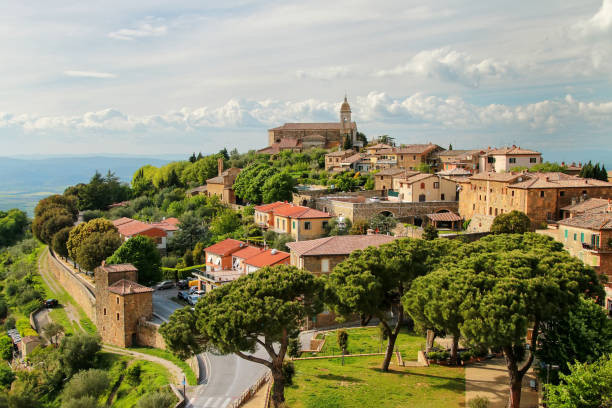 Wine Town
Montalcino
A compact hilltop town of medieval perfection crowned by a 14th-century rocca (fortress), and home to Brunello di Montalcino - widely considered Italy's greatest red wine, produced from 100% Sangiovese Grosso grapes grown on the surrounding hillsides.
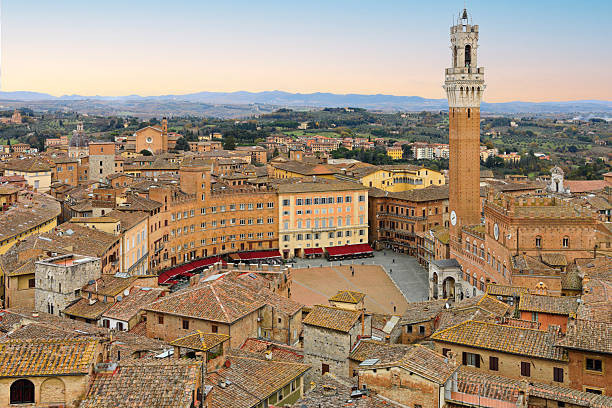 UNESCO City
Siena
The greatest medieval city in Italy - Siena's intact historic centre of Gothic palazzi, narrow brick vicoli, and the extraordinary Piazza del Campo is a UNESCO World Heritage Site of overwhelming architectural coherence. The Duomo, striped in black and white marble, rivals any cathedral in Italy.
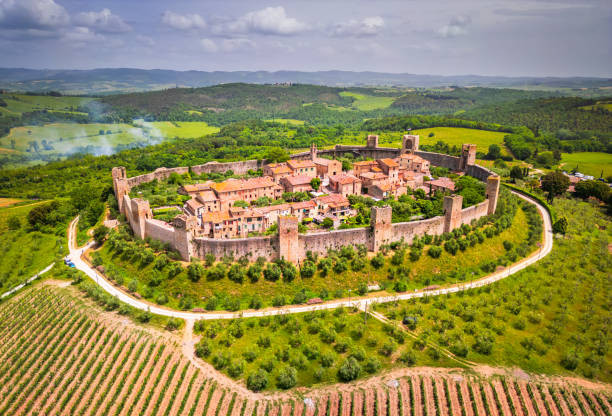 Walled Village
Monteriggioni
Small circular town enclosed within a ring of 14th-century walls punctuated by 14 towers, sitting on a low hill above the Via Francigena pilgrim road. Dante immortalised its towers in the Inferno, comparing them to the giants around the pit of Hell. A single piazza, a Romanesque church, a handful of wine shops, and the intact circuit of walls.
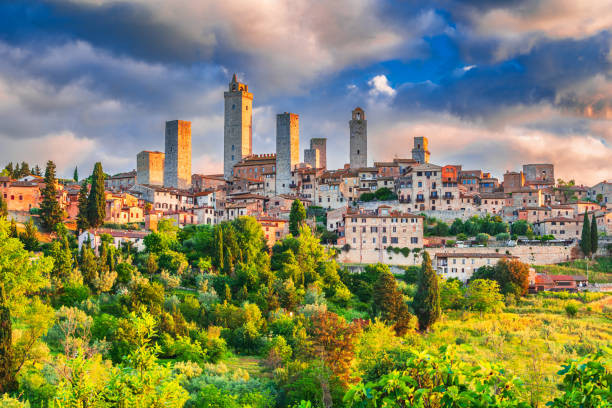 UNESCO Medieval Town
San Gimignano
One of the most dramatically preserved medieval towns in Italy whose 14 surviving tower-houses rise from the hilltop skyline in a silhouette unchanged since the 13th century. Wealthy rival merchant families built towers as symbols of power, competing for height across the roofscape; at its peak 72 towers stood here.
Florence - Cradle of the Renaissance
Firenze · ToscanaMaking the Most of Day 2 in Tuscany — Florence, Lucca & Pisa
Book
the Brunelleschi Dome climb and the Uffizi Gallery before anything else
— these are the two most visited sites in Florence and availability disappears weeks
ahead in peak season at duomo.firenze.it and uffizi.it
Piazzale
Michelangelo - arrive early and continue
up the steps behind it to San Miniato al Monte for the finest elevated view in
Florence
Ponte
Vecchio is best photographed from Ponte Santa Trinita to the west -
stand in the centre of the bridge looking east for the classic composition; the
bridge itself is most pleasant in the early morning the crowds arrive
The
Uffizi requires 2 hours minimum - do not rush the Botticelli rooms
(rooms 10–14) where the Birth of Venus and Primavera hang
Lucca -
park at Parcheggio Palatucci outside the walls (€1.50/hr) and enter on foot
Book
the Leaning Tower climb before you leave home at opapisa.it — select your time slot
carefully, allowing at minimum 2 hours at the Campo dei Miracoli before the tower
slot
Pisa is not just the tower - the
Lungarno riverfront, the Borgo Stretto medieval arcade, the Knights of Santo Stefano
church, and the Museo Nazionale di San Matteo make Pisa a full half-day city for
those who choose to explore beyond the
Campo
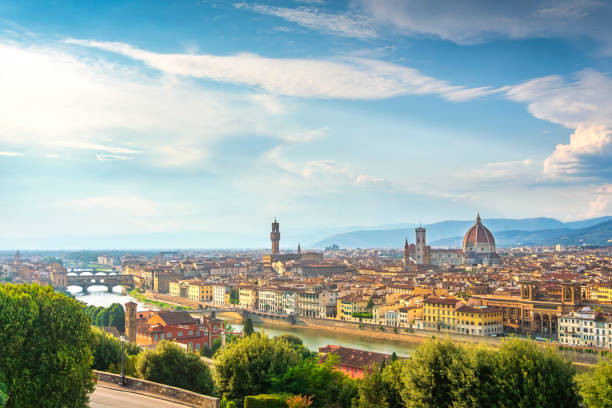 Panoramic Terrace
Piazzale Michelangelo
Florence's most famous viewpoint - a broad terrace on the south bank hill above the Oltrarno, reached by a steep climb through San Miniato's cypress-lined avenue, offering a panorama of the entire city: the Duomo and Campanile, Palazzo Vecchio's tower, the Arno bridges, and the Tuscan hills stretching beyond.
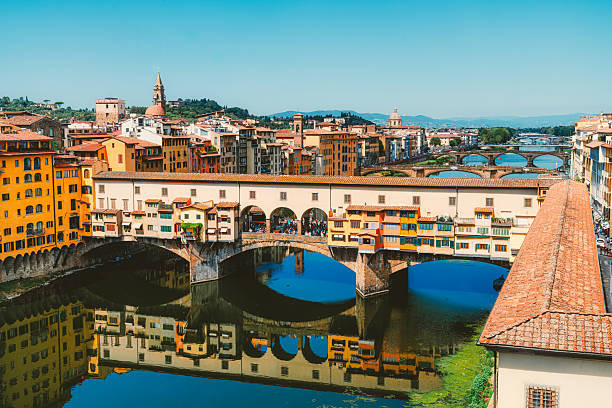 Medieval Bridge
Ponte Vecchio
The oldest bridge in Florence - a medieval structure of 1345 lined with goldsmiths' and jewellers' shops that hang over the Arno on timber brackets, their windows a glittering row of amber, ruby, and gold. The Vasarian Corridor runs above the shops, connecting the Uffizi to the Palazzo Pitti across the river - built by Cosimo I in 1565.
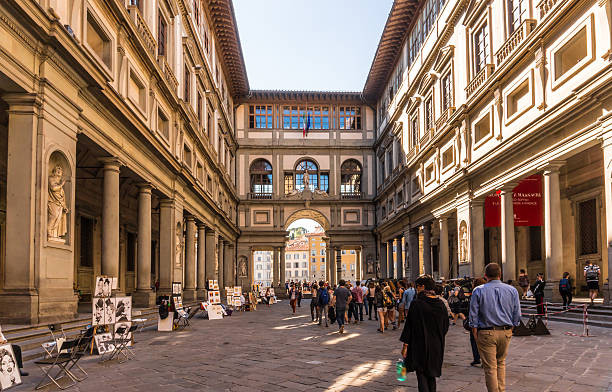 World Art Museum
Gallerie degli Uffizi
The greatest collection of Italian Renaissance painting in existence - Botticelli's Birth of Venus and Primavera, Leonardo's Annunciation, Michelangelo's Holy Family, Raphael's portraits, Titian, Caravaggio, and room after room of Florentine masters accumulated by the Medici over three centuries.
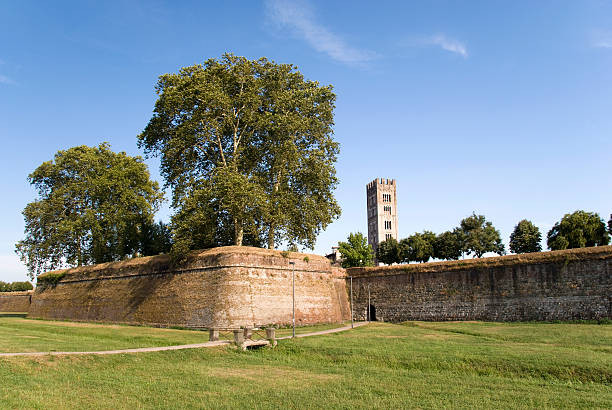 Renaissance Walls
Le Mura di Lucca
Lucca's most extraordinary feature — a complete circuit of Renaissance bastioned walls, 4.2 kilometres long and up to 30 metres wide at the top, built between 1504 and 1645 and never breached in battle. The walls are tree-lined along their entire length and serve as the city's main public park and promenade.
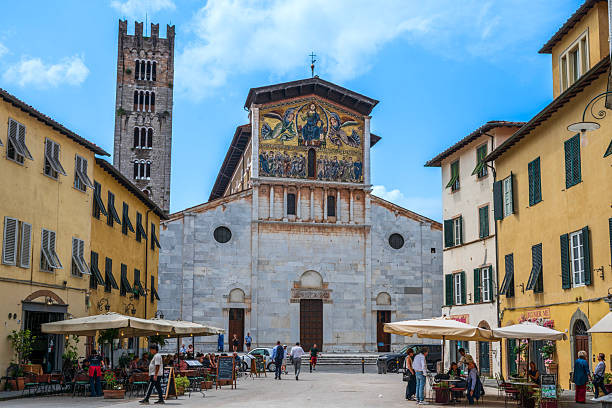 Roman Amphitheatre
Piazza dell'Anfiteatro
An oval piazza whose shape perfectly preserves the outline of the Roman amphitheatre that stood here from the 1st century AD, its medieval houses built directly on and into the ancient tiers of seating. The four original Roman entrances have become the four entry points to the piazza.
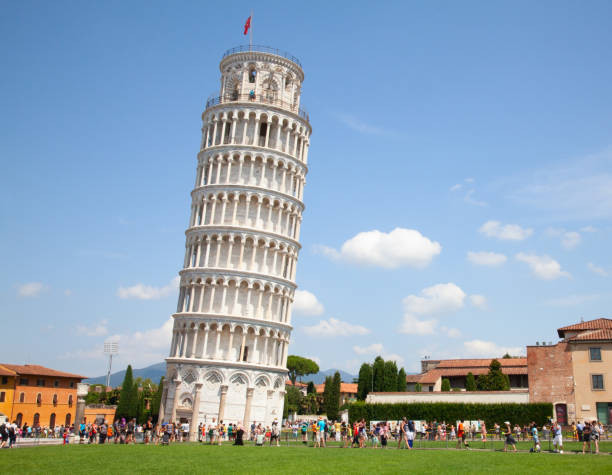 UNESCO Monument
Torre di Pisa
A freestanding Romanesque bell tower begun in 1173 whose soft subsoil caused it to begin tilting during construction, a lean that continued for 800 years until engineering intervention in the 1990s stabilised it at its current 3.97-degree tilt. Climb the tower (294 steps) for the disorienting experience.
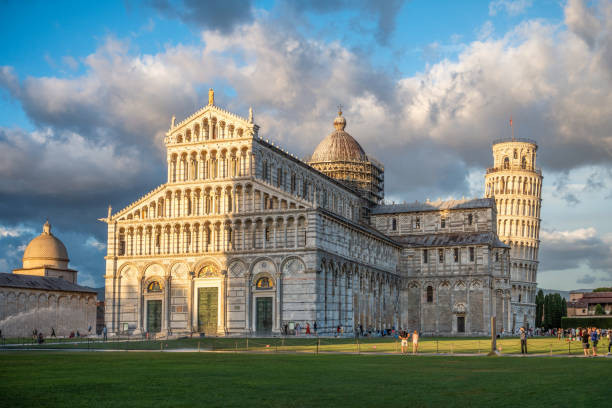 UNESCO Complex
Campo dei Miracoli
The Cattedrale di Santa Maria Assunta (begun 1064), whose striped marble interior contains a Pisano pulpit of superlative carved narrative detail, and the circular Baptistery (begun 1152), the largest in Italy, whose acoustics are so precise that a single voice singing inside produces a natural chord.
La Spezia & Cinque Terre
Riomaggiore · Manarola · Corniglia · Vernazza · MonterossoMaking the Most of Day 8 - La Spezia & Cinque Terre
Buy
the Cinque Terre Card on arrival in La Spezia -
the card (~€18/day) covers unlimited train travel between the five
villages, access to the Sentiero Azzurro coastal trail, and free use
of village shuttle buses
Recommended route: La Spezia (market + card purchase) →
Riomaggiore (harbour rocks) → Manarola (viewpoint above village) →
Corniglia (Lardarina steps + belvedere) → Sentiero Azzurro section → return to
Manarola for sunset
Corniglia's
Lardarina steps (377 steps) can be avoided by taking the shuttle bus
from the station for ~€2.50 — take the bus up and walk the steps down for the best
of both options.
Do
not eat in Monterosso's main tourist strip — walk to the old village
section (the medieval part north of the tunnel) where the restaurants are local,
cheaper, and serve genuinely fresh anchovies rather than frozen product
Arrive in Manarola by
6pm - the viewpoint above the harbour on Via Birolli requires 15
minutes to reach from the station; return to the viewpoint after full dark (8:30–9pm) for the night reflection
 Port City
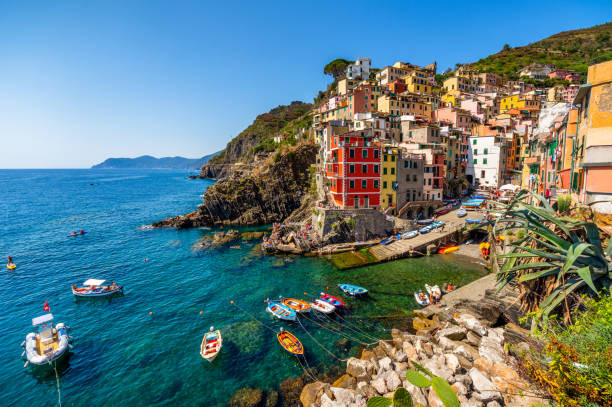
La Spezia
Begin in La Spezia, the working port city at the head of its namesake gulf and the main transport hub for the Cinque Terre. Far less touristy than the villages it serves, La Spezia has a proper Italian city feel - a long seafront promenade, a bustling morning market, and the Museo Tecnico Navale housing centuries of Italian naval history.
 Cinque Terre Village
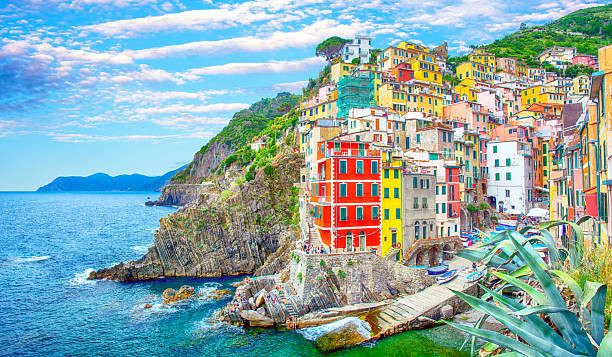
Riomaggiore
The southernmost and the first sight of the 5 Terre that most visitors encounter, emerging from the train tunnel into a narrow gorge of stacked pastel houses in terracotta, yellow, and dusty rose climbing the cliff above a tiny harbour. Walk down the main street (Via Colombo) to the harbour and scramble onto the black rocks beside the boat ramp.
 Cinque Terre Village
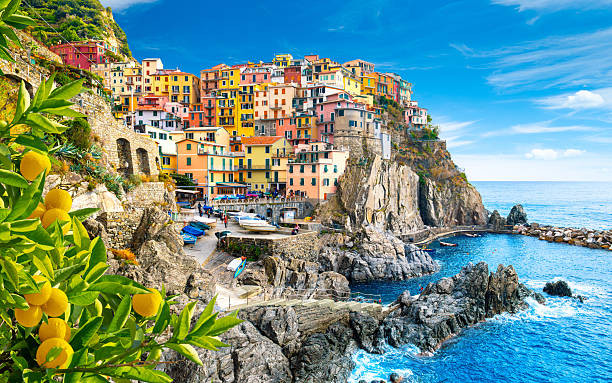
Manarola
The most photographed village - a dense cluster of medieval tower-houses in vivid ochre, green, and rose stacked directly above the sea on a spur of black volcanic rock, its harbour crammed with painted fishing boats hauled up on davits above the surge. The viewpoint above the village on the Corniglia trail gives the composition that appears on every postcard.
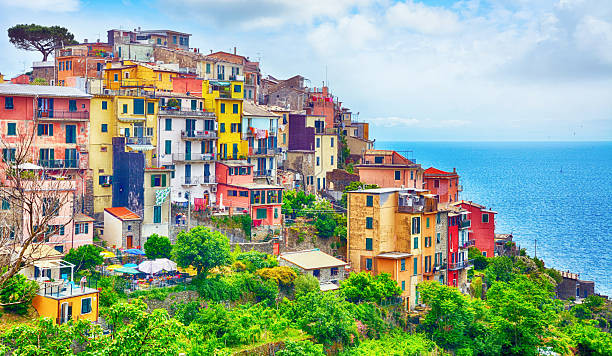 Hilltop Village
Corniglia
The only one of the five villages with no direct sea access - sits on a 100-metre promontory above the coast, reached from the station by 377 steep steps (the Lardarina staircase) or a shuttle bus. The reward for the climb is the most peaceful and authentically inhabited of the five villages.
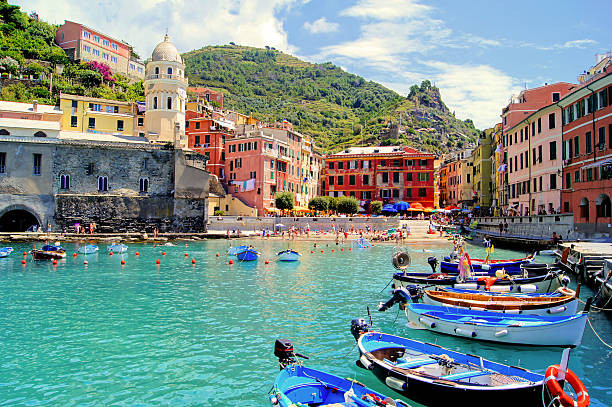 Fishing Village
Vernazza
Widely considered the prettiest of the Cinque Terre villages, Vernazza is built around a tiny natural harbor ringed by pastel houses climbing the hillside. The Doria Castle and its round watchtower sit above the breakwater, offering sweeping views back over the harbor and coastline.
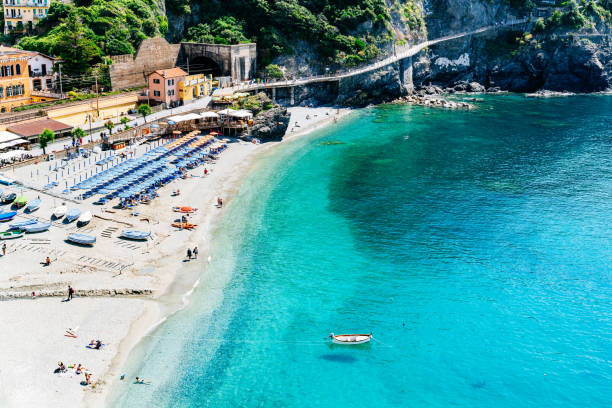 Beach Village
Monterosso al Mare
The largest and most resort-like of the five villages - has the only substantial beach in the Cinque Terre, a 400-metre arc of fine dark sand divided between free and paid sections, with the old medieval village on one side and the newer Fegina resort quarter on the other. The giant concrete figure of Neptune rising from the cliff face at the beach's southern end.
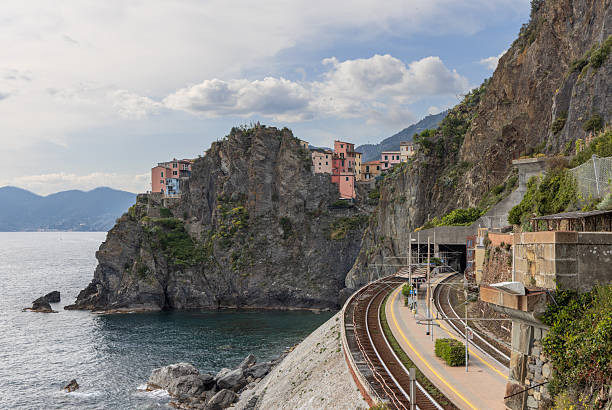 Coastal View
Optional
Coastal View
Optional
Sentiero Azzurro
Walk a section of the Sentiero Azzurro - the famous Blue Trail that connects all five villages along the cliff face above the sea. The most dramatic and accessible open section currently runs between Monterosso and Vernazza (1.5 hrs, strenuous) and Vernazza to Corniglia (1.5 hrs, moderate).
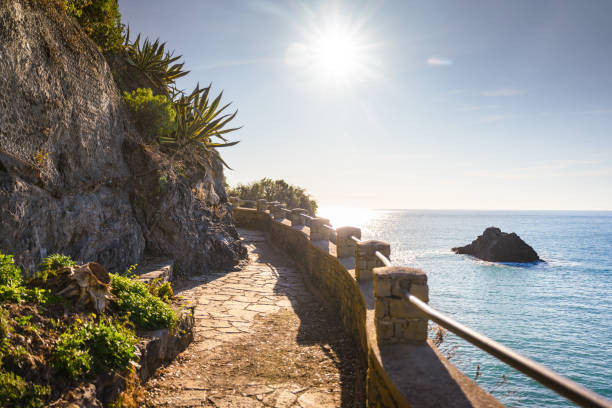 Coastal Trail
Optional
Coastal Trail
Optional
Vernazza to Monterosso
The finest section of the Sentiero Azzurro — a strenuous but magnificent 1.5-hour trail from Vernazza north to Monterosso al Mare, climbing steeply from the village through terraced vineyards and ancient mule paths before dropping back to sea level through lemon groves.
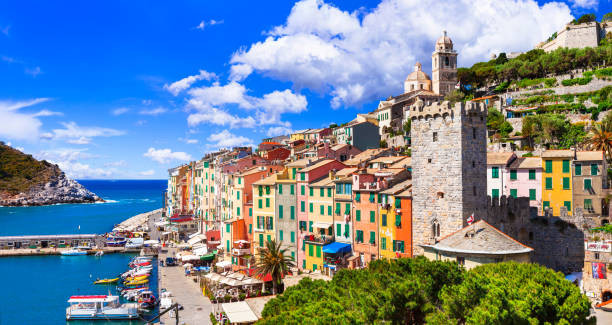 Medieval Village
Optional
Medieval Village
Optional
Portovenere
UNESCO-listed medieval village on the rocky headland at the southern entrance to the Gulf of La Spezia, older and wilder than the Cinque Terre villages and far less visited. The striped Gothic church of San Pietro stands on the very tip of the headland, below it the Grotta Arpaia is where the poet supposedly swam across the gulf to visit Shelley at Lerici.
The City Between Two Hills
Zagreb, CroatiaMaking the most of Croatia's capital
Tram network — Zagreb has one of the
best-preserved
tram systems in Europe; a single ticket (~€0.60) is valid for 30 minutes and takes
you anywhere
in the lower city. Tram 6 runs the full length of Ilica, the main shopping street
Zagreb Card (~€20/24 hrs) covers
unlimited tram and
bus travel, the funicular, and discounts at most museums — worth it for a full day
Cannon at noon — the Grič cannon fires
from the
Lotrščak Tower at midday precisely; position yourself on the funicular platform for
the best
view of the plume
Štrukli — the local speciality of baked
or boiled
cheese pastry; the best in the city are at Stari Fijaker 900 on Mesnička or La Štruk
on Skalinska
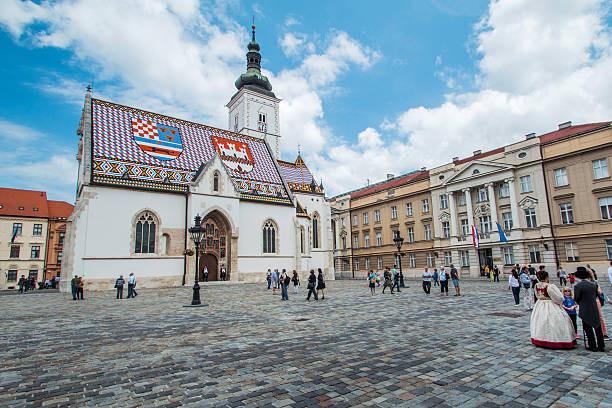 Historic Quarter
Gornji Grad
Zagreb's medieval core, perched on the twin hills of Gradec and Kaptol that were rival towns for centuries. Reach Gornji Grad by the funicular from Ilica (the shortest public funicular in the world, operating since 1890) or on foot up the Strmec stairway. The Lotrščak Tower marks the highest point of Gradec.
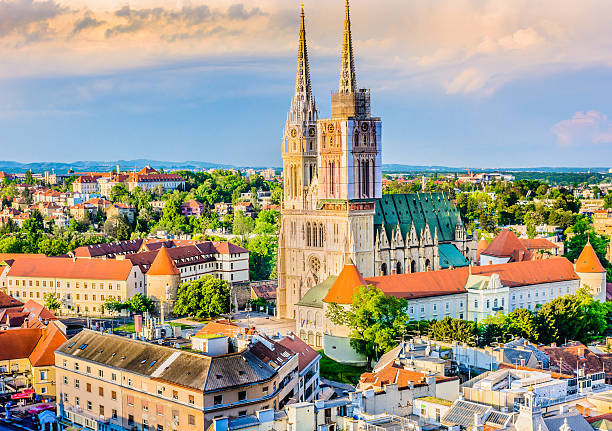 Cathedral
Katedrala Uznesenja
The tallest building in Croatia and the most important Gothic structure on Croatian soil - its twin neo-Gothic spires, rising 108 metres, are the defining element of the Zagreb skyline and visible from the observation terrace on Sljeme mountain 20 kilometres to the north.
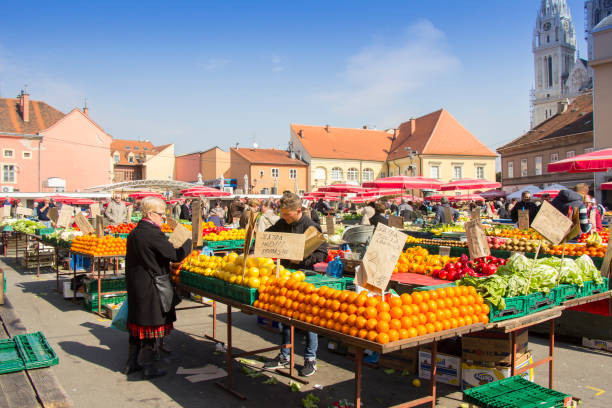 Open-Air Market
Dolac
Zagreb's principal fresh-produce market, operating on a terrace above Ban Jelačić Square since 1930 and known to locals simply as "trbuh Zagreba". The red-and-white umbrella forest of the upper open-air section sells seasonal fruit and vegetables, local cheeses, eggs, and flowers; the covered lower hall specialises in meat and fish.
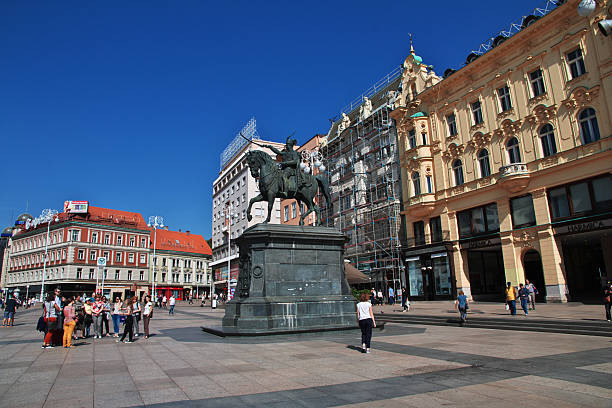 Main Square
Trg bana Josipa Jelačića
The pulsing centre of Zagreb's public life - a large, open square where the trams converge, the city meets, and every demonstration, celebration, and spontaneous gathering takes place. The equestrian statue of Ban Josip Jelačić (1866), the 19th-century viceroy who abolished feudalism in Croatia, points northward toward Hungary."
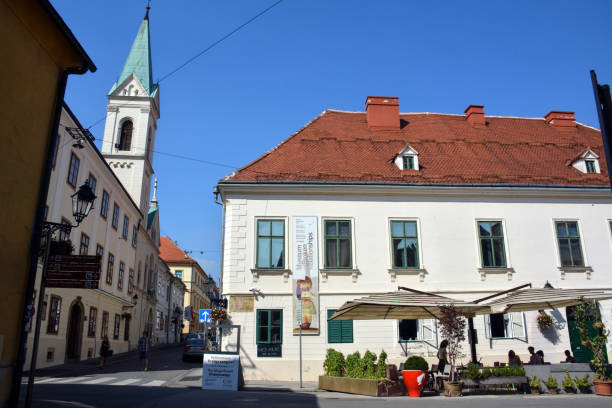 Unique Museum
Optional
Unique Museum
Optional
Museum of Broken Relationships
The most singular museum in Croatia and one of the most emotionally affecting collections in the world - a permanent exhibition of objects donated by people from around the globe, each representing a failed love affair, and accompanied by the brief, unsparing account of its end.
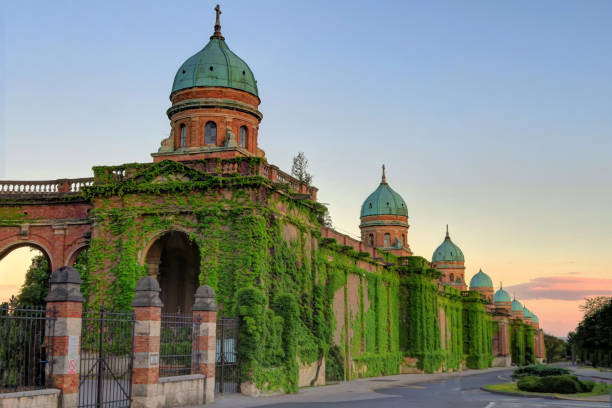 Historic Cemetery
Optional
Historic Cemetery
Optional
Groblje Mirogoj
Consistently ranked among the most beautiful cemeteries in Europe - a vast funerary park north of the city designed by Hermann Bollé in 1876, entered through a monumental ivy-covered arcade of domes and arcades that would not be out of place fronting a cathedral.
 Art Gallery
Optional
Art Gallery
Optional
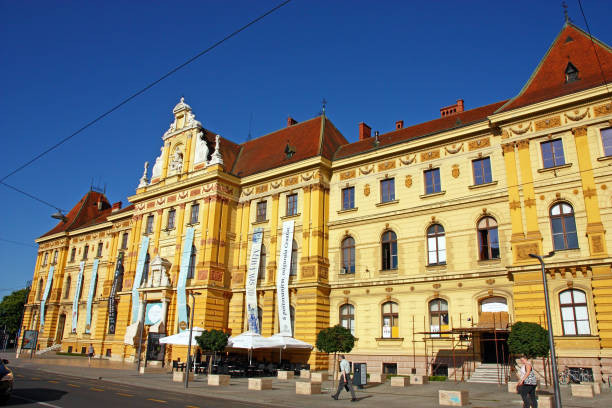
Strossmayerova Galerija
Croatia's oldest public art gallery, housed in a neo-Renaissance palace of the Croatian Academy of Arts and Sciences and opened to the public in 1884. The collection was assembled by Bishop Josip Juraj Strossmayer - polymath, politician, and the greatest cultural patron in Croatian history.
 Café Street
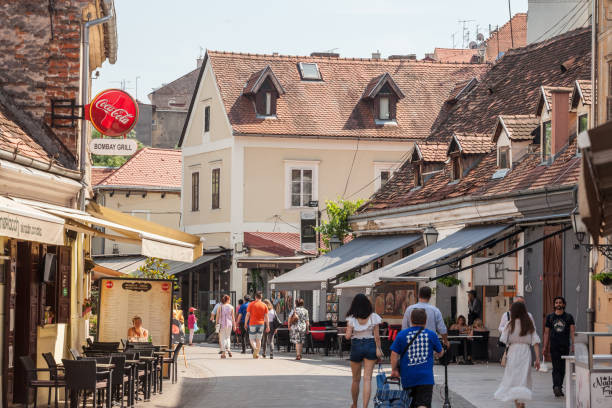
Tkalčićeva Ulica
The longest continuous outdoor café terrace in Zagreb - a pedestrian street running northward from Ban Jelačić Square into the heart of the old town. Baroque and 19th-century townhouses line both sides, their ground floors given over entirely to bars, wine bars, and restaurants. This is where Zagreb's famous "špica" reaches its most concentrated form.
Must-Try Food in Italy
From Roman street snacks to Tuscan slow food and Ligurian seafood pasta - the essential dishes and drinks of the Italian table, city by city.
Venice
Days 1 · 2 Must Try
Venice's answer to tapas - small crostini, polpette (meatballs), baccalà mantecato (whipped salt cod), artichoke hearts, hard-boiled eggs with anchovy, and tiny glasses of ombra served from the counters of the bacari bars of Cannaregio and Dorsoduro.
 Venice
Venice's oldest dish - fried sardines marinated in a sweet-sour (agrodolce) sauce of caramelised onions, white wine vinegar, raisins, and pine nuts, left to mature for at least 24 hours. The Venetian version of escabeche, invented by sailors as a preserving technique. Order it as a cicchetto or antipasto.
 Venice
Black risotto coloured and flavoured with squid ink - dramatically dark, intensely oceanic in flavour, rich with cuttlefish and white wine. A Venetian speciality of the lagoon fishing tradition that looks extraordinary and tastes of the sea.
 Dessert
Italy's most celebrated dessert was invented in the Veneto - layers of savoiardi biscuits soaked in espresso and Marsala, alternating with mascarpone cream whipped with egg yolks and sugar, dusted with bitter cocoa. The name means "pick me up".
Rome
Days 3 · 4 · 5 Must Try
Rome's most iconic pasta - spaghetti or rigatoni coated in a sauce of raw egg yolks, aged Pecorino Romano, and black pepper, studded with crispy cubes of guanciale (cured pig's cheek). There is no cream in carbonara; the silky sauce is formed entirely by emulsifying egg with pasta water.
 Rome
Rome
The simplest and most deceptively difficult pasta in Rome - tonnarelli or spaghetti tossed with Pecorino Romano and coarsely cracked black pepper in a sauce that demands perfect technique to prevent the cheese from clumping. Three ingredients, infinite skill required.
 Rome
Rome
The third pillar of Roman pasta - thick hollow spaghetti (bucatini) in a sauce of guanciale, San Marzano tomatoes, Pecorino Romano, and white wine, named for the mountain town of Amatrice. Spicy, rich, and deeply satisfying.
 Street Food
Rome's essential street snack - a deep-fried risotto ball filled with ragù and a molten core of mozzarella that stretches like a telephone wire when you pull it apart (hence the name). Buy them hot from any pizza al taglio shop and eat standing on the pavement.
 Rome
Rome
Thin veal escalopes layered with fresh sage and prosciutto, pan-fried in butter and white wine. The name means "jumps in the mouth" - and the combination of tender veal, salty ham, and aromatic sage justifies every syllable.
 Antipasto
Grilled sourdough rubbed with raw garlic and drizzled with green olive oil, topped with ripe diced tomato, fresh basil, and flaked sea salt.
Tuscany
Days 6 · 7 · 8 Must Try
The canonical Florentine T-bone steak - cut from the Chianina breed of white cattle raised in the Valdichiana valley, grilled over charcoal to a crimson rare interior with a charred crust, finished with Ligurian olive oil, lemon, and coarse salt. Ordering it anything beyond blue-rare is considered an insult.
 Tuscany
Tuscany's greatest peasant dish - a dense, twice-cooked bread soup of cannellini beans, cavolo nero (black kale), stale Tuscan bread, and root vegetables, slowly built over two days. The name means "reboiled." Thick enough to stand a spoon upright, it is the soul of Tuscan winter cooking.
 Tuscany
Hand-rolled thick spaghetti (pici) from the hills of Siena, served with a slow-cooked wild boar ragù - the definitive pasta of southern Tuscany. Pici is made from only flour and water with no egg; the dough is rolled by hand into thick irregular strands.
 Pienza
The cheese of the Val d'Orcia - Pecorino made from sheep's milk in the fields around Pienza, sold in three ages: fresco (young, milky, soft, 20 days), semi-stagionato (2 months, firmer with a nutty sweetness), and stagionato (3+ months, hard, pungent, crumbling).
Cinque Terre & Liguria
Days 9 · 10 Must Try
The canonical dish of Liguria - hand-twisted trofie pasta tossed with pesto made from Genovese DOP basil, Ligurian extra-virgin olive oil, pine nuts, Parmigiano-Reggiano, Pecorino Sardo, and garlic, traditionally ground by hand in a marble mortar. The Ligurian version includes boiled green beans and potato in the pasta.
 Cinque Terre
The anchovies of Monterosso al Mare are the finest in Italy - larger, fattier, and more deeply flavoured than anywhere else, caught in the nutrient-rich waters off the Cinque Terre coast. Eaten fresh (marinated in lemon), fried (golden, addictive), stuffed with capers and breadcrumbs, or salt-cured (anchovy fillets under oil).
 Liguria
Ligurian focaccia is nothing like what is served as focaccia outside Italy - it is thin, very crispy on the base, soft and dimpled on top, drenched in cold-pressed olive oil and sea salt, and eaten for breakfast. The focaccia di Recco variety is filled with fresh crescenza cheese.
 Liguria
A thin, golden chickpea flour flatbread baked in a wood-fired oven in a large copper pan - crispy at the edges, just-set and almost custardy in the centre, finished with black pepper and rosemary.
Gelato & Dolci
Every Day · Every City Must Try
Artisan gelato - denser, less aerated, and more intensely flavoured than ice cream, made fresh daily from seasonal fruit, nuts, and chocolate. The key distinction: a genuine gelateria (look for the sign artigianale or produzione propria) stores its gelato in covered metal containers, not piled in colourful peaks.
 Pastry
Sicilian pastry shells of deep-fried dough filled to order with sweetened ricotta and candied orange peel. The shell must be filled at the moment of purchase - a cannolo that has been sitting filled for more than an hour has lost its crunch.
 Breakfast
The Italian breakfast ritual - a warm cornetto (brioche croissant, lighter and less buttery than French, often filled with crema pasticcera, marmellata, or Nutella) and a cappuccino, taken standing at the bar counter. Italians never drink cappuccino after 11am, never with a meal, and always standing.
 Everywhere
In Italy "un caffè" means espresso - a 25ml shot of intensely concentrated coffee drawn in 25 seconds through finely ground Arabica. Drunk standing at the bar in one or two sips, never to go.
 Veneto
Invented in Venice - Aperol, Prosecco, and a splash of soda over ice in a large wine glass, garnished with an orange slice. The official aperitivo of the Veneto and now all of northern Italy.
 Tuscany
Italy's most prestigious red wine - 100% Sangiovese Grosso from the hills around Montalcino, aged 5 years minimum before release, with a capacity to age 30+ years. Deep garnet, complex aromatics of dried cherry, leather, tobacco, and dried flowers, a long tannic structure that needs food.
 Digestivo
The Italian digestivo of the south - an intensely sweet, syrupy lemon liqueur made from the zest of Femminello lemons from the Amalfi Coast and Sorrento, steeped in pure alcohol then sweetened with sugar syrup. Served ice-cold in a frozen shot glass at the end of a meal.
Useful Phrases for Italy
Essential Italian for navigating 10 days across la bella Italia — from ordering espresso in Rome to hiking the Cinque Terre. Italiano · English